Inside the service
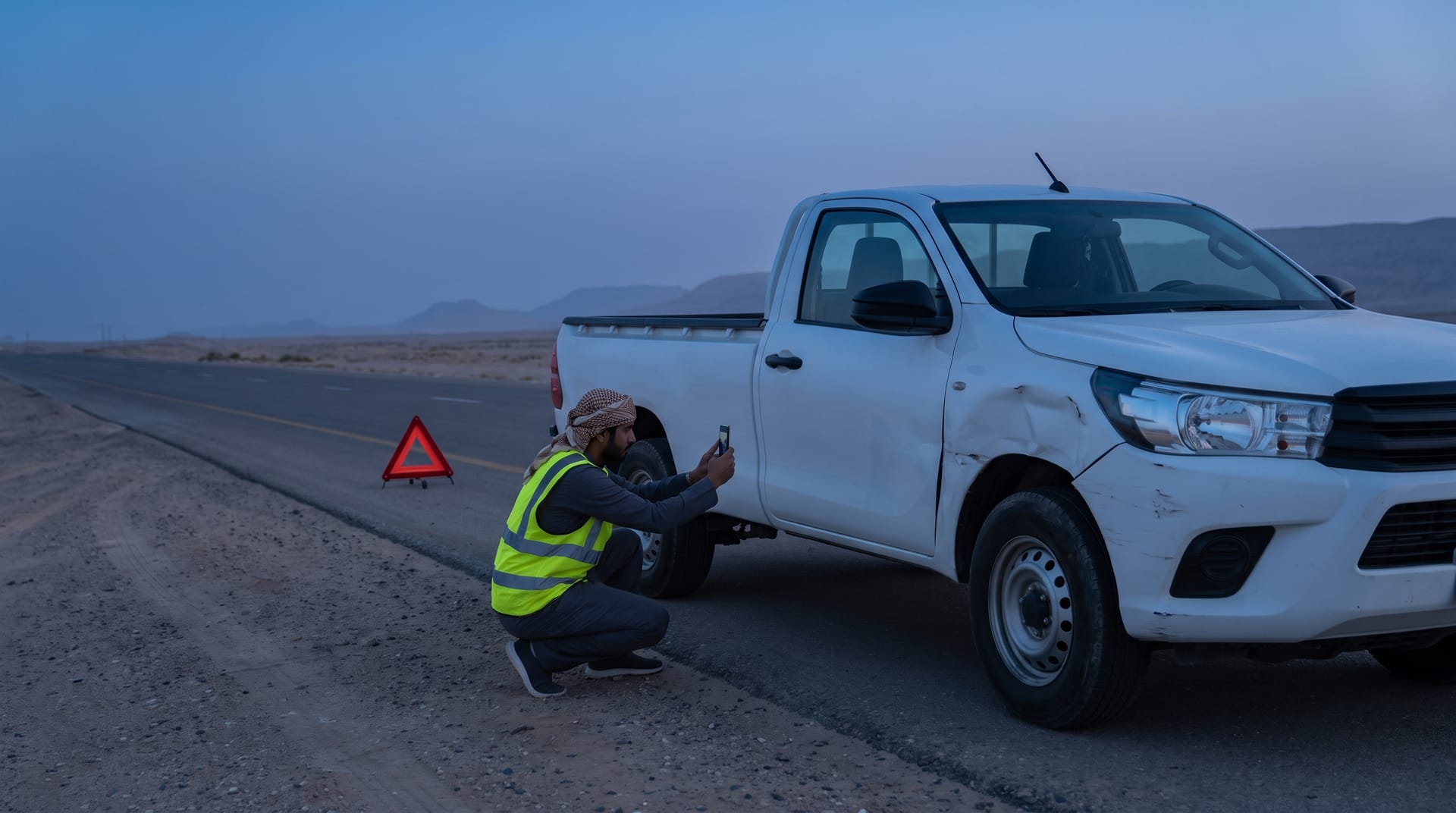
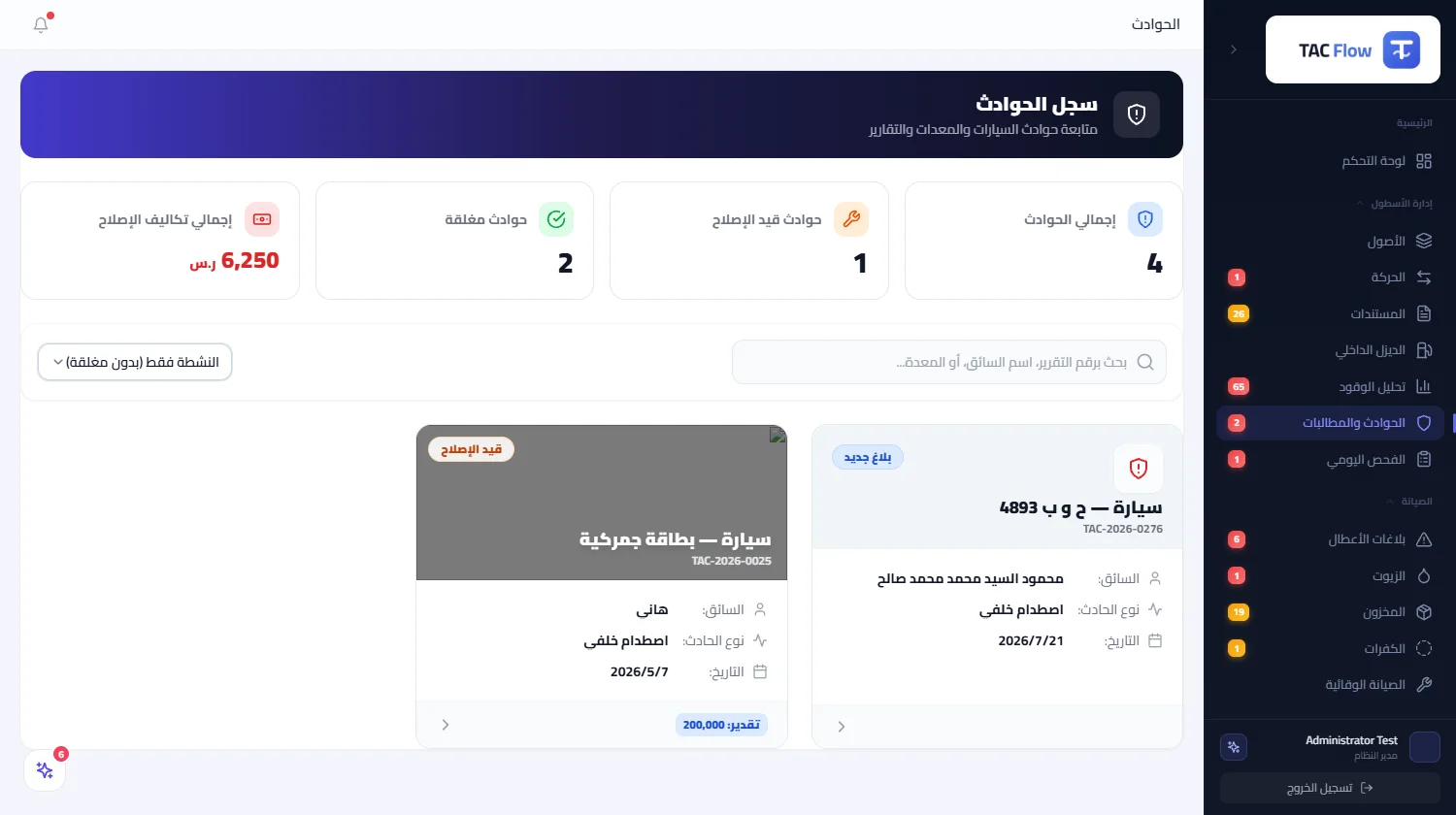
The moment of an accident is chaos: a shaken driver, photos scattered across chats, a vehicle whose drivability nobody at the office knows, then a claim file assembled weeks later from scattered sources. Here the accident is documented from the scene through the vehicle's code in four languages — parties, witnesses, injuries, photos and an interactive damage map — and if the vehicle cannot be driven, a workshop movement opens automatically the moment the report is saved. The file then runs from repair to a closure that returns the vehicle to service.
01
Full documentation from the scene
The field report page opens by scanning the vehicle's code, no account needed, in Arabic, English, Urdu and Hindi. The driver records the accident type and damage level, whether there are injuries, his own details and the other party's — plate, name, phone — and the witness, with guided photos and the captured coordinates, plus the authority's report number once issued. The damage map is interactive: he taps the vehicle's own outline to mark where the damage sits instead of describing it in words.
02
An undrivable vehicle never hangs
One question changes the file's path: can the vehicle still be driven? If the answer is no, the system creates — at the moment of registration — an approved movement from the accident scene to the workshop and switches the vehicle's status to maintenance automatically. It does not stand on the road for days waiting for someone to decide where it goes, and it never shows as available in the system while it sits wrecked and immobile.
03
Liability share and claim data
The file carries the liability percentage assigned to the driver, the insurance company with its policy expiry and the registration's, and the assessed amount against the actual repair cost — so the elements of a claim are complete in one place instead of being chased across email, chats and drawers. Whatever burden is assigned to the driver stays recorded in the file with its percentage, so accountability rests on a documented figure, not on a retelling.
04
Linked repair, closure restores service
Moving the file to under-repair automatically creates a maintenance record tied to the accident, numbered from its report number — once, never duplicated by later updates — so the repair work and its costs accumulate through the normal maintenance path while staying bound to their origin. Closing the file returns the vehicle to service automatically, and what management reads in the end is a single file: the accident, its parties, its damage, its liability and its cost, from the first photo to the last riyal.