Inside the service
A breakdown reported by phone call dissolves into chat history, and a week later nobody knows who owns it or what it cost. Here the fault starts as a report from the driver's phone — scan the machine's code, no account needed — with photos, description and location, then moves through an explicit status path from intake to diagnosis to repair, and can only be closed through a completion gate the server enforces item by item. The breakdown turns from a forgotten call into a complete file in the asset's history.
01
A field report without accounts
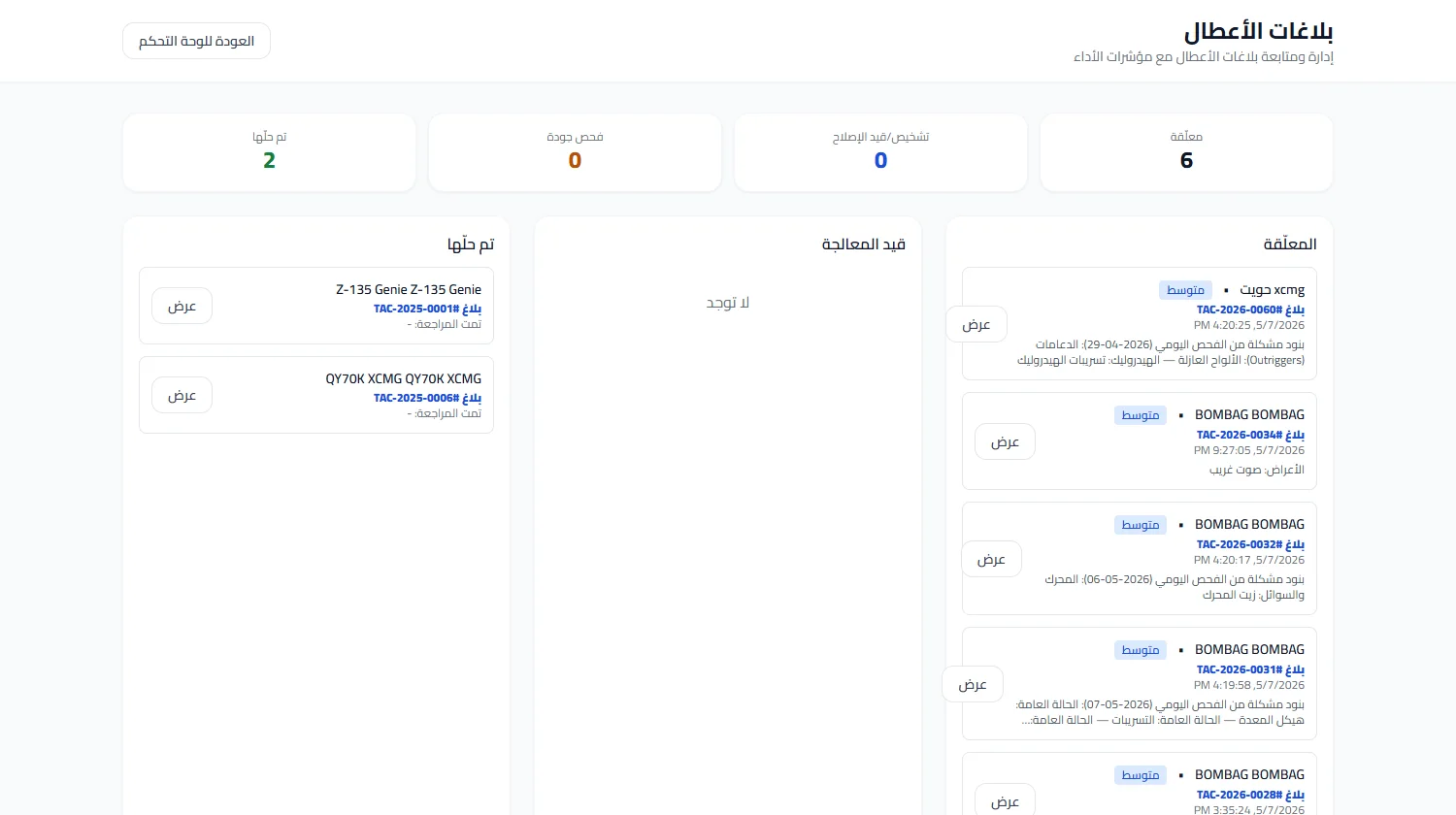
The driver scans the code fixed to the machine and a report page opens in his own language — Arabic, English, Urdu or Hindi — where he selects the fault category, severity and symptoms, attaches photos, and the system captures the coordinates and resolves them into an address automatically. No account, no password: the barrier between a driver's observation and the system is zero. Every report carries a sequential number, its reporter's name and its arrival time, and every later change to its status is logged with its actor and moment.
02
The workshop is two explicit movements
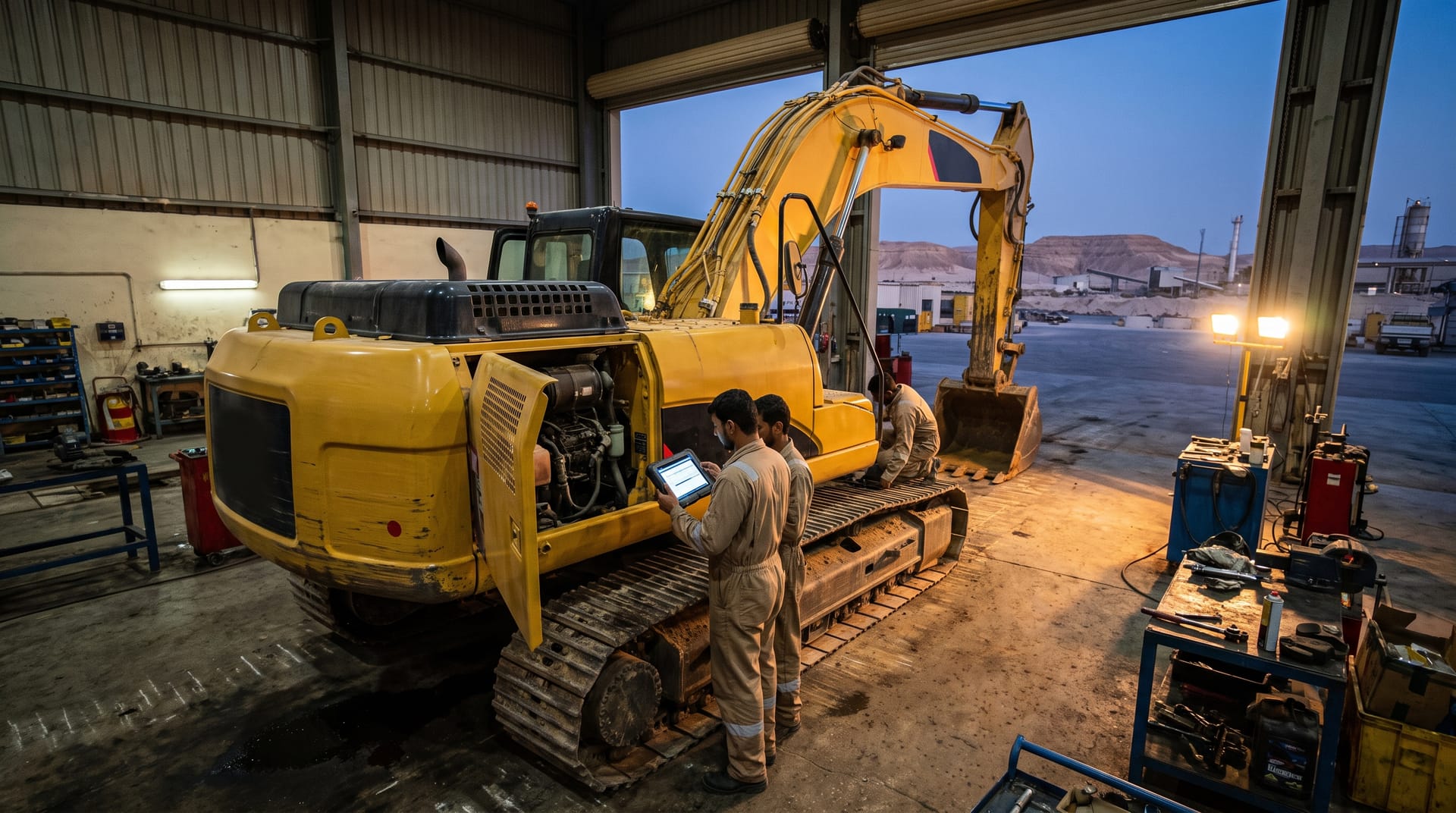
Entering the workshop is recorded as a real movement with origin and destination, and the system refuses an entry for a machine already registered inside. Exiting demands a destination — back to the project or to the yard — and the machine's status and location update automatically. Closing a report while the machine is still registered inside the workshop is explicitly refused, so no unit hangs in maintenance forever because someone forgot to log its exit. An on-site repair creates no movement at all.
03
A work order with counted parts
Issuing parts deducts from inventory through a real stock movement that never takes the balance below zero, and any shortfall automatically becomes an external purchase request followed until receipt. The replaced old part has its own documented return path with its location and condition, and labor hours and purchase invoices accrue on the same work order — so the true repair cost accumulates from the record as it happens, not from a number typed at closing time.
04
A close gate the server enforces
A report closes only when a checklist verified by the server against the final state is complete: repair location, at least one assigned technician, diagnosis, fault cause and attribution, old parts received, external purchases settled, oil transactions resolved, and after-repair photos. Any attempt to blank a mandatory field in the same request that closes the report is rejected, because validation runs on what is about to be saved, not on what was saved before.
05
A cost ceiling and curated advice
The repair spend is computed on the server from recorded parts and invoices, never from free input. When it reaches the company's configured approval ceiling, closing is blocked until the authorized approver records an explicit approval under his own name, for the full computed amount. And the recurrence-prevention recommendation is selected from a curated library keyed to the fault category, keeping the advice professional and consistent across reports instead of improvised each time.