Inside the service
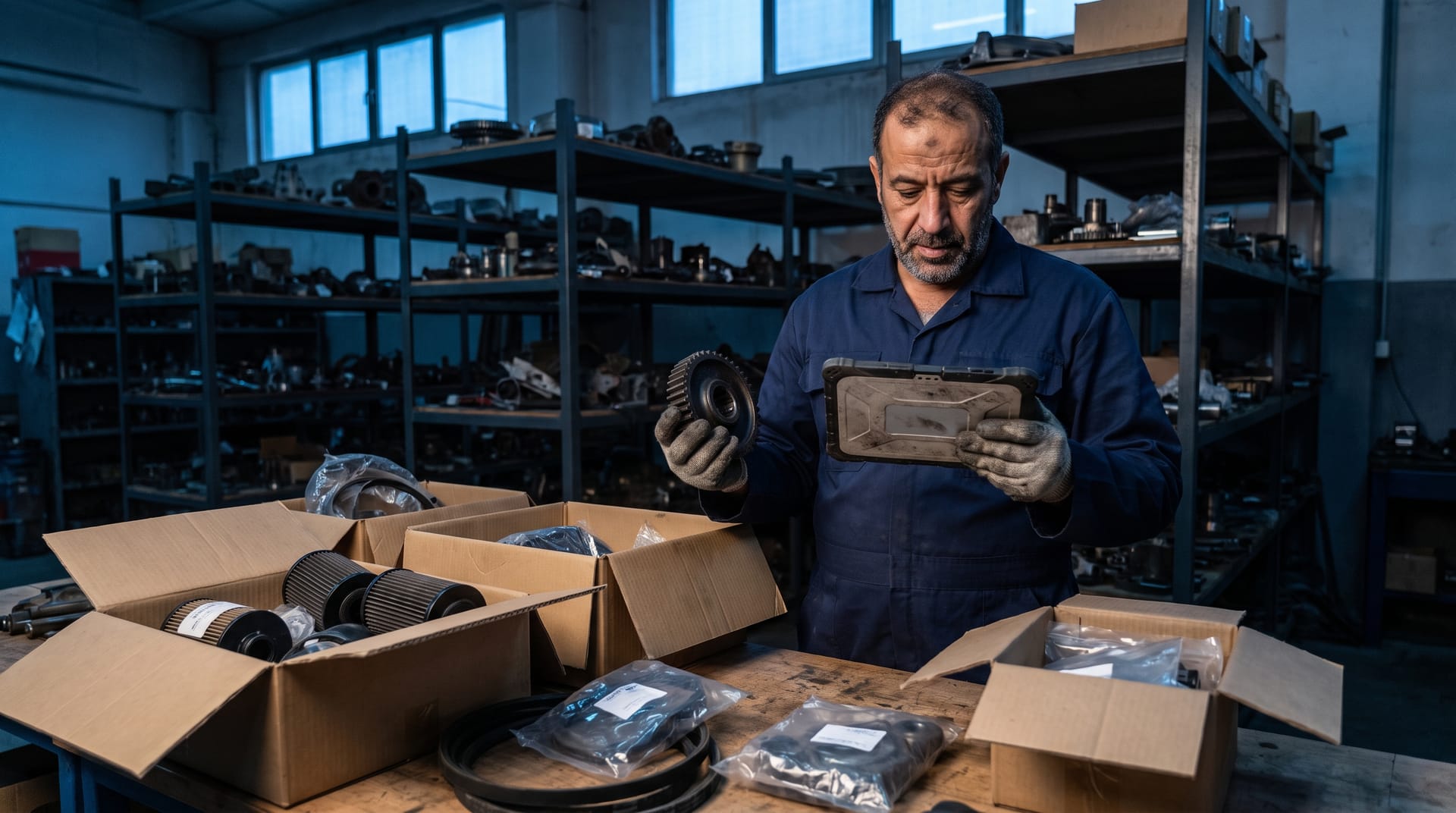
A part arrives at the workshop on the back of a truck, someone takes delivery, it goes into some machine — and a month later nobody remembers who received it, where it came from, or where the old part went. This module is a documentation register built for exactly that moment: every incoming part is recorded with its source, its receiver, the benefiting machine, the maintenance report it served, and the condition of the old part it replaced. Its limits are stated openly: it documents receiving to an auditable standard; it does not claim to manage purchasing or move stock balances.
01
An entry with every element
The technician records the part by name, number, quantity, unit and receiving date, and declares its source: a market purchase under the supplier's name, or an issue from internal stock. He records the receiving location, the receiving technician, the benefiting machine and his notes. A moment that used to pass verbally becomes a written entry with an owner and a date — and every registration leaves a trace in the system's activity log under the name of whoever made it.
02
The old part cannot vanish
At replacement, the old part's condition is documented as one of three states: scrap, usable, or repairable — together with naming the replaced part itself. This one field closes a familiar door in workshops: old parts with resale or repair value disappearing unquestioned. Once everyone knows the old part gets recorded with its condition and its receiver's name, behavior around it changes before any audit even begins — declared documentation is prevention before it is evidence.
03
One screen for every receipt
The register is not limited to manual entries: parts documented inside fault-report work orders — externally purchased parts received, stock parts used, and old parts returned with their condition — all appear in the same register, tied to their report and technician. The reviewer filters by machine, period or source to reach what he needs, and the reports hub carries a dedicated receiving report with spreadsheet export for sharing or archiving.
04
Honest and declared limits
The module does not run a purchasing cycle or financial approval, and recording a receipt here does not change inventory balances — balances move through their own approved gates in work orders, tires and oils. The separation is deliberate: the documentation register stays an independent witness to what entered the workshop, something the manager checks supplier invoices and stock movement against, not a party to the count itself — which is exactly what makes it citable in a dispute.