Skip to content
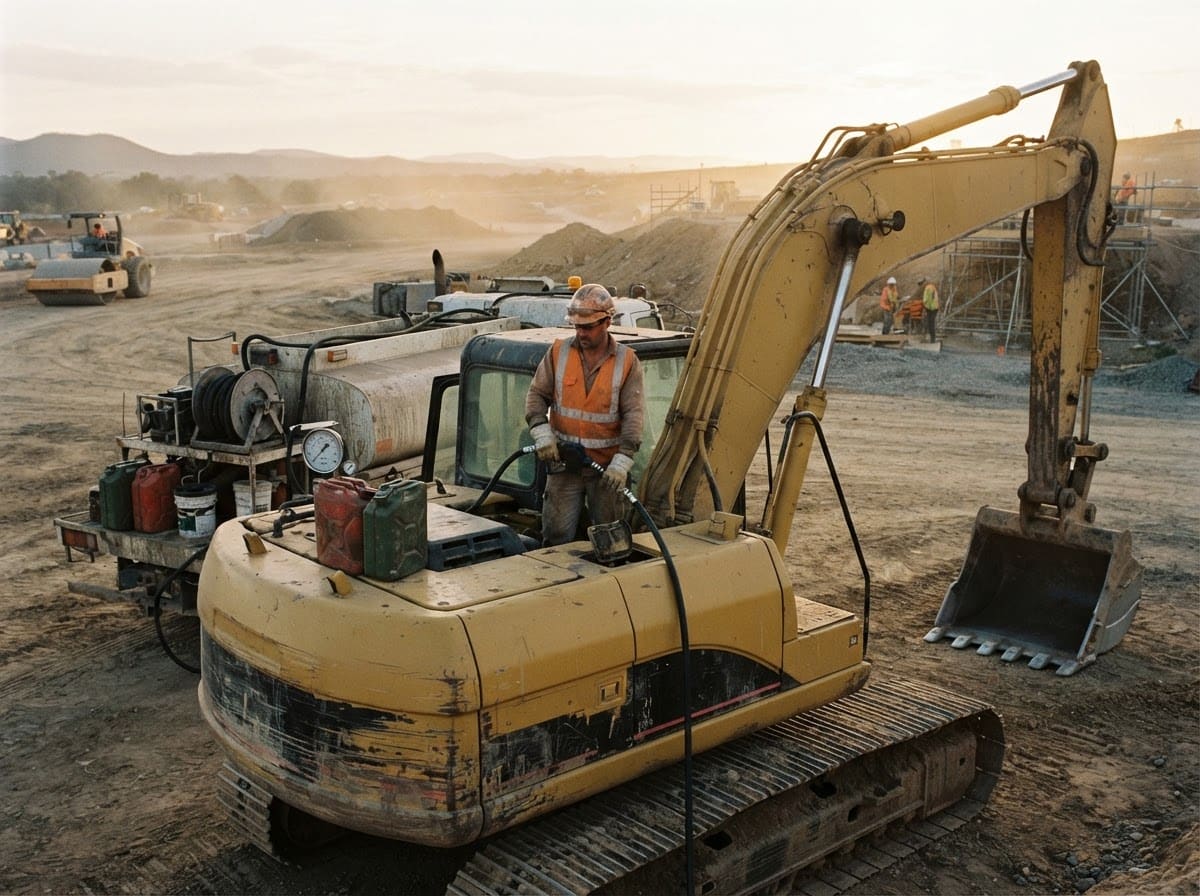
A diesel tanker refueling an excavator on site
Fleet & assets

Every liter has a source, a person, and a time

Run internal diesel end to end: tank and tanker balances, refuelings recorded from the field with quantity, asset, and responsible person the moment they happen, plus settlement and field stock counts that document the variance.

Before

What happens today without this module

  • 01Refuelings go into a paper log, and unexplained variances surface at month-end
  • 02The tank’s book balance doesn’t match the physical one, with no way to prove why
  • 03Duplicate refuelings slip through because nobody compares them to the operating pattern
Capabilities

Exactly what this module does

  • 2 sources, 2 modes

    A mobile tanker or a fixed station — each mode with its own rules and mandatory photos.

  • Double verification by readings

    The source meter before and after versus the machine’s tank gauge — the difference computed automatically.

  • 9 automated checks

    From capacity overruns to meter rollback and off-hours timing — critical flags turn the refueling into a review.

  • Dual approval against collusion

    Original flags are frozen and cannot be edited, and a critical case requires a second, different approver.

  • A live ledger

    Opening balance from the last count + received − issued = book balance, against the physical one and a costed variance.

  • Field count by QR code

    A dipstick measurement from a code on the tanker, with the gauge photo and location mandatory.

  • Maker-checker settlement

    Whoever submits a settlement cannot approve it, and no two settlements may overlap one period.

  • A statistical trust score

    Every driver scored from their history and deviation rate — pure statistics, no external AI.

Inside the service

How it actually works in your company

In most fleets, internal diesel lives in a driver's notebook and a supervisor's memory, and the month closes with an unexplained gap that turns into accusations no paper can settle. This module rebuilds the full cycle: an authorized source with a computed balance, field-recorded fills captured the moment they happen with photos, coordinates and meter readings, automatic checks that run before the line is saved, then a physical count and a settlement that close each period under two different approvers. Every liter carries its source, its handler, its time and its proof.

01

Two source types, two rulebooks

The system supports a mobile tanker — with its plate, assigned driver and cumulative flow meter — and a fixed station identified by name and location that field staff draw from directly. Each type has its own evidence requirements: a tanker fill demands five photos including the tanker meter before and after, a station fill four photos plus the dispensed quantity. In both cases the machine's own fuel-gauge reading is captured before and after the fill — the true measure of what the equipment actually received, not what was claimed on paper.

02

Checks that run at submission

The server refuses a record without valid coordinates and a timestamp matching the actual moment, rejects fills for decommissioned units or suspended sources, and blocks resubmission of identical readings within minutes. The data then passes nine automatic checks — from tank-capacity overruns and meter rewinds to a suspicious gap between what was dispensed and what the machine actually received, off-hours timing, and consumption that breaks the vehicle's statistical baseline. Clean fills are verified automatically; flagged ones stop for human review and never pass on their own.

03

Dual approval against collusion

The flags raised at submission are frozen into an immutable copy, and the approval gate reads that copy — so editing the readings to clear a critical flag and then approving solo does not work. A fill carrying a critical flag requires two approvals from two different people, and the system explicitly rejects a second approval by the same person who gave the first. Every approve, reject or edit lands in an append-only audit trail carrying the actor's name and the transaction's state before and after the decision.

04

A live ledger and field counts

Each source's balance is computed, never typed: the opening comes from the last physical dipstick count, deliveries are added, approved issues subtracted, and the book balance stands against the physical one with the gap valued at the company's approved diesel unit price. Field counts start by scanning a code on the tanker itself, and a photo of the gauge plus coordinates are required before a reading is accepted — no number typed at a desk. The variance is computed for the period since the last count, so you learn when the diesel went missing, not merely that it did.

05

Maker-checker settlement, trust scores

Closing a period separates maker from checker: whoever submits the settlement with the closing dipstick reading cannot approve it, any overlap with a previously locked period is rejected, and a reconciled settlement is frozen against edits. While one awaits approval, the source accepts no new fills until it is decided. Each driver carries a trust score recomputed statistically from their full history at every final decision — a colluding supervisor cannot farm it upward with repeated approvals — and fills by low-trust drivers are flagged automatically.

Inside the product

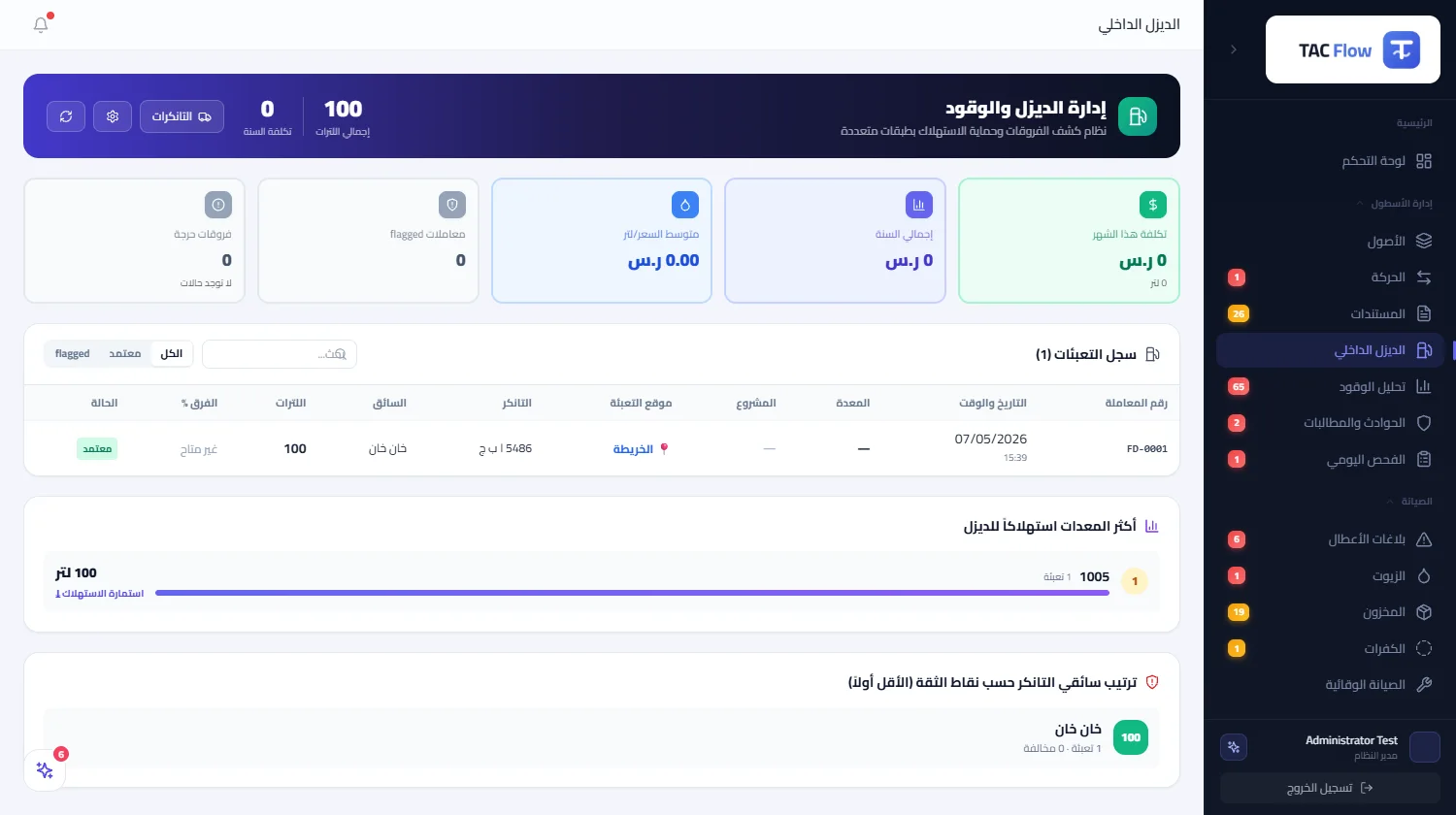
The screen as your team uses it

Internal Diesel
Screen of Internal Diesel
From the field, no account

One code on the asset opens all of this

The technician or driver scans the code printed on the asset and a public page opens in four languages — they submit directly, with no account and no app, and the entry lands on the asset record instantly.

  • A four-language interface, with free text auto-translated
  • A draft that never dies: saved on-device and restored even after a network drop or a closed browser
  • Duplicate-proof submission, with ID numbers shown masked
Try the asset search

What gets recorded from this page for this module

Straight from the work site

  • Diesel refueling with two readings and photos
  • Tanker dipstick count
The flow

How the process runs end to end

  1. 01

    Approved source

    A tanker or station with an opening balance from the last count

  2. 02

    Two-reading refueling

    From the field with photos and location, checks running the moment it happens

  3. 03

    Tiered approval

    Clean entries pass automatically; flagged ones await human review

  4. 04

    Count and settlement

    A field measurement closes the period and documents the variance

After rollout

What actually changes

No promises built on numbers we don’t know about your company. What follows is the structural difference of wiring this module into the rest of the platform.

A matching balance
book and physical, at all times
Deviations caught
opening an investigation instead of being booked as waste
Comparable consumption
across machines on one basis

Limits of this module

No tank sensors and no live metering; the numbers come from field entries documented with photos and location.

Try Internal Diesel on your own assets — not a generic example

We tailor the demo to your operation, starting with the module that blocks your team today.