Inside the service
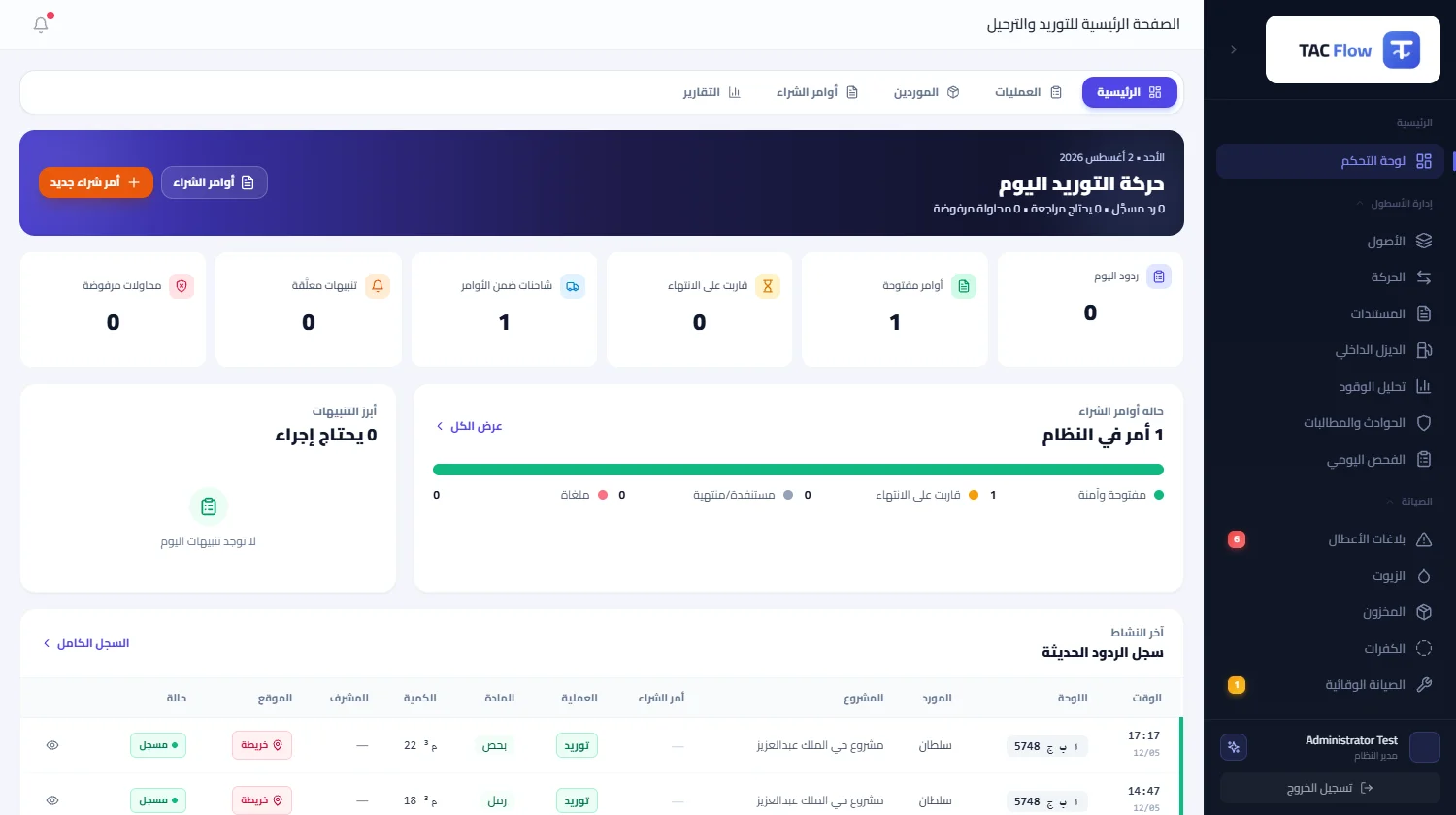
Contractor truck rounds at project gates are usually run on paper, pen, and trust — so the month-end statements arrive carrying numbers no evidence supports, and every line becomes a negotiation. This service makes a round exist only by scanning the truck's code at the gate, stamped with its location, time, two photos, and quantities, then passes it through fraud-detection rules that run at scan time and others that run overnight. The billing file arrives approved and evidence-backed before any dispute can even start.
01
A round exists by scan, not by entry
Every contractor truck carries a printed code. The gate supervisor scans it to open a round tied to that truck and its project, records the material and quantity on supply operations, and captures two mandatory photos — the load and the plate — straight from the camera; the system refuses a photo picked from the device gallery. Recording rounds is a defined authority for the transport-and-supply supervisor, the project manager, the data-entry role, and administration — not every user on the account.
02
Instant refusal, not later review
Strict rules decide at the very moment of scanning: a location outside the project's geographic boundary is refused, with signal accuracy factored into the equation; a signal weaker than the acceptable threshold is refused as well; a photo that is not a live capture is refused; a gap shorter than allowed for the same truck is refused; and a truck or material outside an active purchase order never opens a round at all. Every refused attempt is logged in a dedicated register that management reviews.
03
Purchase orders are a hard ceiling
Each contractor's purchase orders cap their rounds by count or duration. Consumption is deducted at scan time through an operation robust against simultaneous recording from more than one gate, and the remaining balance is shown to the supervisor the instant each round succeeds — when the ceiling runs out, recording stops on its own. No contractor exceeds the agreed limit, and nobody is surprised at month-end by rounds beyond the purchase order.
04
Rules that work while everyone sleeps
Alongside the instant rules, synchronous checks flag a round for review on a duplicated photo, a capture date that does not match the scan time, an impossible move between two locations, or a quantity beyond the truck's capacity. A nightly job then sweeps the whole log, spotting empty or blurred photos through artificial intelligence, a sudden surge in a contractor's rounds, a supervisor's favoritism toward one party, recording clustered into the day's last minutes, and spikes just before billing dates.
05
Confined decisions, clean billing
A flagged round is never decided by whoever recorded it: approval, dispute, and rejection are the authority of administration and the project manager alone within their own project, and rejection removes the round from billing permanently while its trace stays in the audit log. The monthly billing report is built from approved rounds only, detailed per contractor, truck, and material — alongside supervisor reports, daily activity, and an export ready for accounting.