The Problem Is Rarely "Where Is the Machine?"
When management breaks down, the first proposal is usually to buy tracking devices. But review your actual daily questions: when was this excavator last serviced? Who received this truck? How much diesel did it burn this month? Has its registration expired? — all record-keeping questions, not coordinate questions.
A GPS device answers exactly one question: where is the machine now. The price of that answer: purchase and installation per asset, a monthly subscription per device, hardware failing in dust and heat, and restrictions on rented equipment you cannot install anything on.
What Software Alone Covers
A software system built on field documentation covers most of what you assume needs hardware:
- Operational location: a movement log documents every exit, entry and inter-site transfer with approval — you know which site holds every asset
- Engine hours and kilometers: meter readings documented with photos from the field
- Consumption: a fuel cycle documented with source, operator and meter photo per dispense
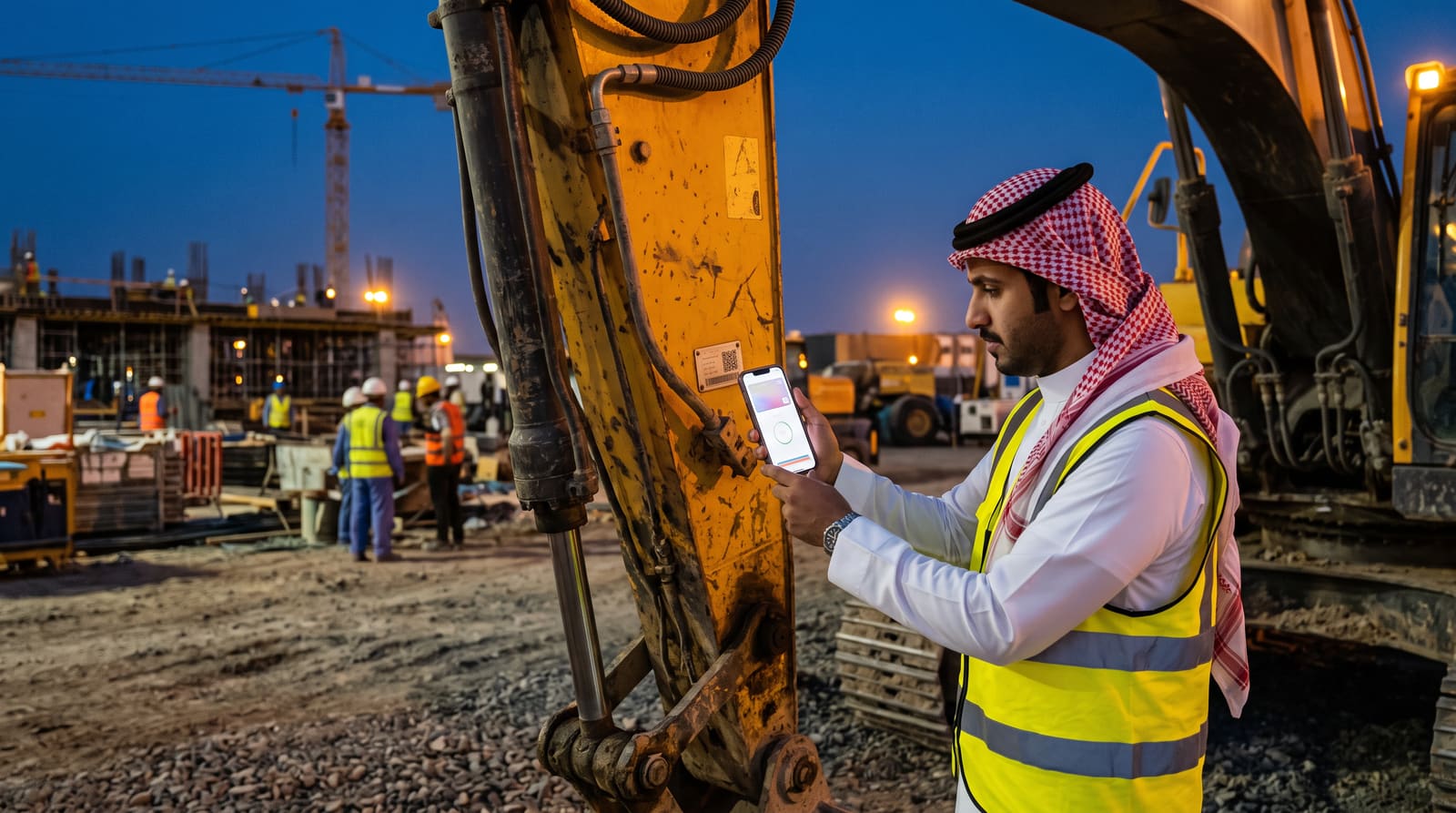
- Technical condition: instant fault reports from site by scanning the asset's QR code
- Compliance: automatic alerts for registration, insurance and inspection expiry
When Do You Genuinely Need Hardware?
Devices earn their price in specific cases: vehicles moving on public roads all day needing minute-by-minute live tracking, real theft risk at remote unguarded sites, or a contractual need to prove a route (material transport under contracts requiring trip documentation).
Even then, the sound decision is installing devices only on the segment that needs them — not blanketing an entire fleet where half the machines sit at one site for weeks.
The Right Order: Register First, Hardware If Needed
A company starting with devices before the register gets dots on a map for machines whose condition and history it doesn't know. A company starting with the unified digital register — assets, maintenance, fuel, movements, documents — builds the foundation that makes any later device just an additional data source feeding the same file.
The practical order: digitize the register and field documentation first; after three months of real data you will know, with numbers, which fleet segment deserves hardware — if any.
How This Works in TAC Flow
TAC Flow is built on this principle from the ground up: a fully software platform that never obliges you to buy a device. Field documentation happens on the operator's phone — scanning the asset's QR code opens its file to report a fault, log a meter reading or document a fill-up, and the movement log covers asset transfers between sites with documented approval.
And when you later decide a fleet segment needs live tracking, all your data is already in place — devices add a layer; nothing gets rebuilt.
Start with Simple Arithmetic
Multiply your asset count by device and installation cost, add twelve months of per-device subscription — that is the price of answering "where is the machine". Compare it to the price of a system answering every other question that drains your team daily.
The numbers usually settle the debate: start with the register, defer hardware until the data proves you need it.