
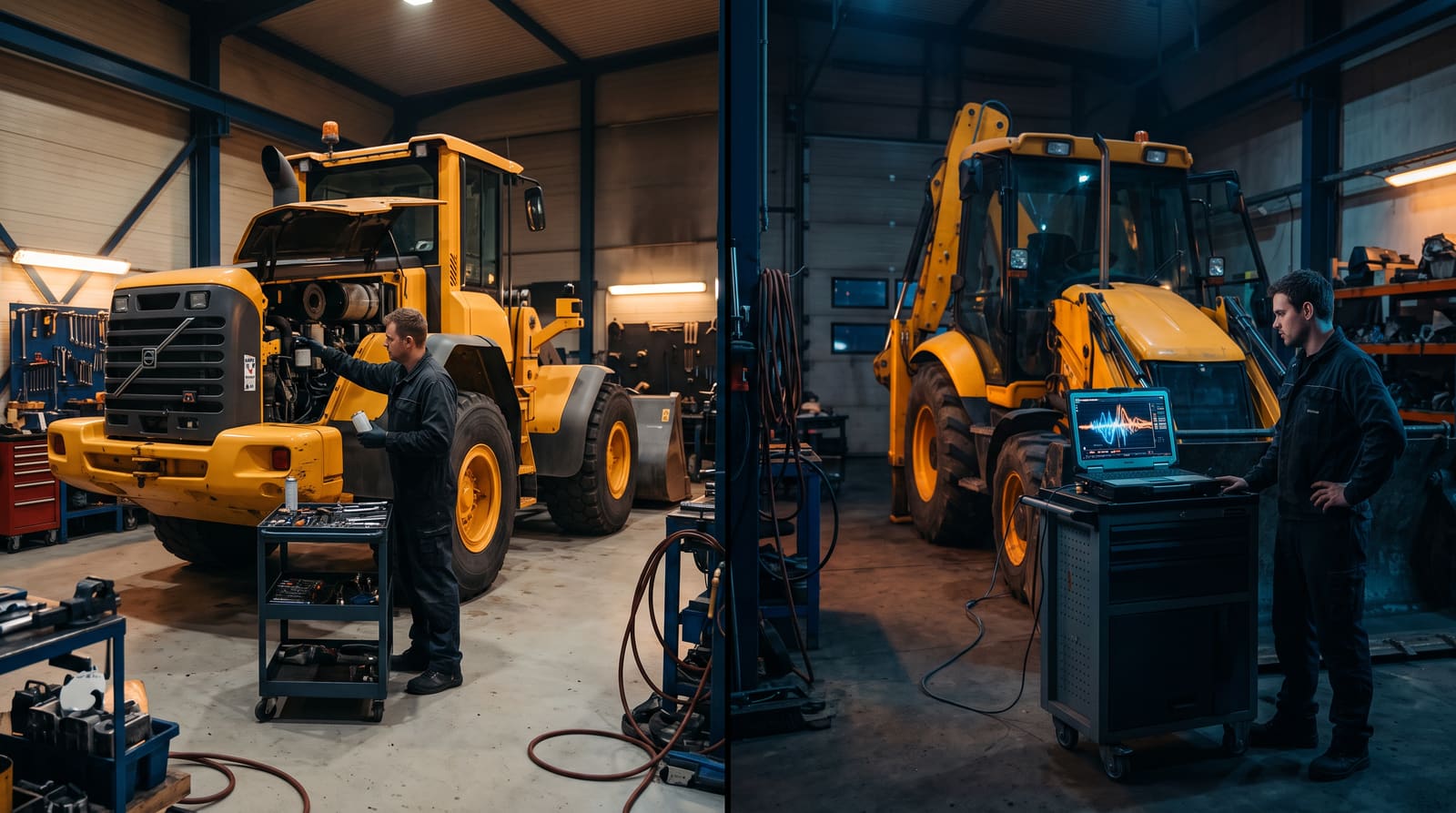
What Is Preventive Maintenance?
Preventive maintenance is based on performing recurring work before a breakdown occurs, driven by a calendar, operating hours, or kilometers. The aim is to reduce the likelihood of unexpected failures and raise asset readiness.
It works very well for assets with a recurring consumption pattern whose core needs are easy to forecast.
What Is Predictive Maintenance?
Predictive maintenance relies on data analysis to detect the probability of a fault before it happens. Instead of acting on fixed dates, decisions are guided by actual risk indicators for each asset.
This model reduces unnecessary maintenance work and focuses effort on the highest-risk assets.
When to Choose Each Model
In practice, the best approach is usually a smart combination of preventive and predictive. Start with disciplined preventive maintenance, then add predictive elements gradually as data quality improves.
- Preventive: excellent as a fast, disciplined starting point
- Predictive: effective for critical, high-cost assets
- Combining both: best balance between readiness and cost
- The decision depends on data quality and breakdown frequency