Where Do Equipment Hours Vanish Between Fault and Repair?
A machine doesn't stop only on the day it breaks — it stops a day waiting for the report to reach whoever decides, a day waiting for diagnosis, and days waiting for a part nobody formally ordered. In workshops run by phone calls, true downtime is often two or three times the actual repair time.
Worse, the loss is invisible: nobody records when the stoppage really began, so nobody answers for the gap between report and action.
The Report: Straight from the Field, No Middlemen
The documented cycle starts at the moment of discovery: the operator on site opens a report from their phone — fault description and photos — and it lands instantly with the maintenance manager under an indisputable timestamp. No forgotten call, no message lost in a group chat, no "I told him a week ago".
That report timestamp is the cornerstone: everything after it is measured against it — response time, diagnosis time, total downtime.
Entering the Workshop: A Documented Movement, Not a Disappearance
A machine entering the workshop must be a recorded movement with a documented handover — not a disappearance from site that the project manager discovers two days later. With the movement, the asset's status changes automatically in the register, so it is never scheduled for work while sitting on a lift.
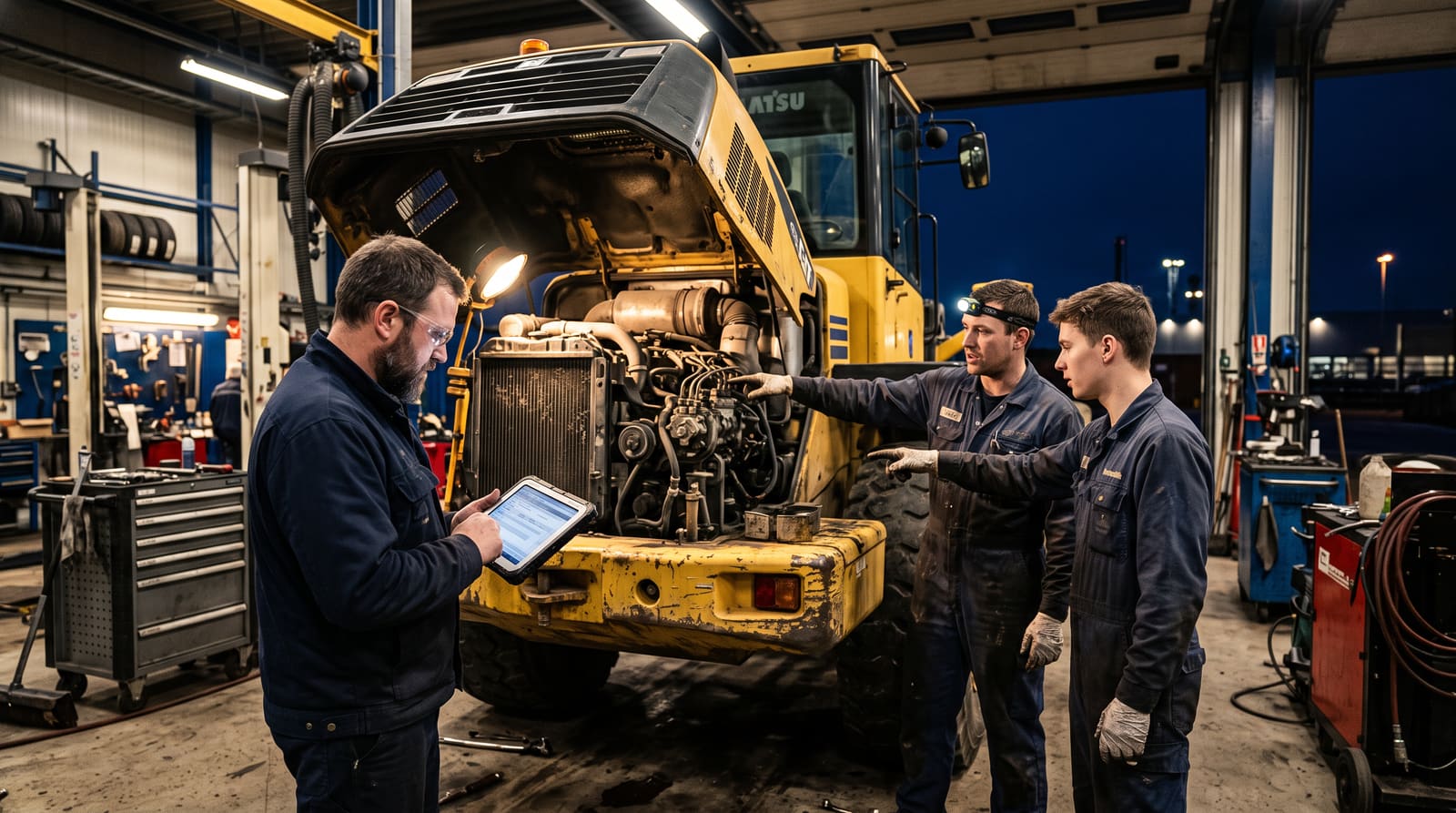
Inside the workshop, one file holds everything: the original report, the diagnosis, the parts issued, the labor hours, and photos before and after. Whoever opens the file a year later understands the whole story without asking anyone.
Spare Parts: Issued Against the File, Not from the Drawer
The biggest hole in workshop cost is unlinked parts issuance: a part leaves the store to fix "some machine" and it becomes impossible to know which asset consumed what. The correct link: every issue is attributed to a specific repair file, so each asset accumulates its true cost — parts and labor.
After months of this discipline, the truth that chaos hides emerges: which machines cost more in maintenance than they are worth, and which faults recur for the same cause and need a radical decision, not another repair.
Closure: No File Closes Incomplete
Disciplined closure requires a complete file: fault cause, work performed, full cost, and the meter reading at exit. A file closed incomplete comes back to haunt you — a recurring fault with no history to explain it, an accumulated cost nobody can source.
And the machine's exit is documented like its entry: a signed handover, returning the asset to operation with an updated status and a complete record.
How TAC Flow Runs This Cycle
In TAC Flow the whole cycle is one connected file: the report opens from the field by scanning the asset's QR code with photos and lands instantly with its timestamp; workshop entry is a documented movement that changes the asset's status automatically; diagnosis, parts and costs accumulate on the same file; closure requires completeness; and reports show management the downtime and cost per asset and per fault type.
The practical result: a workshop run by records, not memory — and repair-or-retire decisions built on real numbers.