- Names used in Saudi Arabia
- Air compressorPortable air compressorCompressorKombrosar (Saudi term)Drilling compressorBreaker compressorSpraying compressor
- Formal name
- ضاغط هواء متنقل
- English name
- Portable air compressor
- Family
- Heavy equipment · Power & lighting
- Measured by
- Operating hours
01Definition and uses
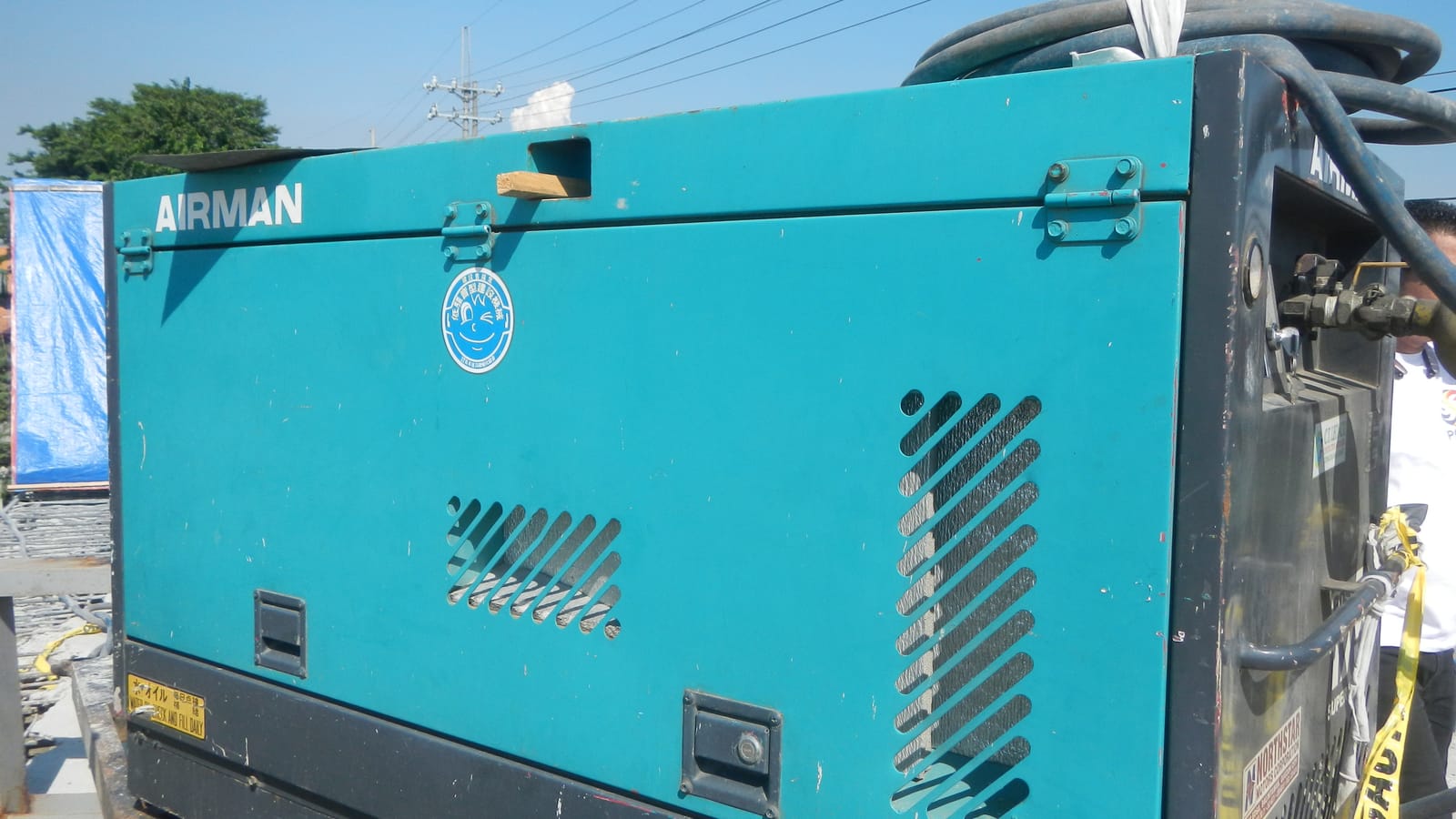
The portable air compressor is a machine that compresses air and stores it or delivers it directly to air-powered tools such as breaking hammers, sandblasting equipment and drilling machines, and it is usually mounted on a wheeled trailer and driven by a diesel or electric motor. One manufacturer states that its portable compressors come in three drive types: diesel, electric and battery, in sizes from small to large. Its life is measured in operating hours. In the Saudi market the word “kombrosar” is also applied to air-conditioning and refrigerator compressors, and this page is about the site air compressor only.
Uses
- Running hand-held breaking hammers and pneumatic drilling tools.
- Sandblasting to clean metals and prepare surfaces for painting.
- Drilling wells, foundations and tunnels, testing and cleaning pipelines, and blowing cables.
- Running pneumatic workshop tools, blowing and cleaning.
- Supplying concrete plants and crushers with air for control and cleaning.
- Spray painting and insulation in construction work.
02Classes and sizes
The market classifies portable compressors by flow in cubic feet per minute or cubic metres per minute, by working pressure in bar, by drive type, diesel or electric, and by compression mechanism: reciprocating with pistons for small units with a tank, or rotary screw for medium and large portable units. What matters in selection is that the compressor’s flow exceeds the total consumption of the tools connected to it at their working pressure.
| Class | Description | Typical use |
|---|---|---|
| Workshop compressor with a tank | A small electric reciprocating unit with a tank | Workshop tools, blowing and inflating tyres. |
| Small portable compressor | A diesel rotary screw unit on a trailer | One or two hammers, municipal maintenance work. |
| Medium portable compressor | A larger diesel rotary screw unit | Sandblasting, several hammers and small drilling equipment. |
| High-pressure portable compressor | A unit for high pressures | Drilling wells, foundations and quarries. |
| Electric portable compressor | A rotary screw unit with an electric motor | Enclosed sites and areas where exhaust or noise is prohibited. |
03Main components
- 01The compression unit: the rotary screw or the pistons.
- 02The diesel or electric motor and the drive coupling.
- 03The oil separator, its tank, the oil filter and the oil cooler in oil-flooded compressors.
- 04The air receiver on models with a tank, and its drain valve.
- 05The safety valve, the pressure gauge and the pressure regulator.
- 06The intake air filter and the moisture separator.
- 07The intake valve and the load and unload control system.
- 08The air outlets and their valves, the hoses, their couplings and the safety chains.
- 09The silencing canopy, the trailer and its wheels, the parking brake and the tow drawbar.
04Periodic maintenance schedule
The usual ladder for a diesel-driven rotary screw compressor; the manual for the specific model sets the intervals and tasks that apply, and the intervals shorten in heavy dust and high heat.
| Interval | Typical tasks |
|---|---|
| Every 10 hours / daily |
|
| Every 50 hours / weekly |
|
| Every 250 hours |
|
| Every 500 hours |
|
| Every 1000 hours |
|
| Every 2000 hours |
|
Air receivers need a drain valve at the lowest point that is opened regularly, a clear pressure gauge, and one or more safety valves with no other valve isolating them from the receiver, and the safety valve is tested regularly.
The manufacturer’s manual governs. The actual intervals and tasks are set by the operation and maintenance manual for your machine’s model, and they are shortened in heavy dust, high heat and continuous operation. This table shows the general order only and does not replace the manual.
05Daily pre-start checklist
14 items
06Common operating mistakes that cause breakdowns
- Neglecting to drain the condensed water, so the receiver rusts and water reaches the tools.
- Running in heavy dust without cleaning the air filters, so dust enters the compression unit and spoils the oil.
- Loading the compressor with tools that consume more than its flow, so it runs continuously at full load and its temperature rises.
- Using an oil not intended for the rotary screw compressor or mixing oils.
- Disconnecting a hose while it is still pressurised, or running hoses without safety chains, which is a danger to people before the machine.
- Running in an enclosed place or blocking the ventilation openings.
- Filling with contaminated fuel or leaving water in the tank.
- Disabling the safety valve or setting the pressure above the rated one.
07Regulatory requirements
Regulatory procedures to check when owning or operating this machine in the Kingdom.
- Registering heavy equipment with the Heavy Equipment Regulation Center
- Renewing the vehicle registration (istimara)
08What to weigh when renting or buying
- The total flow of the tools that will work together at their working pressure, with a margin for long hoses.
- The working pressure required: normal pressure for hammers and spraying, high pressure for drilling.
- The drive type according to the site: diesel for open sites, electric for enclosed ones or where electricity is available.
- The hour meter and the record of compressor oil and separator element changes.
- A test run: the time to reach pressure, the working of the load control, the oil temperature, and the presence of oil in the air outlet, which indicates a damaged separator.
- The condition of the trailer, the tow drawbar, the tyres and its lights if it is towed on the road.
- Availability of filters, compressor oil and the separator for the brand in the area.
- When renting: who bears the fuel, filters and hoses, and how the hours are counted.
Settle these factors first, then enter your own numbers in the Own vs rent calculator or the Equipment operating cost per hour calculator.
09Frequently asked questions
By compression mechanism: reciprocating with pistons for small units with a tank, and rotary screw for portable units; by drive: diesel, electric or battery; and by pressure: normal or high.
The naming in the market is by use, not by the type of machine; the breaker compressor supplies hammers at normal pressure, the spraying compressor needs a larger flow for sandblasting, and the drilling compressor is a high-pressure unit for well and foundation drilling machines.
By adding up the consumption of the tools that will work together from their sheets at their working pressure, choosing a compressor that exceeds this total with a margin, then making sure its pressure is enough for the highest-pressure tool.
Because the water vapour in compressed air condenses in the receiver and the hoses; the remedy is draining the receiver and the moisture separator daily and fitting a dryer or separator when needed.
In an oil-flooded rotary screw compressor, oil at the outlet indicates a damaged oil separator element, a high oil level or a blocked return line, and it must be repaired before it damages the tools or spoils the spraying.
Inspection is daily, and oil and filter changes come at service points usually between 250 and 500 hours, with the separator element and the major inspection every 1000 and 2000 hours, and the intervals that apply set in the model’s manual.
The drain valve at the lowest point, opened regularly, the pressure gauge, and the safety valve, which has no valve isolating it from the receiver and is tested regularly.