- Names used in Saudi Arabia
- Hydraulic breakerHydraulic hammerRock breakerExcavator breakerDaqqaq (Saudi term)NaqqarJack hammer
- Formal name
- مطرقة هيدروليكية
- English name
- Hydraulic breaker (hammer attachment)
- Family
- Heavy equipment · Attachments
- Measured by
- No meter
01Definition and uses
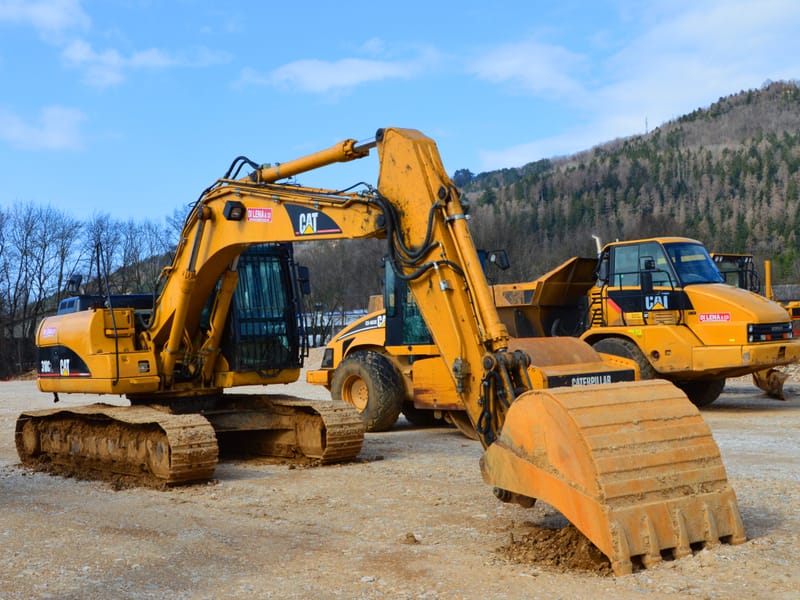
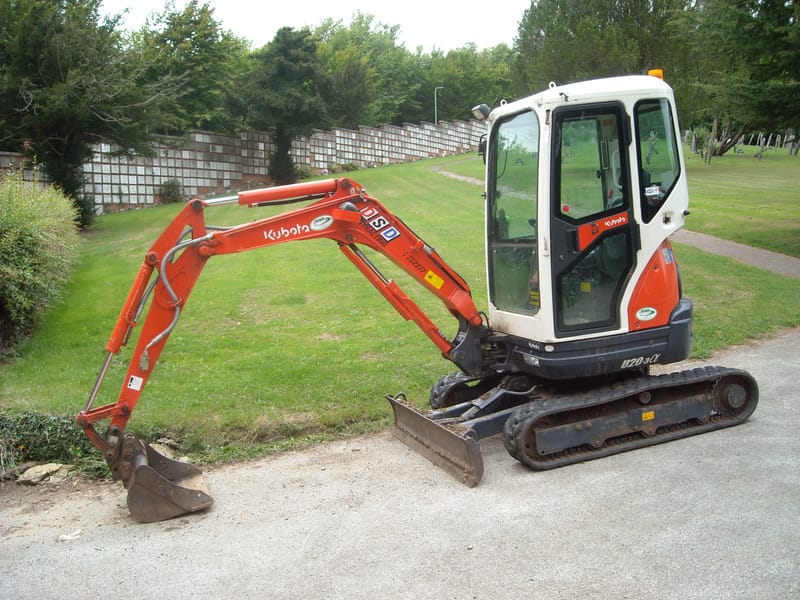
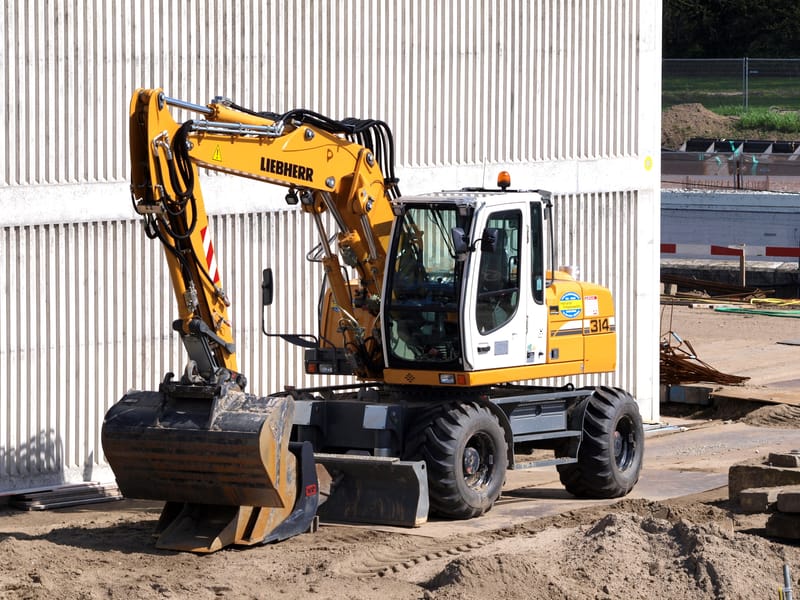
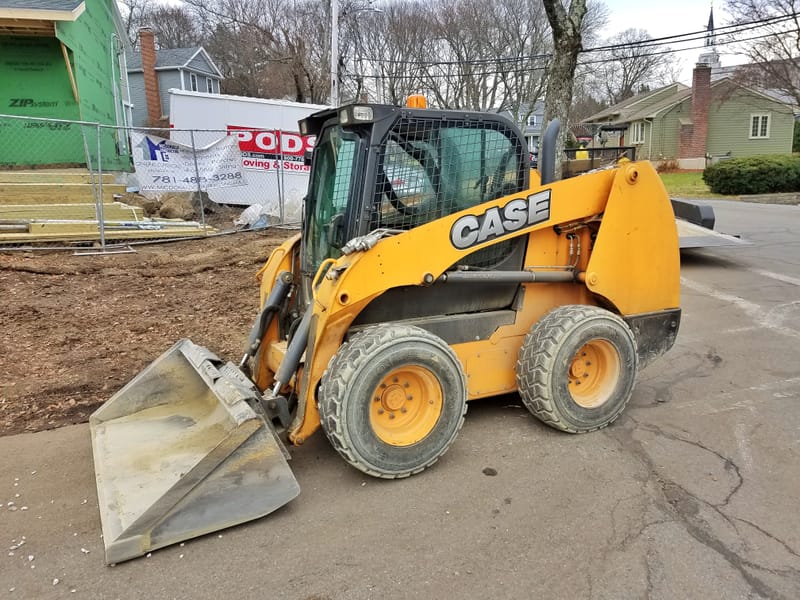
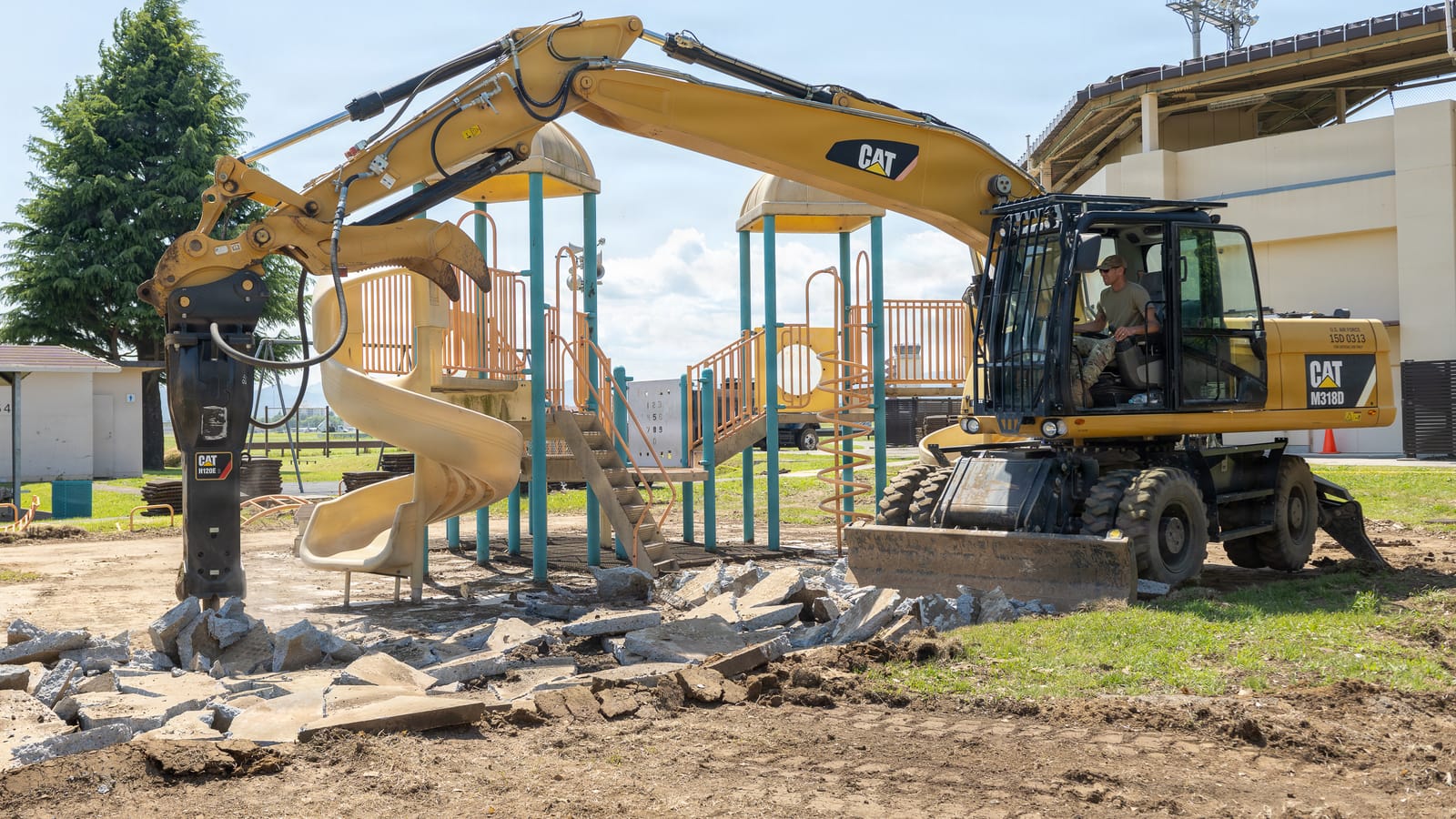
The hydraulic breaker is an attachment fitted to the excavator arm that works from its auxiliary hydraulic system, and its operation is governed by a dedicated valve that the operator controls with his foot. Demolition crews use it for work too large for a hand-held breaker, or where blasting is not possible for reasons of safety or the environment. It is known in English by several names, and the first hydraulic hammer is attributed to a German company in 1967. It usually has no separate meter, so its life is counted by the hours of the carrier that drives it and by its own working-hours record if there is one. One practical rule is that the chisel must not be left pressed against rock when stopping or transporting. In the Saudi market “daqqaq”, “naqqar” and “jack hammer” are said, and “bokalin daqqaq” is said for the excavator on which this attachment is fitted.
Uses
- Breaking concrete, pavements and old foundations in demolition.
- Breaking rock and opening trenches in rocky ground.
- Selective demolition of buildings where blasting cannot be used.
- Breaking oversize blocks at crushers and quarries.
- Breaking up asphalt and paving in road repair work.
- Digging foundations and cutting concrete barriers.
- Opening openings in concrete walls and ceilings during alteration and restoration.
- Preparing rocky ground for the passage of services.
02Classes and sizes
The breaker is chosen according to the weight of the carrier, and the reference gives a table that pairs each weight class of excavator with the chisel diameter, the breaker weight, the oil flow, the operating pressure and the blow rate, starting with an excavator weighing less than two tonnes with a chisel of about forty millimetres, and ending with an excavator between forty and fifty-five tonnes with a chisel of about one hundred and seventy-five millimetres. The value that applies to each breaker is in its bulletin, and a breaker is not fitted to a carrier outside the range set for it.
| Class | Description | Typical carrier |
|---|---|---|
| Small | A smaller chisel, light weight and faster blows | Small excavators and skid-steer loaders. |
| Medium | A higher blow energy | Medium excavators and the backhoe. |
| Large | A wide chisel and large weight | Large excavators. |
| With a pointed chisel | Penetrates cohesive rock | Rock and quarries. |
| With a flat or blunt chisel | Breaks up concrete and surfaces | Demolition and road work. |
03Main components
- 01The outer housing and the protective shell.
- 02The moving piston that strikes the chisel.
- 03The chisel or breaking tool and its carrying bushing.
- 04The chisel retaining pins.
- 05The oil distribution valve and the blow control system.
- 06The gas accumulator and the nitrogen system for storing energy.
- 07The pressure and return hoses and their quick connections.
- 08The mounting bracket or the quick coupler on the arm.
- 09The automatic lubrication system or the manual grease points.
04Periodic maintenance schedule
The breaker is an attachment that usually has no meter, so the ladder is built on the working hours of the carrier or the breaker’s hours record if there is one. The manual for the specific model sets the intervals and tasks that apply; the intervals are shorter in heavy dust and hard rock.
| Interval | Typical tasks |
|---|---|
| Every 10 hours / daily |
|
| Every 50 hours / weekly |
|
| Every 250 hours |
|
| Every 500 hours |
|
| Every 1000 hours |
|
| Every 2000 hours |
|
The manufacturer’s manual governs. The actual intervals and tasks are set by the operation and maintenance manual for your machine’s model, and they are shortened in heavy dust, high heat and continuous operation. This table shows the general order only and does not replace the manual.
05Daily pre-start checklist
14 items
06Common operating mistakes that cause breakdowns
- Striking in the void with no material under the chisel, so the energy is transferred to the breaker and the carrier.
- Using the chisel as a lever to turn or move rocks.
- Striking at an angle instead of keeping the chisel perpendicular to the surface.
- Continuing to strike at one point without changing it when there is no response.
- Fitting a breaker heavier or lighter than the range suited to the carrier’s weight.
- Neglecting greasing, so the chisel and its bushing wear quickly.
- Running it with very hot or dirty hydraulic oil.
- Lowering the chisel into water or mud and running the breaker.
07Regulatory requirements
Regulatory procedures to check when owning or operating this machine in the Kingdom.
08What to weigh when renting or buying
- Matching the breaker weight, oil flow and pressure to the carrier’s specification.
- The chisel type suited to the material: pointed for rock and flat for concrete.
- The condition of the chisel, the bushing and the retaining pins.
- The soundness of the piston and its surface, with no deep scratches or oil leaks.
- The presence of the right coupler for your carrier’s arm and the auxiliary hydraulic lines.
- The accumulator gas pressure and the record of the last overhaul.
- Whether the breaker includes the chisel and the connecting hoses.
- When renting: the operating hours charged, and who bears the chisel, the greasing and damage caused by misuse.
Settle these factors first, then enter your own numbers in the Own vs rent calculator or the Equipment operating cost per hour calculator.
09Frequently asked questions
In the Saudi market it is called “daqqaq”. The English name is in the name field above, and in English the attachment has other common names among workers.
The daqqaq is a hydraulic hammer fitted to an excavator, and it handles work too large for a hand-held breaker. The jack hammer was originally a hand-held hammer, and the two names are sometimes used for one thing in the market, with the meaning understood from the context of the carrier.
On the excavator, the skid-steer loader and the backhoe, according to the coupler and flow specifications.
By the carrier’s weight, oil flow and pressure according to the manufacturer’s table, since each weight class has a range of chisel diameter and breaker weight.
Pointed for cohesive rock, and flat or blunt for concrete and other surfaces, and the choice follows the manufacturer’s bulletin.
Because the breaker continuously consumes a high flow and pressure, so if cooling weakens or the oil becomes dirty its temperature rises and the seals are damaged.
It is sold as a piece and rented by agreement by the hour or the day, and its work is recorded linked to its carrier in the asset record.