- Names used in Saudi Arabia
- Diesel generatorGenerator setGensetGeneratorDiesel gensetMawlid kahraba (Saudi term)Matoor kahraba
- Formal name
- مولد كهربائي يعمل بالديزل
- English name
- Diesel generator set
- Family
- Heavy equipment · Power & lighting
- Measured by
- Operating hours
01Definition and uses
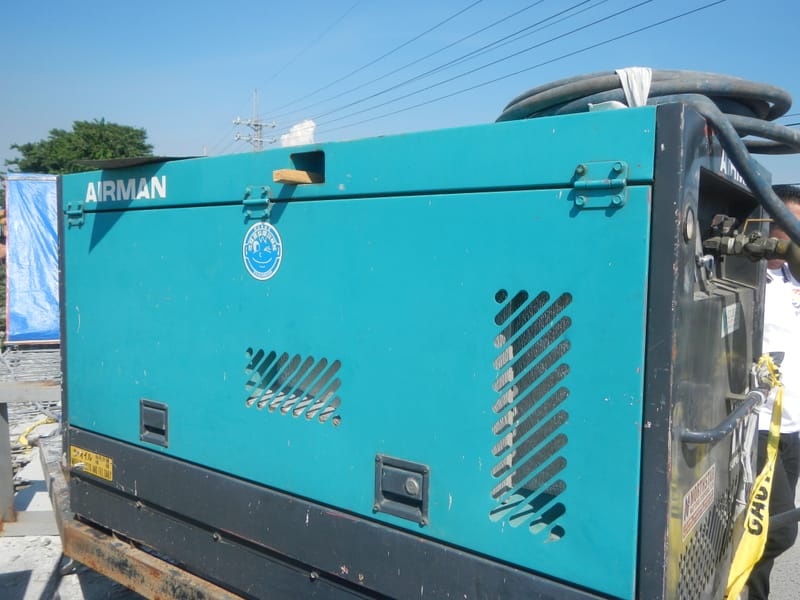
The generator set is an assembly of a diesel engine driving an alternator on a single base, with a control panel and a fuel tank, and it is often inside a sound-attenuating canopy or on a trailer. It supplies sites, camps and facilities with electricity where there is no grid or when it is cut, and its life is measured in operating hours.
Uses
- Main power supply for construction sites and camps away from the grid.
- Standby power for facilities, warehouses and hospitals during an outage.
- Running crushers, mixing plants and pumps on sites.
- Temporary events and occasions.
- Running lighting towers and electrical site equipment.
- Farms, rest houses and wells.
02Classes and sizes
The market classifies generators by apparent power in kilovolt-amperes (kVA) or by actual power in kilowatts (kW), which appears in the enquiries “10 kilo generator”, and by duty rating: standby for limited hours, prime for long running at a variable load, or continuous at a constant load; the single power figure of the same generator differs between these ratings, and the model’s sheet states each rating.
| Class | Description | Typical use |
|---|---|---|
| Small portable | Small units, mostly single-phase | Rest houses, small workshops and tools. |
| Medium silenced | Three-phase units in a sound-attenuating canopy | Site offices, camps and commercial facilities. |
| Large | High-power units in a container or a room | Large projects, factories and hospitals. |
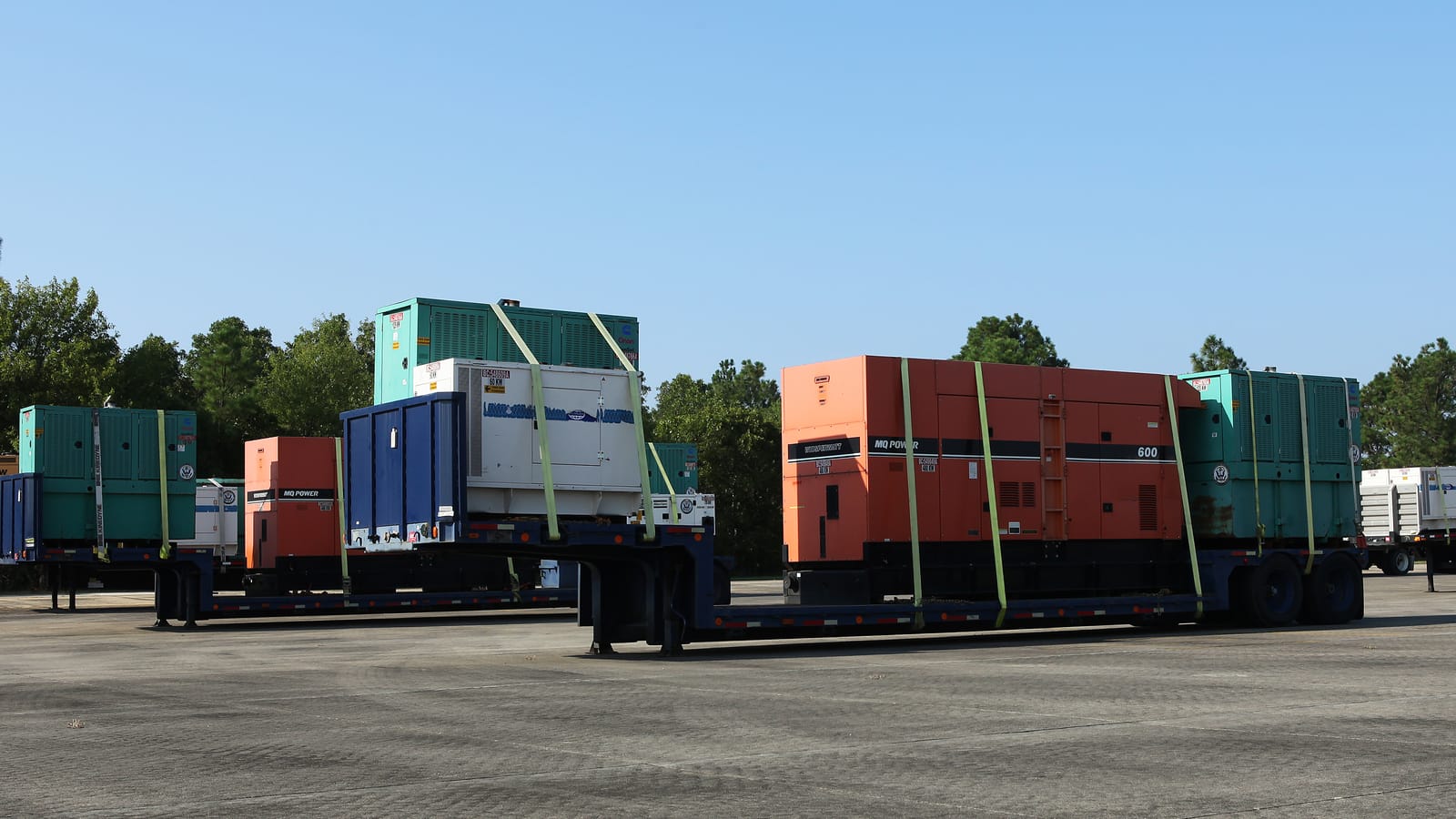
| Trailer-mounted | A medium unit on a wheeled trailer | Rental and moving between sites. |
| Paralleled | Several units working together through a synchronising panel | Large variable loads with redundancy. |
03Main components
- 01The diesel engine with its fuel, cooling and lubrication systems.
- 02The alternator and the voltage regulator.
- 03The control panel: measurements, protections, automatic start on grid failure.
- 04The output breaker and the automatic transfer switch if fitted.
- 05The main fuel tank, the external reserve tank and the water separator.
- 06The radiator, the fan and the coolant.
- 07The batteries and their charger, and the engine heater on some models.
- 08The sound-attenuating canopy and the exhaust silencer.
- 09The base, the earthing and the lifting points.
04Periodic maintenance schedule
The usual ladder; the intervals differ between a standby generator that runs little and a prime generator that runs daily, and the manual for the specific model sets the intervals and tasks that apply.
| Interval | Typical tasks |
|---|---|
| Every 10 hours / daily |
|
| Every 50 hours / weekly |
|
| Every 250 hours |
|
| Every 500 hours |
|
| Every 1000 hours |
|
| Every 2000 hours |
|
The manufacturer’s manual governs. The actual intervals and tasks are set by the operation and maintenance manual for your machine’s model, and they are shortened in heavy dust, high heat and continuous operation. This table shows the general order only and does not replace the manual.
05Daily pre-start checklist
14 items
06Common operating mistakes that cause breakdowns
- Long running at a very low load, which causes carbon build-up and oil slipping into the exhaust and shortens the engine’s life.
- Overloading, or starting large motors direct-on-line beyond the generator’s capacity.
- Filling with contaminated fuel or letting water collect in the tank, which damages the injectors and the fuel pump.
- Stopping the generator immediately after a high load with no cool-down period, or loading it as soon as it starts before warming up.
- Neglecting to test the standby generator periodically under load, so it fails when needed.
- Running it in an enclosed place or blocking the ventilation openings, so the temperature rises and exhaust accumulates.
- Bypassing or disabling the protections to keep running.
- Leaving the batteries without a charger or without inspection so that automatic start does not work.
07Regulatory requirements
Regulatory procedures to check when owning or operating this machine in the Kingdom.
08What to weigh when renting or buying
- Calculating the actual load in kilowatts and the apparent power with a margin for motor starting, and the duty rating, standby or prime.
- The acceptable noise level on site and the need for a sound-attenuating canopy.
- The fuel tank size and the running time between refills.
- Reading the hour meter and the maintenance record, and the oil analysis if available.
- A test run under load: voltage and frequency stability, exhaust colour, leaks, vibration.
- The condition of the alternator and its insulation, the batteries and the radiator.
- Availability of spare parts and engine filters for the brand in the area.
- When renting: who bears the fuel, filters and oil, how the hours are counted, and the response when there is a fault.
Settle these factors first, then enter your own numbers in the Own vs rent calculator or the Equipment operating cost per hour calculator.
09Frequently asked questions
By fuel: diesel, petrol and gas; by size: small portable, medium silenced and large; by duty rating: standby, prime and continuous; and by installation: fixed or on a trailer.
The kilowatt is the actual power that the loads consume, and the kilovolt-ampere is the apparent power by which the generator is rated, and the ratio between them is the power factor that the manufacturer specifies in the sheet.
Because the engine does not reach its working temperature, so carbon builds up, oil slips into the exhaust and the engine is damaged over time; it is preferable for the generator to run at the load the manufacturer specifies or to be tested with a dummy load.
Inspection is daily, and oil and filter changes come at service points usually between 250 and 500 hours depending on the model and the fuel quality, with the major service points every 1000 and 2000 hours, and the intervals that apply set in the model’s manual.
The most common causes: weak batteries or a faulty charger, the control switch on manual, a pending fault in the panel that was not cleared, or the fuel being low or containing water.
Consumption depends on the generator’s power, the actual load percentage and the engine condition, and the reference figure is in the manufacturer’s sheet at the different load percentages, and it is measured in practice by recording refills against hours.
The standby is rated for limited hours during a grid outage, and the prime is rated for long running at a variable load, and the same generator carries a different power for each rating in its sheet.
Yes; the canopy silences the sound but the engine needs a large air flow for cooling, combustion and exhaust discharge, and blocking the openings raises the temperature and stops the generator.