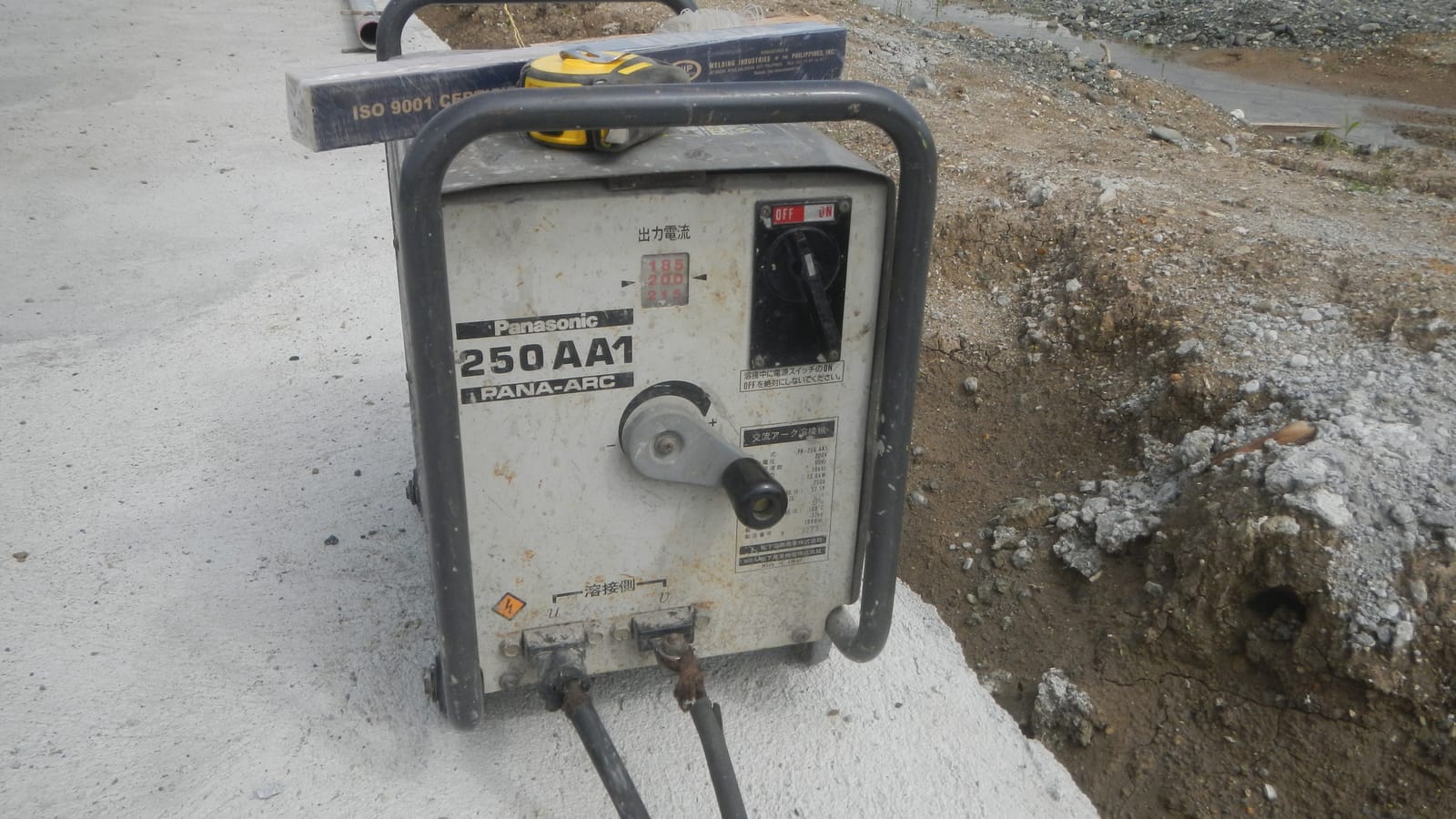
- Names used in Saudi Arabia
- Welding machineEngine-driven welderWelding generatorWelder setMakina liham (Saudi term)Makina lihaam
- Formal name
- مولد لحام
- English name
- Welding machine (engine-driven welder)
- Family
- Heavy equipment · Site equipment
- Measured by
- Operating hours
01Definition and uses
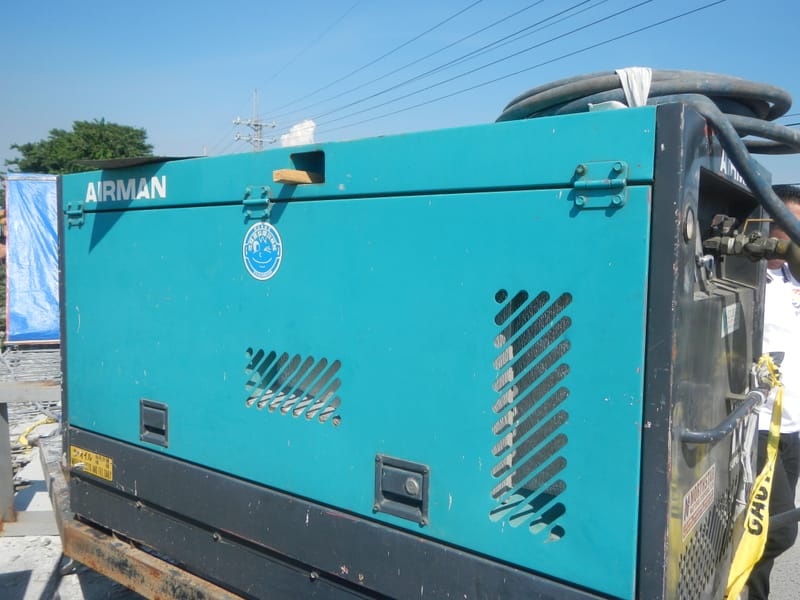
The welding machine is a device that supplies the electric current needed to strike an electric arc between the electrode and the metal, which melts the metal at the weld point and joins the two pieces. All arc welding processes use a welding power source to produce the arc and maintain it, and the best-known power sources are of two types: constant current and constant voltage. What is meant here is the engine-driven welding machine, a generator run by a diesel or petrol engine to produce welding current on sites with no electricity, and it often provides an alternating current outlet to run workshop tools. It is measured by the operating hours of the engine. In the Saudi market “makina liham” and “makina lihaam” are said, and what is meant here is the mobile site machine, not the fixed workshop machine.
Uses
- Welding steel structures, pipes and pipelines on project sites.
- Repairing heavy equipment on site: welding buckets, arms, edges and platforms.
- Fences, gates and metal structures in open areas.
- Arc cutting and shaping plates in construction work.
- Emergency maintenance work in places from which the equipment cannot be moved to the workshop.
- Serving mobile workshops and field maintenance vehicles.
02Classes and sizes
Welding machines are classified by the maximum current they give, the engine type, the processes they support and whether they are mobile on a trailer, and these are manufacturer data for each model and are marked on the plate. Shielded metal arc welding with a coated electrode is the best-known welding process in open places and in outdoor construction and repair, because processes that use shielding gases are not suitable in wind.
| Class | Description | Typical use |
|---|---|---|
| Small portable | A light machine with a small engine that is carried or mounted on a cart | Light work and quick maintenance. |
| Medium on a trailer | A machine with a diesel engine fixed on a small trailer | Construction sites, pipes and structures. |
| Heavy multi-outlet | Supports more than one welder at the same time | Large projects and construction workshops. |
| Generator with welder | An electricity generator that also provides welding current | Sites that need general electricity and welding. |
03Main components
- 01The engine and its cooling, lubrication and fuel systems.
- 02The generator connected to the engine, which produces the welding current.
- 03The control panel and the switch that selects the current and the process type.
- 04The electrode cable and the insulated electrode holder.
- 05The earth return cable and its clamp.
- 06The air filter, the fuel filter and the oil filter.
- 07The fuel tank, its gauge and the auxiliary alternating current outlet.
- 08The battery and the water or air cooler.
- 09The protective frame and the carrying cart or trailer.
- 10Personal protective equipment for the welder: a helmet with a filter, gloves and resistant clothing.
04Periodic maintenance schedule
The following ladder is the usual one, and the manual for the specific model sets the intervals and tasks that apply; the intervals are shorter in heavy dust, heat and work at near-full load.
| Interval | Typical tasks |
|---|---|
| Every 10 hours / daily |
|
| Every 50 hours / weekly |
|
| Every 250 hours |
|
| Every 500 hours |
|
| Every 1000 hours |
|
| Every 2000 hours |
|
The manufacturer’s manual governs. The actual intervals and tasks are set by the operation and maintenance manual for your machine’s model, and they are shortened in heavy dust, high heat and continuous operation. This table shows the general order only and does not replace the manual.
05Daily pre-start checklist
12 items
The arc welding and cutting regulation requires the electrode holder to be designed for welding and fully insulated, and the welding cables to be insulated and flexible and able to carry the maximum current of the work, taking the duty cycle into account.
06Common operating mistakes that cause breakdowns
- Running an engine-driven machine inside an enclosed space, so exhaust gases accumulate.
- Using cables that need repair or whose bare conductors have appeared, which the welding regulation prohibits.
- Earthing on a gas pipe, a flammable liquid pipe or an electrical conduit.
- Welding on equipment with the battery and the electronic processor connected, so welding current damages the electronics.
- Running the machine at continuous maximum load above the rated duty cycle, so the generators and cables overheat.
- Refuelling while the engine is running or hot.
- Neglecting protection from ultraviolet rays and fumes, so eye burns and respiratory damage occur.
- Welding near fuel tanks or flammable materials without inspection, ventilation and an extinguisher.
07Regulatory requirements
Regulatory procedures to check when owning or operating this machine in the Kingdom.
08What to weigh when renting or buying
- The maximum current and duty cycle against the thickness of the plates and the processes you will carry out.
- The engine type and how easily its spare parts and maintenance are available at the dealer.
- Whether you need an auxiliary alternating current outlet to run tools alongside welding.
- The condition of the cables, holder, clamp and outlet, since they are what wears most.
- The engine hours with the maintenance record and a load test.
- The noise level, the size of the machine and its weight and whether a crane is not needed to move it.
- When renting: whether the cables, holder and accessories are delivered, and who bears the fuel, damage and transport.
Settle these factors first, then enter your own numbers in the Own vs rent calculator or the Equipment operating cost per hour calculator.
09Frequently asked questions
A device that feeds the electric arc with current to melt the metal at the weld point, and the site machine is run by an engine so it works without mains electricity.
Constant current for manual welding processes such as shielded metal arc welding and tungsten welding, and constant voltage for automatic welding processes such as wire welding.
The maximum current, the duty cycle, the engine type, the cables and the holder, and who bears the fuel and damage, as in the rental section above.
By isolating the equipment from its battery and electronic control units before welding, fixing the return clamp near the weld location, and following the manufacturer’s manual at the warning points.
Electric shock, burns, eye damage from the strong light, and inhaling fumes and gases, so a helmet and ventilation or local extraction are needed.
It can if its model provides an auxiliary alternating current outlet, and its capacity is marked on its plate, so the outlet is not loaded above its capacity.
The engine, the fuel, the cables, the holder, the earthing, the ventilation, the extinguisher and the personal protection, as in the list above.