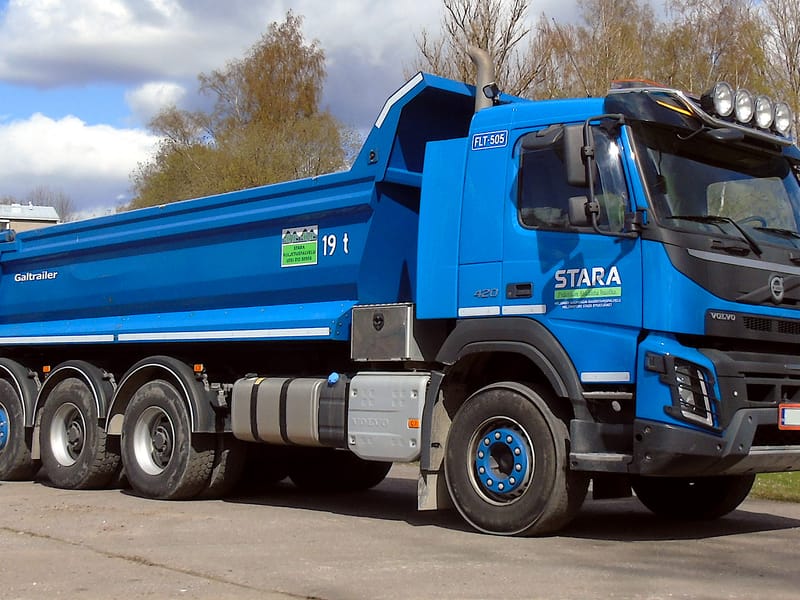
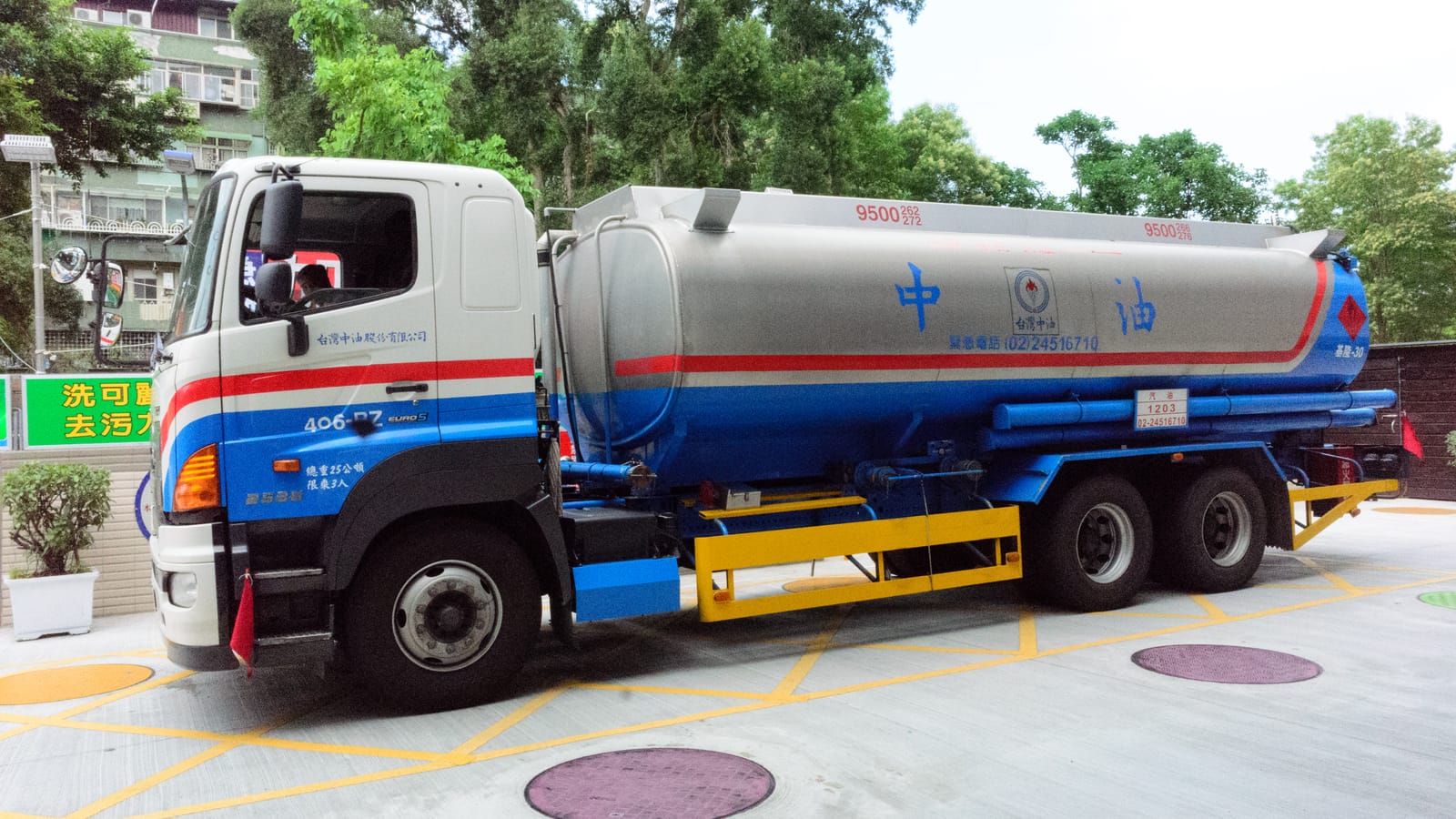
- Names used in Saudi Arabia
- Diesel tankerFuel tankerFuel bowserDiesel bowserTanki diesel (Saudi term)Tankar dieselWayt dieselSihrij diesel
- Formal name
- صهريج وقود
- English name
- Fuel tanker (diesel bowser)
- Family
- Trucks & trailers · Tankers
- Measured by
- Kilometres
01Definition and uses
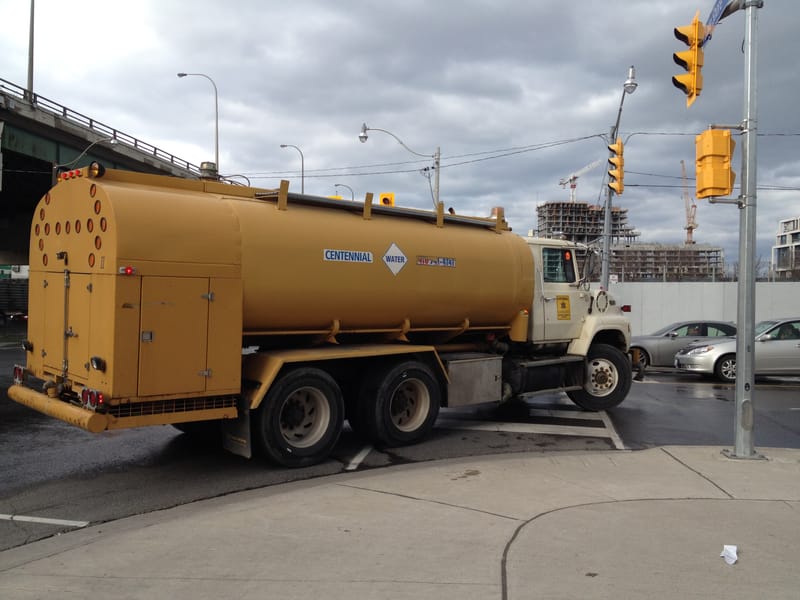
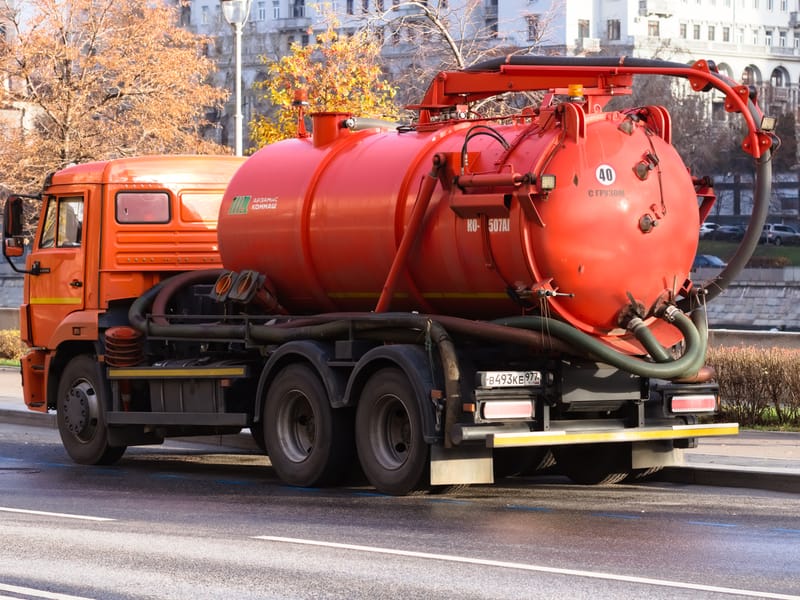
The diesel tanker is a truck or trailer carrying a horizontal cylindrical tank to transport liquid fuel, and large tanker trucks carry gasoline and diesel to filling stations, and some are used to refuel aircraft and equipment. Some tankers are built with several internal compartments that allow more than one grade to be carried in a single trip. On project sites they are used to supply heavy equipment with diesel at its place of work instead of its travelling to a station. The chassis life is measured in kilometres, with operating hours for the discharge pump and a filling meter. In the Saudi market it is called “sihrij diesel”, “tanki diesel”, “tankar diesel” and “wayt diesel”, and it differs from the “water wayt”, which carries water, and from the suction tanker.
Uses
- Carrying diesel and gasoline to filling stations.
- Carrying diesel from depots and stations to projects, factories and farms.
- Supplying heavy equipment and generators with fuel at their sites.
- Filling fixed tanks at sites and camps.
- Serving transport fleets and buses in their yards.
- Refuelling aircraft at airports with specialised tankers.
- Providing a temporary fuel reserve for projects in remote places.
02Classes and sizes
Tankers are described by capacity, and the reference states that large ones usually fall between 21,000 and 44,000 litres, and that smaller ones of less than 11,000 litres serve light loads within the local community. The actual capacity and declared weight of each tanker are in its registration card.
| Class | Description | Typical use |
|---|---|---|
| Small on a light chassis | A tank of limited capacity with a pump and a meter | Supplying equipment at small sites and farms. |
| Medium on a medium chassis | The most widespread in site service | Supply between the depot and project sites. |
| Large on a heavy chassis | A tank with three axles or more and several compartments | Transport between stations, depots and large projects. |
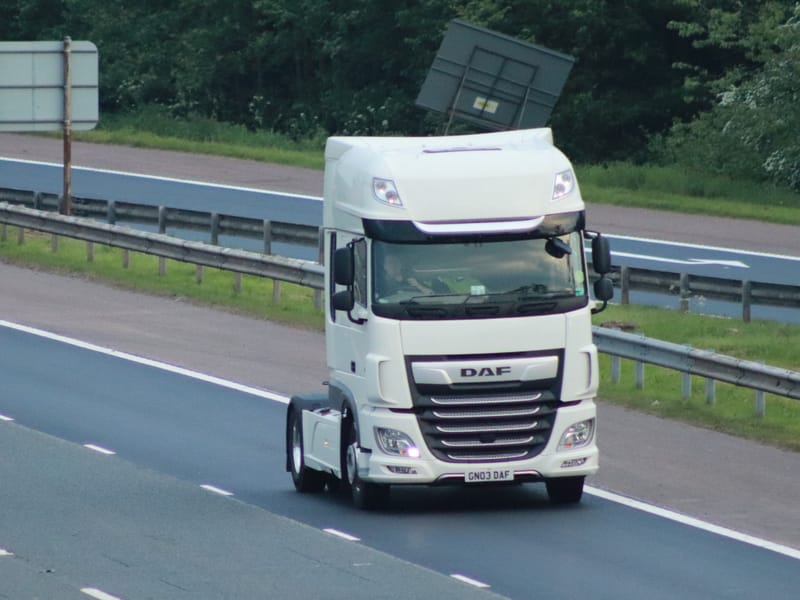
| Tanker semi-trailer | A tractor head and a tanker semi-trailer | Transport between cities and large quantities. |
03Main components
- 01The horizontal cylindrical tank in a material suited to the load, and common materials are aluminium, carbon steel and stainless steel.
- 02The internal baffles and tank compartments to reduce the effect of liquid movement on the truck’s balance.
- 03The inspection openings, their covers and the vent valves.
- 04The bottom discharge valves and their quick-closing levers.
- 05The pump, the power take-off, the meter and the fuel strainer.
- 06The hoses, the nozzle, the discharge connections and the earthing cable.
- 07The chassis, the engine, the air brakes and the tyres.
- 08The fire extinguishers and the spill containment equipment.
- 09The warning plates, the lighting and the reflectors.
04Periodic maintenance schedule
The diesel tanker is a road vehicle, so its schedule is built on kilometres and time with the pump operating hours. The following ladder is the usual one for commercial trucks, and the manual for the specific model sets the intervals and tasks that apply; the intervals are shorter on dusty roads and in heavy service.
| Interval | Typical tasks |
|---|---|
| Daily before moving |
|
| Weekly |
|
| Every 10,000 km or per the manual |
|
| Every 20,000 km |
|
| Every 40,000 km |
|
| Every 80,000 km or annually |
|
The manufacturer’s manual governs. The actual intervals and tasks are set by the operation and maintenance manual for your machine’s model, and they are shortened in heavy dust, high heat and continuous operation. This table shows the general order only and does not replace the manual.
05Daily pre-start checklist
12 items
The general reference for commercial vehicles requires the driver to make sure before driving of the soundness of the brakes, the steering, the lighting, the reflectors, the tyres, the horn, the wipers, the mirrors, the coupling devices and the emergency equipment.
06Common operating mistakes that cause breakdowns
- Driving a partly filled tanker, so the liquid moves inside the tank and affects balance, a known cause of tanker rollovers in bends and sudden braking.
- Sharp braking and steering because the tanker’s centre of gravity is high.
- Filling or discharging without earthing the tanker, so static electricity builds up near the fuel vapour.
- Smoking or using a spark source or flame near filling and discharge.
- Leaving the loaded tanker unattended on a public road, since the general reference requires the driver to stay with a vehicle loaded with hazardous materials on the road.
- Mixing grades in the compartments or filling a compartment with an unintended fuel, which ruins equipment engines.
- Laying out the hose and leaving it on the ground to be run over by vehicles, so it cracks and leaks.
- Neglecting to drain the water from the air tanks, so the brake valves are damaged.
07Regulatory requirements
Regulatory procedures to check when owning or operating this machine in the Kingdom.
08What to weigh when renting or buying
- The tank capacity and declared weight against your sites, your tanks and the size of your filling.
- The tank material and its condition from the inside: rust, corrosion, welds and baffles.
- The number of compartments and whether one grade or more can be carried.
- The condition of the pump and the meter, its calibration and the calibration certificate.
- The condition of the hoses, the nozzle, the valves, the earthing connections and the emergency equipment.
- The brakes, tyres and suspension and the meter reading with the maintenance record.
- The suitability of the tanker for the type of fuel carried, so a tanker that previously carried another material is not used without cleaning.
- When renting: whether the tanker comes with the driver, and who bears the insurance, the fuel carried and responsibility for leaks.
Settle these factors first, then enter your own numbers in the Own vs rent calculator or the Equipment operating cost per hour calculator.
09Frequently asked questions
A truck or trailer with a horizontal cylindrical tank to carry liquid fuel and deliver it to stations and sites.
They are names in use in the Saudi market for the tanker truck, and what is carried gives its name: the water wayt for water, and the diesel tanker for fuel.
By load: fuel, water, sewage, gas, food and chemicals; by build: with or without compartments, in aluminium, carbon steel or stainless steel, and on a chassis or a trailer.
The capacity, the declared weight, the pump, the meter and its calibration certificate, the condition of the hoses, the earthing and the emergency equipment, and who bears the insurance and leaks, as in the rental section above.
The internal inspection of the tank and baffles, the maintenance and kilometre record, the condition of the pump and the meter, and the registration card and periodic inspection documents.
Because of their high centre of gravity and the movement of the liquid inside the tank when it is partly filled, and the danger rises with sharp braking and bends.
By earthing before filling and discharge, preventing spark sources, inspecting the hoses and valves, training the driver for emergencies, and not leaving the vehicle without an attendant on the road.