- Names used in Saudi Arabia
- Concrete mixerConcrete mixer truckTransit mixerReady-mix truckKhallata (Saudi term)Khallatat khirsanaTareela khallat
- Formal name
- شاحنة خلط الخرسانة
- English name
- Concrete truck mixer
- Family
- Heavy equipment · Concrete
- Measured by
- Hours and kilometres
01Definition and uses
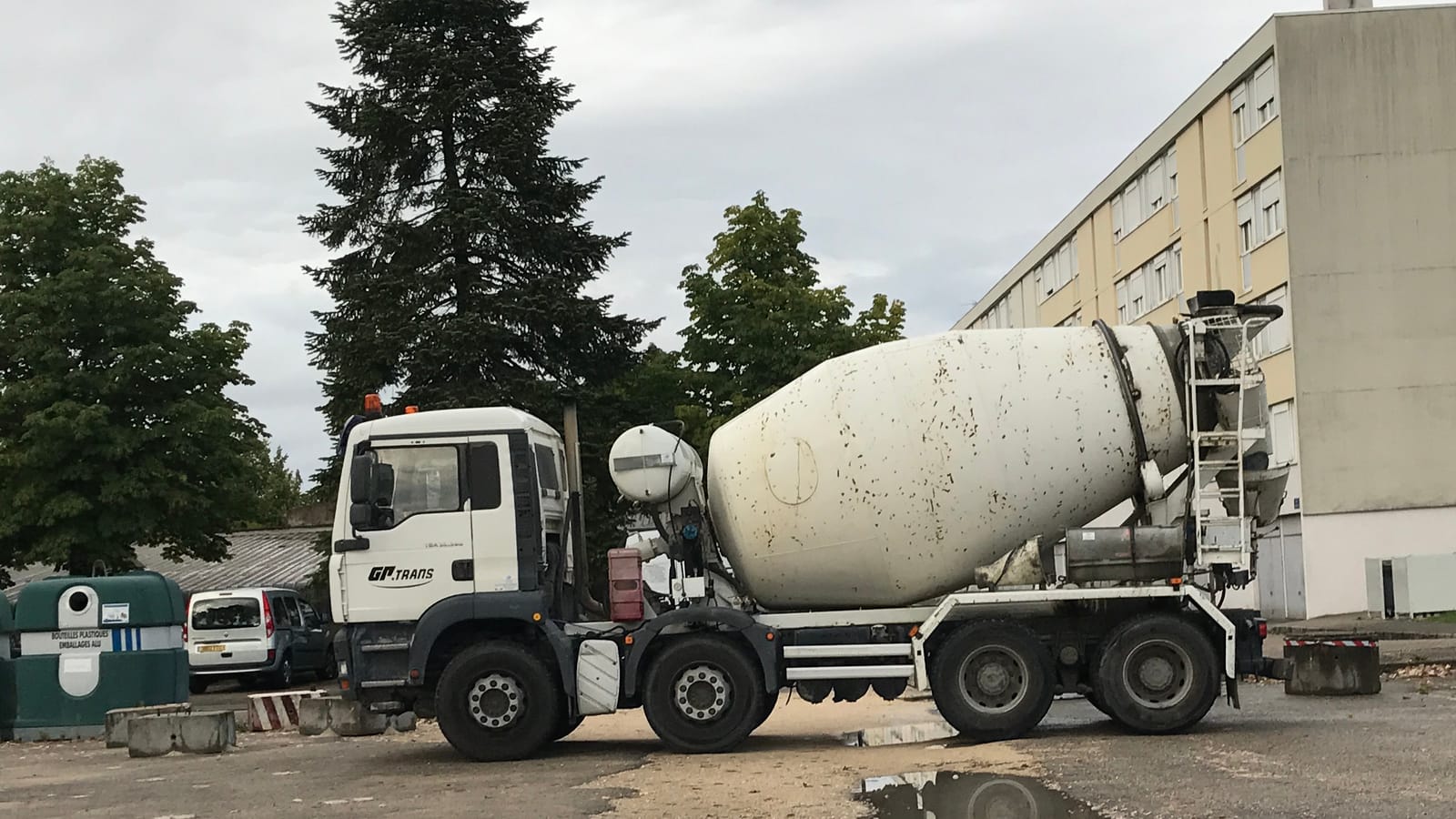
The concrete mixer is a device that blends cement, aggregate and water to make concrete, and its best-known form is a truck with a rotating drum on the chassis that carries the concrete from the plant to the site and keeps it fluid by continuous agitation until discharge. It is a road vehicle measured in kilometres, with rotation hours for the mixing drum and the hydraulic pump. In the Saudi market the words “khallata khirsana” cover three different things: the truck, the small mobile mixer on site, and the fixed central plant mixer, and this page deals mainly with the truck.
Uses
- Carrying ready-mixed concrete from the plant to the pour sites.
- Feeding concrete pumps and conveyor belts in multi-storey buildings.
- Discharging concrete down the chutes directly into formwork and foundations.
- Pouring floors, roads, bridges and major structures.
- Discharging into crane-hung buckets for high work.
- Serving projects far from the plant within the limits of setting time.
- Small-quantity pours with the mobile mixer and the volumetric mixer.
02Classes and sizes
The truck is defined by the capacity of its drum and by its number of axles, and the reference states that the most common capacity is about seven point six cubic metres. Axles range between two and six, and the most common is four to six according to the load and the local weight regulations.
| Class | Description | Typical use |
|---|---|---|
| Rear-discharge mixer truck | Needs a driver and a helper to guide the chute | General work. |
| Front-discharge mixer truck | The chute is controlled from inside the cab | Tight sites and a driver working alone. |
| Trailer-mounted mixer | The drum is on a semi-trailer | Where regulations limit axle weight. |
| Mobile site mixer | A small drum with an electric or petrol motor, towed or carried | Small pours on site. |
| Volumetric mixer | Carries the components and water and mixes on site in the quantity required | Scattered quantities and small successive pours. |
| Central plant mixer | A fixed twin-shaft or drum mixer | Producing ready-mixed concrete in large quantities. |
03Main components
- 01The rotating drum, traditionally of steel and in some newer models of fibreglass to reduce weight.
- 02The internal spiral blade that agitates the concrete and discharges it according to the direction of rotation.
- 03The hydraulic pump, its motor and the drum motor or gearbox.
- 04The slewing ring, the drum supports and their carrying rollers.
- 05The chute, its extensions and its rear or front position.
- 06The water tank and the spray and washing system.
- 07The chassis, the engine and the transmission.
- 08The additional lifting and trailing axles.
- 09The air brake system and the large tyres.
- 10The access ladder and the soundness of the rear legs and guards.
04Periodic maintenance schedule
The ladder is in kilometres for the chassis with operating hours for the drum and the hydraulics, and the manual for the specific model sets the intervals and tasks that apply; the intervals are shorter in heavy use and dust.
| Interval | Typical tasks |
|---|---|
| Daily before moving |
|
| Weekly |
|
| Every 10,000 km or per the manual |
|
| Every 20,000 km |
|
| Every 40,000 km |
|
| Every 80,000 km or annually |
|
The manufacturer’s manual governs. The actual intervals and tasks are set by the operation and maintenance manual for your machine’s model, and they are shortened in heavy dust, high heat and continuous operation. This table shows the general order only and does not replace the manual.
05Daily pre-start checklist
13 items
The general reference for commercial vehicles requires checking before driving the brakes, the steering, the lighting, the tyres, the horn, the wipers, the mirrors, the wheels and the emergency equipment.
06Common operating mistakes that cause breakdowns
- Leaving concrete in the drum until it hardens, so that the inside has to be broken out with hammers or the drum replaced.
- Adding water on site without control, which weakens the mix and changes its specification.
- Delaying discharge beyond the period set by the contractor after loading.
- Driving fast in bends with a loaded drum, which raises the centre of gravity and threatens a rollover.
- Exceeding the permitted load and axle weights.
- Rotating in the wrong direction during transport or discharge.
- Neglecting to wash the chute and the drum after every discharge.
- Turning in tight bends with the additional axles lowered, so that the tyres scrub sideways and wear.
07Regulatory requirements
Regulatory procedures to check when owning or operating this machine in the Kingdom.
08What to weigh when renting or buying
- The drum capacity and the number of axles against the permitted weights.
- The condition of the drum from the inside: wear of the blades and build-up of concrete.
- The slewing ring, the drum rollers, the motor and hydraulic leaks.
- The discharge type, rear or front, according to the sites and the operating team.
- The condition of the chassis, the engine and the transmission and the meter reading.
- The condition of the chute, its extensions and its locking mechanisms.
- The tyres and the additional axles and their operation.
- Matching the mixer type to the size of the pours: a truck for large quantities and a site mixer for small ones.
- When renting: whether it comes with the driver and operator, and who bears the washing, the fuel and the compensation for the drum if it is damaged.
Settle these factors first, then enter your own numbers in the Own vs rent calculator or the Equipment operating cost per hour calculator.
09Frequently asked questions
In the Saudi market it is called “khallata”. The English name is in the name field above, and it is specific to the mixing truck.
A mixer truck with rear or front discharge, a trailer-mounted mixer, a mobile site mixer, and the fixed central plant mixers.
The central mixer is fixed at the plant, produces the mix and then loads it into trucks, while the truck carries the concrete and keeps it moving to the site, and it may mix on the way.
A mobile mixer with a small drum run by an electric or petrol motor that makes concrete at the work site so no time is lost in transport before setting; it is common in some Middle Eastern countries.
Many contractors require it to be poured within ninety minutes of loading, and the actual specification is set in the project contract.
Workers may have to enter it with hammers, or the whole drum is ruined.
The drum blades and rollers, the slewing ring, the hydraulic pump and motor and their hoses.