- Names used in Saudi Arabia
- ForkliftForklift truckLift truckFork liftRafi‘a shawkiya (Saudi term)
- Formal name
- رافعة شوكية
- English name
- Forklift truck
- Family
- Heavy equipment · Material handling
- Measured by
- Operating hours
01Definition and uses
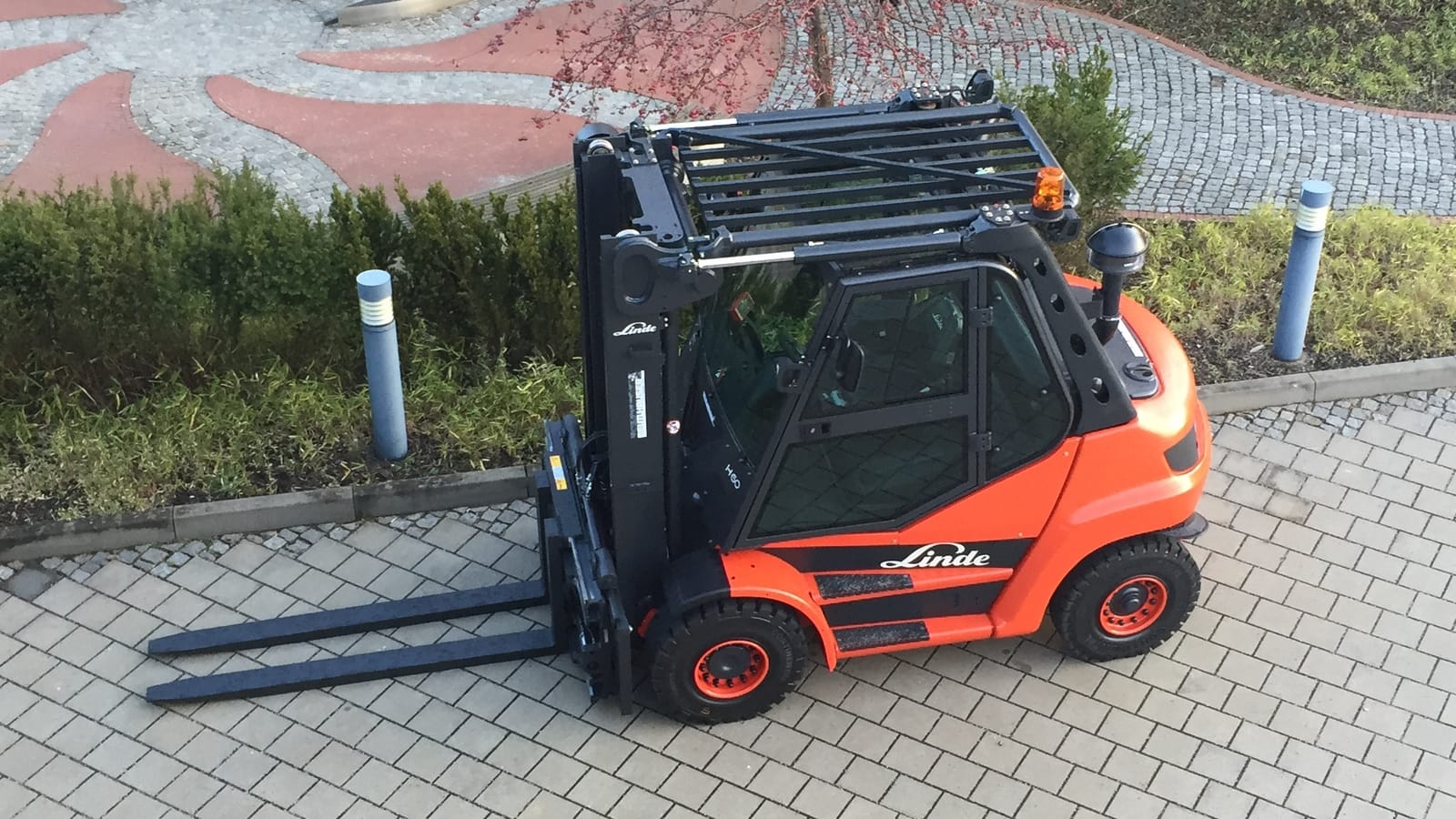
The forklift is a motorised handling machine that carries loads on two forks that slide under the pallet and lift it on a vertical mast, with the load balanced by a counterweight at the rear of the machine body. It runs on diesel, gas or battery, is used in warehouses, factories, ports and construction sites, and its life is measured in operating hours.
Uses
- Loading and unloading trucks and containers.
- Placing pallets on racks and bringing them down.
- Moving materials inside a warehouse or factory between production lines.
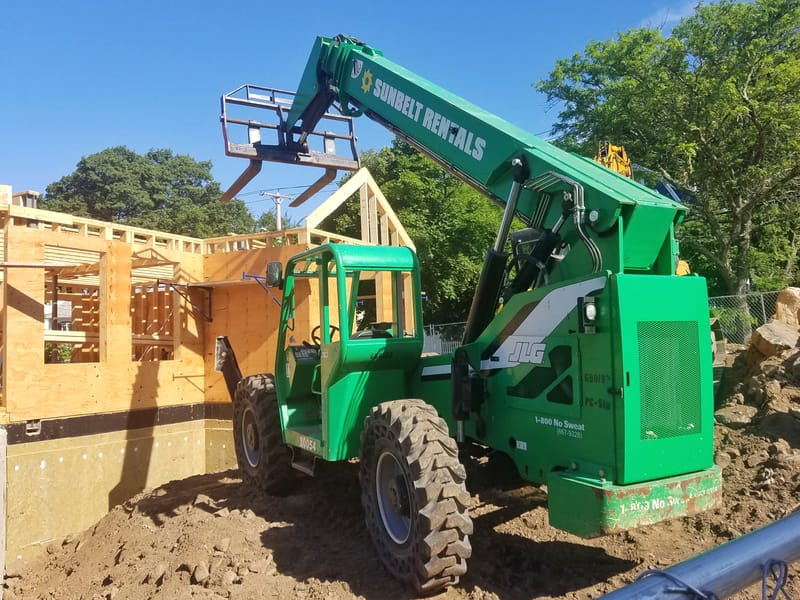
- Handling building materials on sites with the rough-terrain model.
- Lifting special loads with attachments such as the paper clamp, the clamp or the drum rotator.
- Working in enclosed spaces with the electric model, which produces no exhaust.
02Classes and sizes
The market classifies forklifts first by rated lifting capacity in tonnes at a defined load centre, which is what appears in the common enquiries “3 tonne”, “5 tonne” and “10 tonne”, and second by power type and tyres. The rated capacity falls as the load rises, as its centre moves further out, or when an attachment is fitted; the capacity that applies is the one on the capacity plate fixed to the machine.
The reference classification of the seven classes:
| Class | Description | Typical use |
|---|---|---|
| Class I | Electric rider truck with an electric motor, counterbalanced | Warehouses and enclosed factories |
| Class II | Electric trucks for narrow aisles: reach trucks, order pickers, turret trucks | High-density storage |
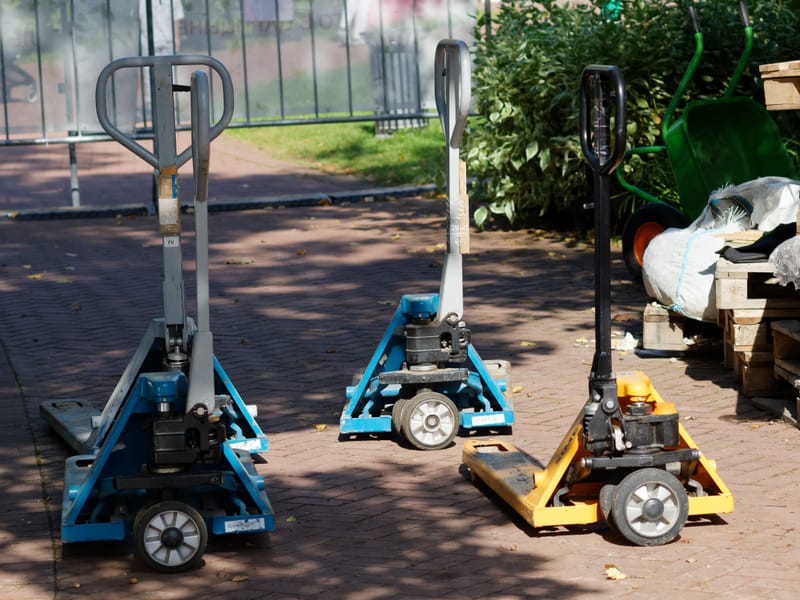
| Class III | Electric hand trucks or hand/rider trucks | Light handling and short distances |
| Class IV | Internal combustion engine with solid tyres | Smooth floors inside and outside facilities |
| Class V | Internal combustion engine with pneumatic tyres | Uneven outdoor ground and yards |
| Class VI | Electric or internal combustion tow tractors | Towing trailers inside the facility |
| Class VII | Rough-terrain trucks with a vertical mast, a variable-length boom, or truck-mounted | Construction sites and natural ground |
03Main components
- 01The mast with its channels and stages, the lifting chains, and the lift and tilt cylinders.
- 02The carriage, the two forks and the load backrest.
- 03The rear counterweight.
- 04The power unit: a diesel or gas engine, or a traction battery with its charger.
- 05The hydraulic system: pump, control valves, hoses.
- 06The transmission, the front drive axle and the rear steer axle.
- 07The tyres: solid, pneumatic or pressed rubber.
- 08The operator compartment, the overhead protective structure and the seat belt.
- 09Safety devices: horn, reverse alarm, lights, battery indicator or hour meter.
04Periodic maintenance schedule
The following ladder is the usual one, and the manual for the specific model sets the intervals and tasks that apply; the tasks of an electric forklift differ from those of a diesel forklift.
| Interval | Typical tasks |
|---|---|
| Every 10 hours / daily |
|
| Every 50 hours / weekly |
|
| Every 250 hours |
|
| Every 500 hours |
|
| Every 1000 hours |
|
| Every 2000 hours |
|
In addition, a full periodic inspection by a person competent in lifting equipment, which under some regimes recurs every twelve months for equipment that does not lift people.
The manufacturer’s manual governs. The actual intervals and tasks are set by the operation and maintenance manual for your machine’s model, and they are shortened in heavy dust, high heat and continuous operation. This table shows the general order only and does not replace the manual.
05Daily pre-start checklist
14 items
The forklift is inspected every day before it enters service, and after every shift if it runs round the clock, and any forklift that is not in a safe operating condition is taken out of service.
With the engine stopped:
With the engine running:
06Common operating mistakes that cause breakdowns
- Exceeding the rated capacity or lifting a load with an offset centre, which stresses the mast, the chains and the front axle and overturns the machine.
- Travelling with the load raised or turning on a slope with a high load.
- Using the tips of the forks to push loads or open containers, which bends the forks.
- Frequently charging the battery partially or letting it run completely flat, which shortens its life.
- Repeated sudden braking and changing direction while moving, which wears out the brakes and the transmission.
- Neglecting the cleanliness of the radiator on the diesel model in a dusty environment.
- Running an internal combustion forklift in an enclosed space with no ventilation.
- Ignoring stretch in the lifting chains and wear of the fork heel until the load collapses.
07Regulatory requirements
Regulatory procedures to check when owning or operating this machine in the Kingdom.
08What to weigh when renting or buying
- Matching the rated capacity to the heaviest expected load after deducting the effect of attachments and height.
- The power type according to the workplace: electric for enclosed and clean areas, diesel for yards and rough ground.
- The lift height required and the height of the machine with the mast lowered relative to warehouse doors and containers.
- The tyre type according to the floor.
- Inspecting the mast: vibration when lifting, chain stretch, cylinder leaks.
- The hour meter together with the maintenance record, and the battery condition and its number of charge cycles on the electric model.
- Availability of spare parts and maintenance in the city, since the enquiries show a clear demand for forklift maintenance in Riyadh, Jeddah and Dammam.
- When renting: specifying who bears the periodic inspection, the tyres and the battery, and how hours are counted.
Settle these factors first, then enter your own numbers in the Own vs rent calculator or the Equipment operating cost per hour calculator.
09Frequently asked questions
In the Saudi market the machine is called “rafi‘a shawkiya” and is also commonly pronounced “forklift”.
Seven reference classes, starting with counterbalanced electric trucks, narrow-aisle trucks and hand trucks, then internal combustion trucks on solid or pneumatic tyres, then tow tractors, and finally rough-terrain trucks.
The electric one has no exhaust and is almost noiseless and suits indoor use, and it needs a battery, charging and shift management. The diesel forklift is stronger outdoors, on rough ground and in continuous work, and it needs engine maintenance.
Training and authorisation are a general condition for operating handling equipment, and the Saudi regulatory requirement is named in the requirements section above, with its details still under verification.
The rated capacity is measured at a defined load centre and a defined height; any increase in load-centre distance, height or an attachment lowers it, so the figure that applies is the one on the capacity plate for that condition.
It depends on the battery capacity and the intensity of work, and it is usually managed with a full charge between shifts; repeated partial charging or running completely flat shortens the battery’s life.
Because the reference requires inspecting it before it enters service every day, and after every shift in continuous operation, and taking any unsafe forklift out of service.
A telehandler is a lift with a telescopic boom that extends the load forward and upward on rough ground, while a forklift lifts vertically on a mast and suits smooth floors and warehouses.