- Names used in Saudi Arabia
- Boom liftAerial work platformCherry pickerArticulated boom liftMan lift (Saudi term)Man lift electric
- Formal name
- منصة رفع أفراد بذراع
- English name
- Boom lift (mobile elevating work platform)
- Family
- Heavy equipment · Access platforms
- Measured by
- Operating hours
01Definition and uses
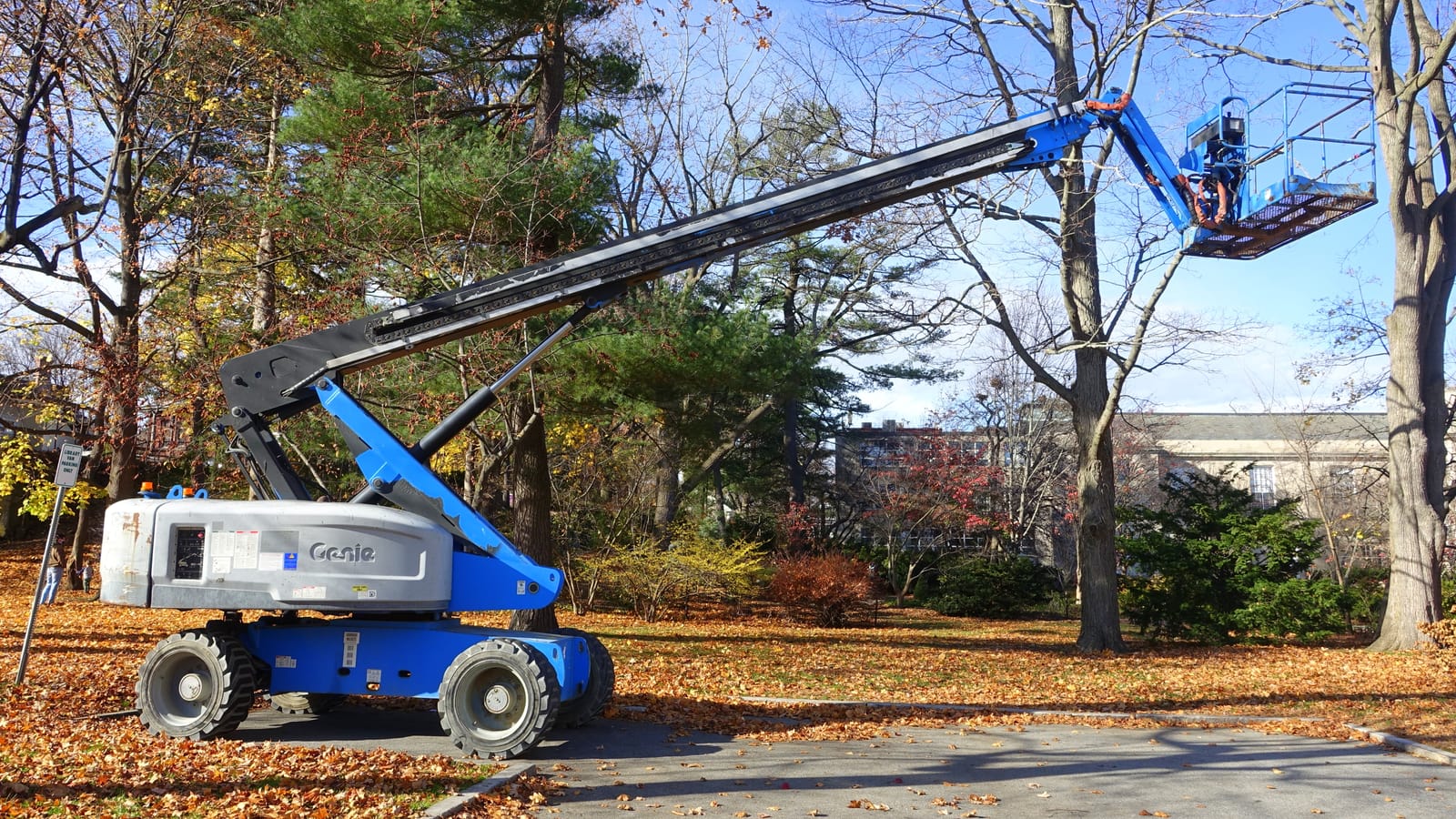
The boom lift is a platform that raises workers and their tools to high places that are hard to reach, on an articulated or telescopic boom that carries the work basket. It is for temporary work such as maintenance and construction, and it mostly carries a limited load of less than a tonne, which is what distinguishes it from cranes. It is measured in operating hours. In the system’s equipment type list there are two classes, “Man lift” and “Man lift electric”, the difference between them being the power source according to the class name.
Uses
- Maintenance of lighting, ducts, air conditioning and ceilings in buildings and warehouses.
- Façade, painting, cladding and glazing work on buildings.
- Maintenance of overhead electrical and telecom lines.
- Pruning trees and working on them from an independent platform.
- Structural erection and welding of metal structures at height.
- Signage and advertising work on façades.
- Maintenance in factories, stations, airports and ports.
02Classes and sizes
Platforms vary in height, horizontal reach and basket capacity, all in the model’s specification bulletin, and the articulated differs from the telescopic in the way the boom extends.
| Class | Description | Typical use |
|---|---|---|
| Articulated | A boom of articulated sections that allows reaching over and around obstacles | Crowded sites and difficult access. |
| Telescopic | A straight boom that extends in sliding sections | Higher and farther reach in a direct line. |
| Spider | Two legs that can be spread give a wide base | Tight sites and uneven ground. |
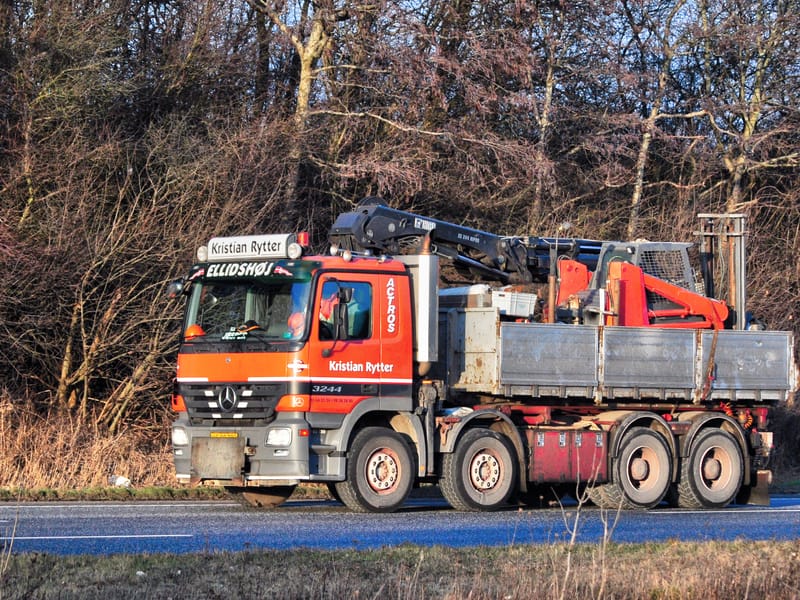
| Truck-mounted | A boom on a truck chassis with outriggers | Electrical lines and work moving between sites. |
| Electric | Runs on batteries, and the light units of it are growing in popularity | Interior work where a heavy hydraulic machine cannot enter. |
| Diesel rough terrain wheeled | Large tyres and ground clearance | Outdoor work and unpaved sites. |
03Main components
- 01The chassis, the wheels or tracks and the drive group.
- 02The rotating turret and its base.
- 03The main boom and its articulated or telescopic sections.
- 04The lift and extension cylinders and the hydraulic system.
- 05The work basket with its guardrail, its gate and the harness anchor point.
- 06The two control panels: the upper one in the basket and the lower one at the base.
- 07The emergency stop switch and the emergency lowering valve.
- 08The tilt and overload sensors.
- 09The two outriggers or the weight balancers.
- 10The engine or the batteries and the charger.
04Periodic maintenance schedule
The usual ladder, and the model manual sets the intervals and tasks that apply. Manufacturers recommend regular periodic maintenance schedules.
| Interval | Typical tasks |
|---|---|
| Every 10 hours / daily |
|
| Every 50 hours / weekly |
|
| Every 250 hours |
|
| Every 500 hours |
|
| Every 1000 hours |
|
| Every 2000 hours |
|
In addition there is a detailed periodic inspection at an interval set by the approved regulation, from which a certificate is issued.
The manufacturer’s manual governs. The actual intervals and tasks are set by the operation and maintenance manual for your machine’s model, and they are shortened in heavy dust, high heat and continuous operation. This table shows the general order only and does not replace the manual.
05Daily pre-start checklist
14 items
The general reference for lifting platforms requires the lifting controls to be tested every day before use to make sure they are sound.
06Common operating mistakes that cause breakdowns
- Standing on the edge of the basket, climbing on the guardrail, or using a ladder or board above the basket.
- Tying the harness to a nearby pole or structure instead of the basket point.
- Exceeding the rated load of the basket.
- Lifting on sloping or soft ground without support pads or wheel chocks.
- Moving to travel with the boom not held in its position or the outriggers not folded.
- Working near overhead power lines without a safety distance.
- Operating the lower controls while a worker is in the basket without his permission except in emergencies.
- Disabling a sensor or safety switch to speed up work.
07Regulatory requirements
Regulatory procedures to check when owning or operating this machine in the Kingdom.
08What to weigh when renting or buying
- The maximum working height and maximum horizontal reach against the work location.
- The basket capacity in people and tools, and its match to the task.
- Articulated or telescopic according to the obstructions on the site.
- Electric for enclosed places and diesel for outdoor sites.
- The validity of the periodic inspection certificate and the date of the last structural inspection.
- The soundness of the emergency switch and the emergency lowering valve.
- The condition of the batteries on the electric model and their ability to complete a shift.
- The chassis width and weight against the site gates, floors and their load-bearing capacity.
- When renting: who provides the trained operator and the safety harness, and who bears the transport and the fuel or charging.
Settle these factors first, then enter your own numbers in the Own vs rent calculator or the Equipment operating cost per hour calculator.
09Frequently asked questions
In the Saudi market it is called “man lift”. The English name is in the name field above.
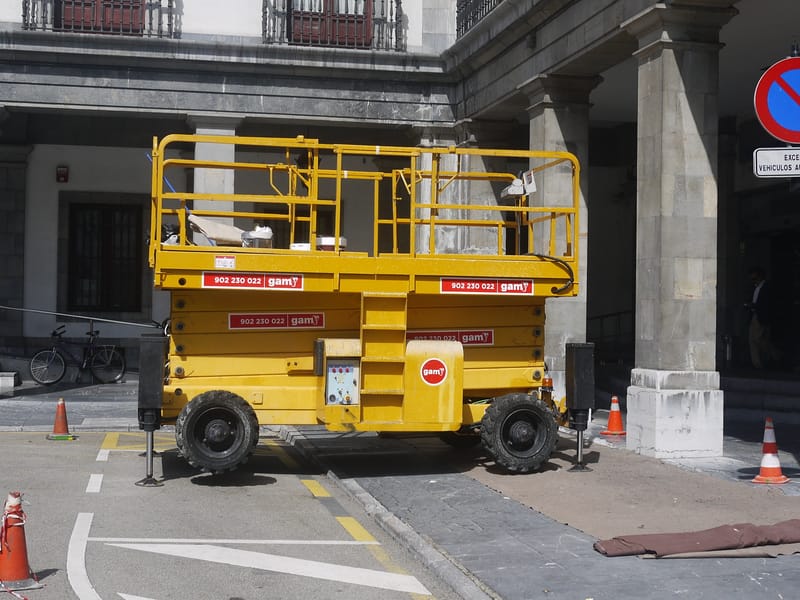
The scissor rises vertically with a crossed mechanism and may not move horizontally, while the man lift is a boom that extends in several directions and reaches locations far from its base.
The articulated has sections that bend so it reaches over and around obstacles, and the telescopic has a straight boom that extends in sliding sections to the maximum direct reach.
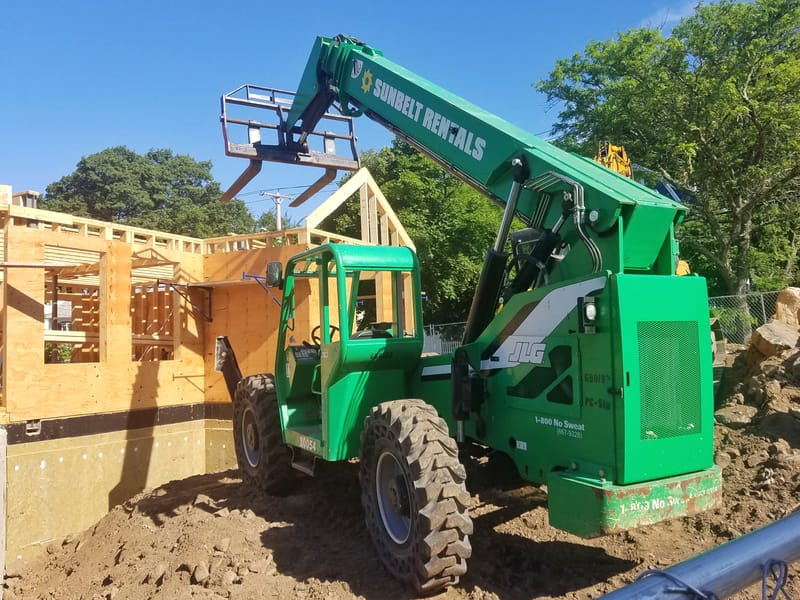
The platform is for lifting people and tools, and the telescopic handler is for moving loads such as wooden pallets.
The electric is more suitable for interior places where heavy hydraulic machines cannot enter, and the diesel is more suitable for outdoor sites and rough ground, with the choice made according to the work site.
Yes, the reference regulation requires a fall arrest or restraint system tied to the boom or the basket.
The controls, the emergency stop, the emergency lowering, the leaks, the tyres, the outriggers, the guardrail, the harness, the ground and the electricity, as in the list above.
Some countries require a licence and insurance for some types of platforms, and training is recommended for every operator.