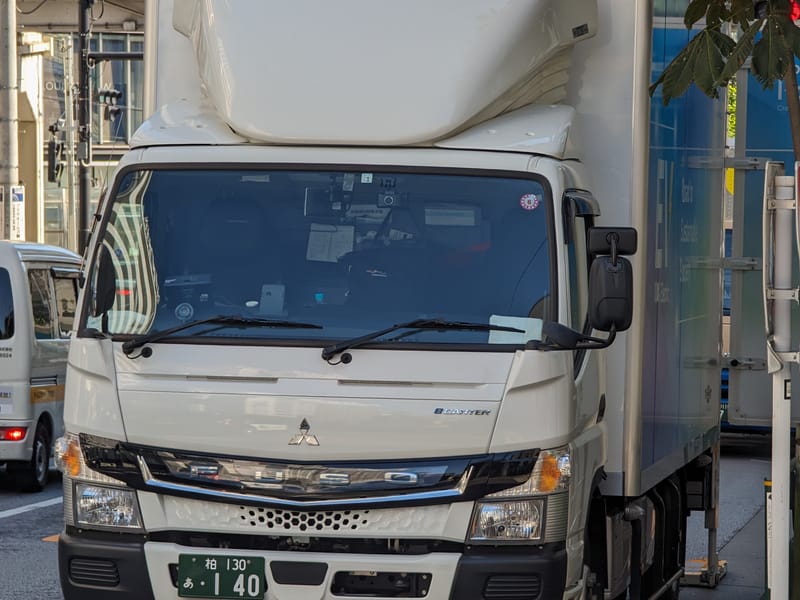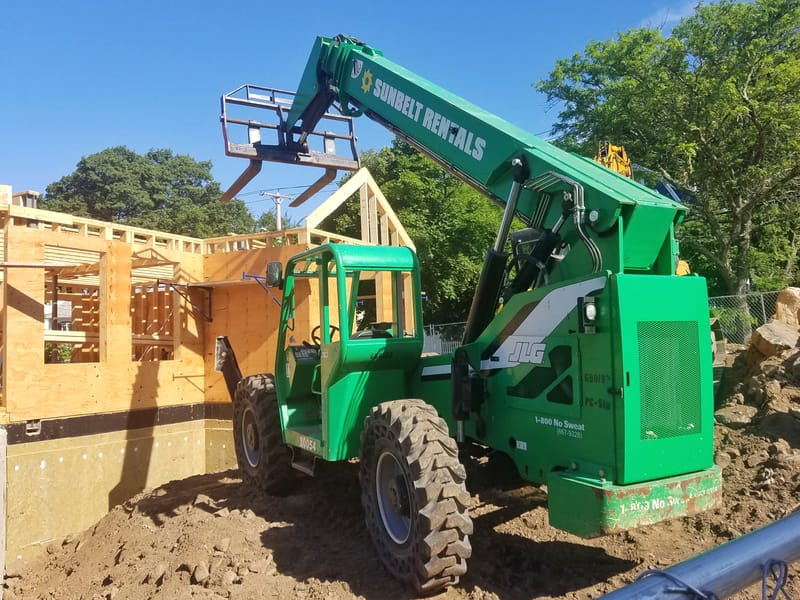
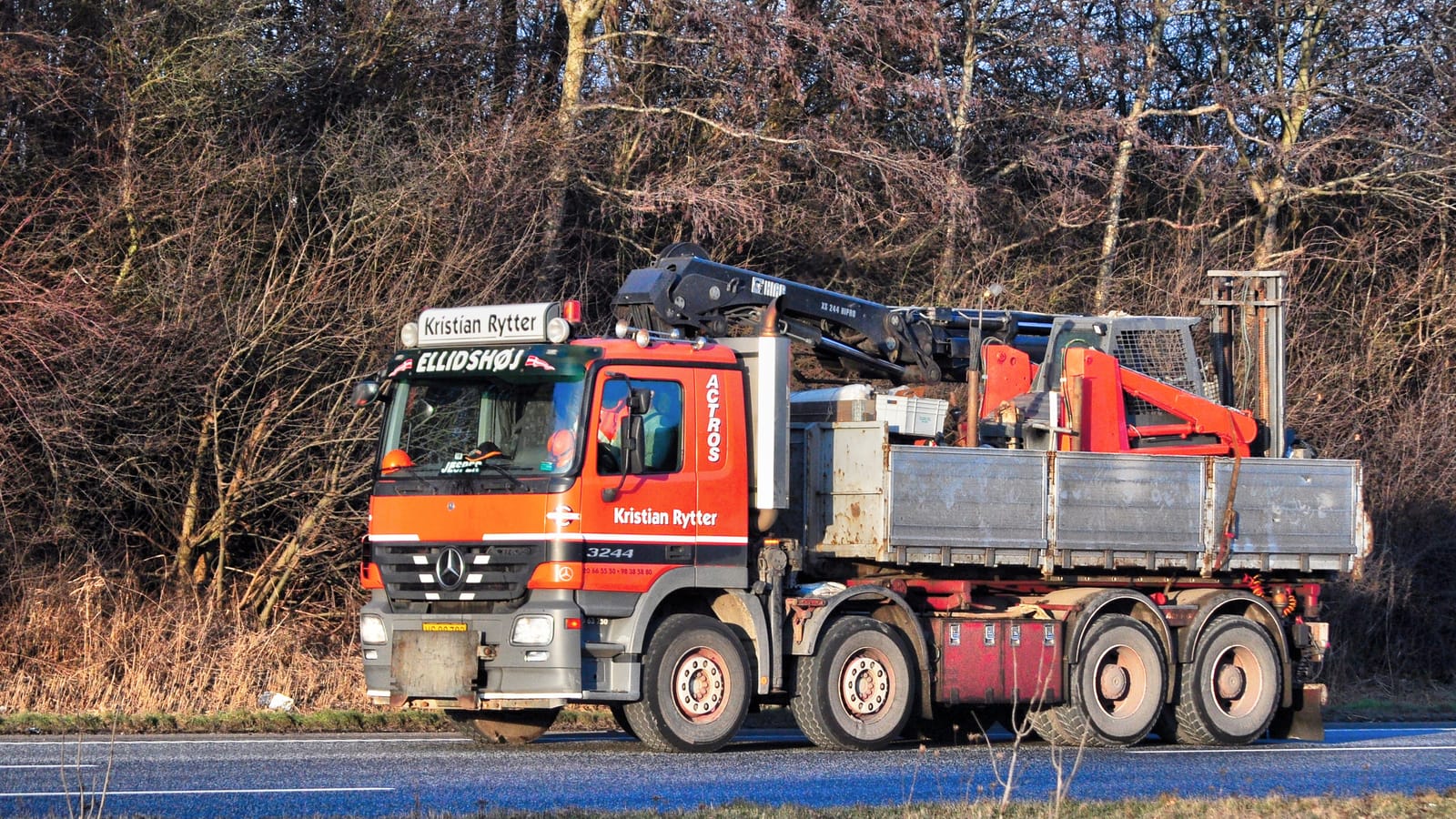
- Names used in Saudi Arabia
- Boom truckTruck-mounted craneLorry loaderKnuckle boom truckBoom truck (Saudi term)Kiran Hiab
- Formal name
- شاحنة برافعة محمولة
- English name
- Boom truck (truck-mounted loader crane)
- Family
- Heavy equipment · Cranes
- Measured by
- Hours and kilometres
01Definition and uses
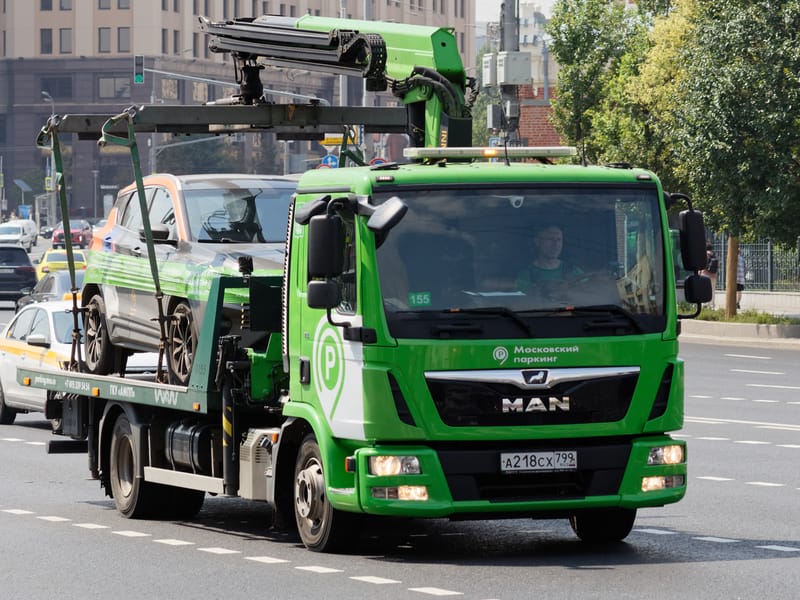
The boom truck is a commercial truck carrying on its chassis a hydraulic crane with a rotating boom, used to load and unload the truck’s own cargo and to lift nearby materials on site. The most widespread type is a knuckle-boom crane whose boom is made of articulated sections that fold on one another, some of which are telescopic, mounted behind the cab so that the truck bed stays free for the load. The first hydraulic crane carried on a truck was invented by the Swedish company Hiab in 1947. The name of this brand is used colloquially for knuckle-boom cranes mounted on trucks in Britain and Canada. In the Saudi market “boom truck” and “kiran Hiab” are said for this truck. It is a road vehicle whose chassis is measured in kilometres, and whose crane is measured in operating hours. It differs from the mobile “crane” in that it is a commercial truck that primarily lifts its own cargo, and not a construction lifting machine with load charts and full outrigger support.
Uses
- Loading and unloading building materials on sites: tiles, steel, pipes and plates.
- Delivering small equipment, tanks and generators and setting them in place.
- Installing air-conditioning and cooling units on roofs and platforms.
- Handling precast fence sections and small concrete posts.
- Loading damaged vehicles and equipment when needed.
- Serving quarries and factories in moving heavy weights inside yards.
02Classes and sizes
Truck-mounted cranes are classified by lifting moment, boom reach, number of sections and the control type, and the manufacturer declares the lifting capacity in a chart for each radius, so no single figure is relied on. The carrier truck varies from a small two-axle one to a heavy one with three axles or more depending on the load and weight of the crane.
| Class | Description | Typical use |
|---|---|---|
| Knuckle-boom crane behind the cab | A boom of folding articulated sections that leaves the bed empty | Delivery and self-loading on sites. |
| Rear telescopic crane | A rotating telescopic boom on a commercial truck chassis | Lifting materials over longer distances and to greater heights. |
| Crane carried on the trailer | A light crane on a wheeled frame that rides on the trailer, so the trailer carries more goods | Long and specialised loads. |
03Main components
- 01The chassis, the cab, the engine and the power take-off that drives the hydraulic pump.
- 02The rotating column, the crane base and the slew bearing.
- 03The main boom, the articulated second boom and the telescopic sections.
- 04The lift and extension cylinders, the hydraulic pump and the control valve.
- 05The side outriggers, the support pads and their cylinders.
- 06The lifting hook or wire rope and pulleys on models fitted with them.
- 07Control from the ground, from the seat or by a remote wireless unit.
- 08The load monitoring computer that shows whether the crane is loaded beyond its limit.
- 09The truck bed and the load securing points.
- 10The warning lighting, the reflectors and the safety devices.
04Periodic maintenance schedule
The truck is maintained by kilometres and the crane by hours, and a boom with many sections carries more maintenance because of its many moving parts. The following ladder is the usual one, and the manual for the specific model sets the intervals and tasks that apply; the intervals are shorter in heavy work and dust.
| Interval | Typical tasks |
|---|---|
| Daily before moving |
|
| Weekly |
|
| Every 10,000 km or per the manual |
|
| Every 20,000 km |
|
| Every 40,000 km |
|
| Every 80,000 km or annually |
|
| For the crane every 250 hours |
|
| For the crane every 1000 hours |
|
A full inspection of the crane is also carried out at least once every twelve months by a qualified person, including dismantling where needed and an inspection of the structural parts, the welds and the safety devices.
The manufacturer’s manual governs. The actual intervals and tasks are set by the operation and maintenance manual for your machine’s model, and they are shortened in heavy dust, high heat and continuous operation. This table shows the general order only and does not replace the manual.
05Daily pre-start checklist
14 items
The construction crane regulation provides for a visual inspection before every shift by a competent person, and it serves as a standard for the boom truck.
06Common operating mistakes that cause breakdowns
- Lifting without extending the outriggers or placing them on soft ground without support pads.
- Lifting the load far from the truck as if the declared capacity were fixed, when the capacity falls as the radius increases.
- Dragging or pulling the load sideways with the boom instead of lifting vertically, which strains the bearing and the sections.
- Driving with the boom not folded in its position or the outriggers not raised.
- Exceeding the limit shown by the load monitoring computer or disabling the load indicator.
- Working near overhead power lines without a safe clearance.
- Leaving the power take-off engaged while driving.
- An unsecured bed load while the boom is working, which upsets the balance.
07Regulatory requirements
Regulatory procedures to check when owning or operating this machine in the Kingdom.
- Inspection certificates for cranes and lifting equipment
- Heavy-vehicle driving and equipment-operator licences
- Periodic technical vehicle inspection
- Transport General Authority operating card and driver card
- Registering heavy equipment with the Heavy Equipment Regulation Center
- Permits for moving heavy equipment and oversized loads
08What to weigh when renting or buying
- The heaviest load and farthest radius you will need, then matching them to the load chart and not to the nominal figure in tonnes.
- The condition of the boom, joints and sections for cracks, deformation and play.
- Leaks from the lift and extension cylinders and the hoses, and the soundness of the control valves.
- The condition of the outriggers, the support pads and their locks.
- The load monitoring computer: working and calibrated, not disabled.
- The crane hours and the truck kilometres with the maintenance record and earlier inspection certificates.
- The age of the chassis and the condition of the brakes, tyres and wheelbase against the load.
- When renting: whether it comes with a qualified operator and who bears the fuel, the insurance and the periodic inspection of the crane.
Settle these factors first, then enter your own numbers in the Own vs rent calculator or the Equipment operating cost per hour calculator.
09Frequently asked questions
A commercial truck with a hydraulic crane for loading and unloading its cargo; they are two names in use in the Saudi market for the crane truck, and the second corresponds to the brand that invented these cranes and which came to be used colloquially in Britain and Canada.
The boom truck is a truck carrying a crane to load its cargo, and the crane is a lifting machine with load charts and full support for construction lifting work.
The nominal figure indicates the class, and the actual lift is read from the load chart according to the radius and the boom length, and it falls as the load moves farther.
The boom, the joints, the cylinders, the load monitoring computer, the inspection certificates, the crane hours and the condition of the chassis, as in the buying section above.
The radius and load required, the qualified operator, a valid inspection certificate, and who bears the insurance and the fuel.
The controls, the lines, the hook, the tyres, the outriggers, the brakes, the lighting and the load monitoring, as in the list above.