- Names used in Saudi Arabia
- BusCoachMinibusStaff transport busBas (Saudi term)Hafila
- Formal name
- حافلة نقل العاملين
- English name
- Staff bus
- Family
- Vehicles · Light vehicles
- Measured by
- Kilometres
01Definition and uses
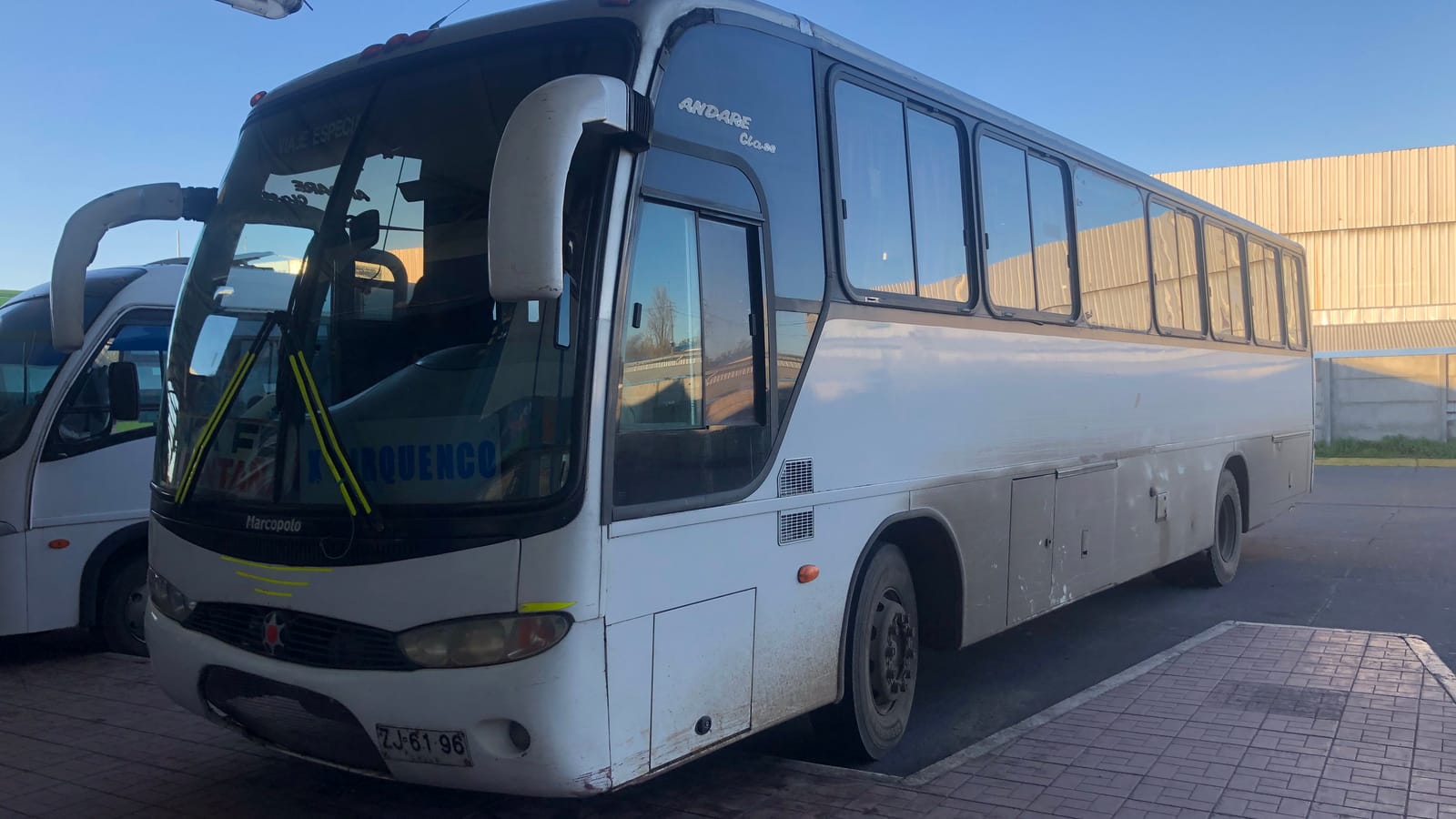
The bus is a vehicle that carries far more passengers than a car or a van carries, and fewer than a train carries; the usual passenger count of a bus is between thirty and a hundred passengers, and some buses reach a larger capacity than that. It is best known for use in public transport, but companies have private uses that lead them to own buses to carry their employees and workers to distant work sites, as contracting and agriculture companies do. It is a road vehicle measured in kilometres, and it is managed by a fleet manager or a transport officer. In the Saudi market “bas” and “hafila” are said, and the word covers the large, medium and small bus that is called a “minibus”, and in TAC Flow it is treated here as a staff transport bus.
Uses
- Carrying workers from housing to projects, factories and remote sites.
- Carrying employees between offices, branches and airports.
- Carrying maintenance and operations teams between sites when they work in shifts.
- Carrying students between homes, schools and institutes.
- Carrying delegations, visitors and work teams at events and conferences.
- Tourist trips with dedicated coaches.
- Shuttle service between car parks and facilities.
- Hire with or without a driver for groups from rental companies.
02Classes and sizes
Buses are classified by passenger count, body length and type of use. Their forms include the single-deck, the double-deck, the articulated, the midibus, the small “minibus”, and long-distance buses called coaches. The declared passenger count and the vehicle weights are in its registration card.
| Class | Description | Typical use |
|---|---|---|
| Minibus | A small bus of limited capacity | Small work teams, nearby projects and alleys. |
| Midibus | A capacity between the small and the large | Carrying workers inside cities and industrial cities. |
| Single-deck bus | The most widespread form | Public transport and carrying workers in large numbers. |
| Long-distance coach | Comfortable reclining seats, seat belts and under-floor luggage space | Trips between cities and tourist trips. |
| Articulated bus | A bus of two parts joined by a joint | Very crowded lines. |
03Main components
- 01The engine and the cooling and lubrication system.
- 02The transmission and the clutch or the automatic gearbox.
- 03The brake system and its linings, which is air-operated in large buses.
- 04The steering, the suspension and the shock absorbers, some of which are air-operated.
- 05The tyres and rims.
- 06The passenger body, the seats and the seat belts.
- 07The doors, their opening mechanism and the emergency exits.
- 08The air conditioning and the ventilation, which are essential in the heat.
- 09The battery, the electrical system and the lighting.
- 10The emergency equipment: the extinguishers and the first aid kit.
04Periodic maintenance schedule
Bus maintenance is built on kilometres with a time limit, and the intervals shorten in extreme heat, dust and heavy stop-start driving. The following ladder is the usual one, and the manual for the specific model sets the intervals and tasks that apply.
| Interval | Typical tasks |
|---|---|
| Daily before moving |
|
| Weekly |
|
| Every 10,000 km or per the manual |
|
| Every 20,000 km |
|
| Every 40,000 km |
|
| Every 80,000 km or annually |
|
The manufacturer’s manual governs. The actual intervals and tasks are set by the operation and maintenance manual for your machine’s model, and they are shortened in heavy dust, high heat and continuous operation. This table shows the general order only and does not replace the manual.
05Daily pre-start checklist
14 items
The general reference for commercial vehicles requires the driver to make sure before driving of the soundness of the brakes, the parking brake, the steering, the lighting, the reflectors, the tyres, the horn, the wipers, the mirrors, the rims and the emergency equipment, and it serves as a standard for the staff bus.
06Common operating mistakes that cause breakdowns
- Exceeding the declared passenger count or loading luggage above the capacity of the bus space.
- Driving on under-inflated or mismatched tyres on hot roads.
- Hard acceleration and sudden braking, which wear the linings and tyres and endanger the passengers.
- Leaving the engine running for long hours without need while waiting.
- Neglecting to drain the air tanks, so the brake valves are damaged.
- Blocking an emergency exit with luggage or added seats.
- Delaying the oil change because of pressure on the trip schedule.
- Not reporting a minor fault in the air conditioning or the brakes in time.
07Regulatory requirements
Regulatory procedures to check when owning or operating this machine in the Kingdom.
08What to weigh when renting or buying
- The declared passenger count against the number of your workers and their shifts.
- The air conditioning and its capacity in the heat, since it is the first thing passengers complain about.
- The condition of the seats, the seat belts, the doors and the emergency exits.
- The brakes, tyres and suspension and the odometer reading with the maintenance record.
- The registration card, the passenger insurance, the operating card and the soundness of ownership when buying used.
- The availability of spare parts and maintenance at the dealer in the cities where you work.
- When renting: whether the bus comes with the driver, how many kilometres are included, and who bears the fuel, the insurance and delay.
- The suitability of the bus size for housing entrances, camps and narrow roads.
Settle these factors first, then enter your own numbers in the Own vs rent calculator or the Equipment operating cost per hour calculator.
09Frequently asked questions
A staff transport bus, entered in the vehicle register with the registration card, the insurance, the operating card, the kilometres, the maintenance and the driver.
The bus has a large capacity and the minibus a limited one, with the midibus between them; and the declared passenger count of each bus is in its registration card.
The number of passengers, the daily distance and the kilometres included, whether the rental includes the driver, who bears the fuel and the insurance, and the condition of the air conditioning and the belts, as in the rental section above.
A bus whose engine runs on diesel, with the model manual specifying the oil type and maintenance intervals; and the daily inspection is the same whatever the fuel type.
With a record for each bus that includes the kilometres, the maintenance, the documents and the driver, and with location tracking by a device or software when needed.
Many jurisdictions require a large-vehicle licence above the ordinary driving licence for a bus driver.
By comparing the number of workers in each shift with the declared passenger count in the bus’s registration card, then the type of roads and the housing entrances, and no more than the declared number is carried.
The registration card, the insurance, the operating card, the kilometres, the maintenance carried out, the assigned driver, the violations and the accidents.