- Names used in Saudi Arabia
- Flatbed recovery truckTilt-and-slide car carrierRollback tow truckHydraulic car carrierSatha (Saudi term)Satha hydraulic
- Formal name
- شاحنة نقل وسحب المركبات
- English name
- Flatbed recovery truck
- Family
- Trucks & trailers · Trucks
- Measured by
- Kilometres
01Definition and uses
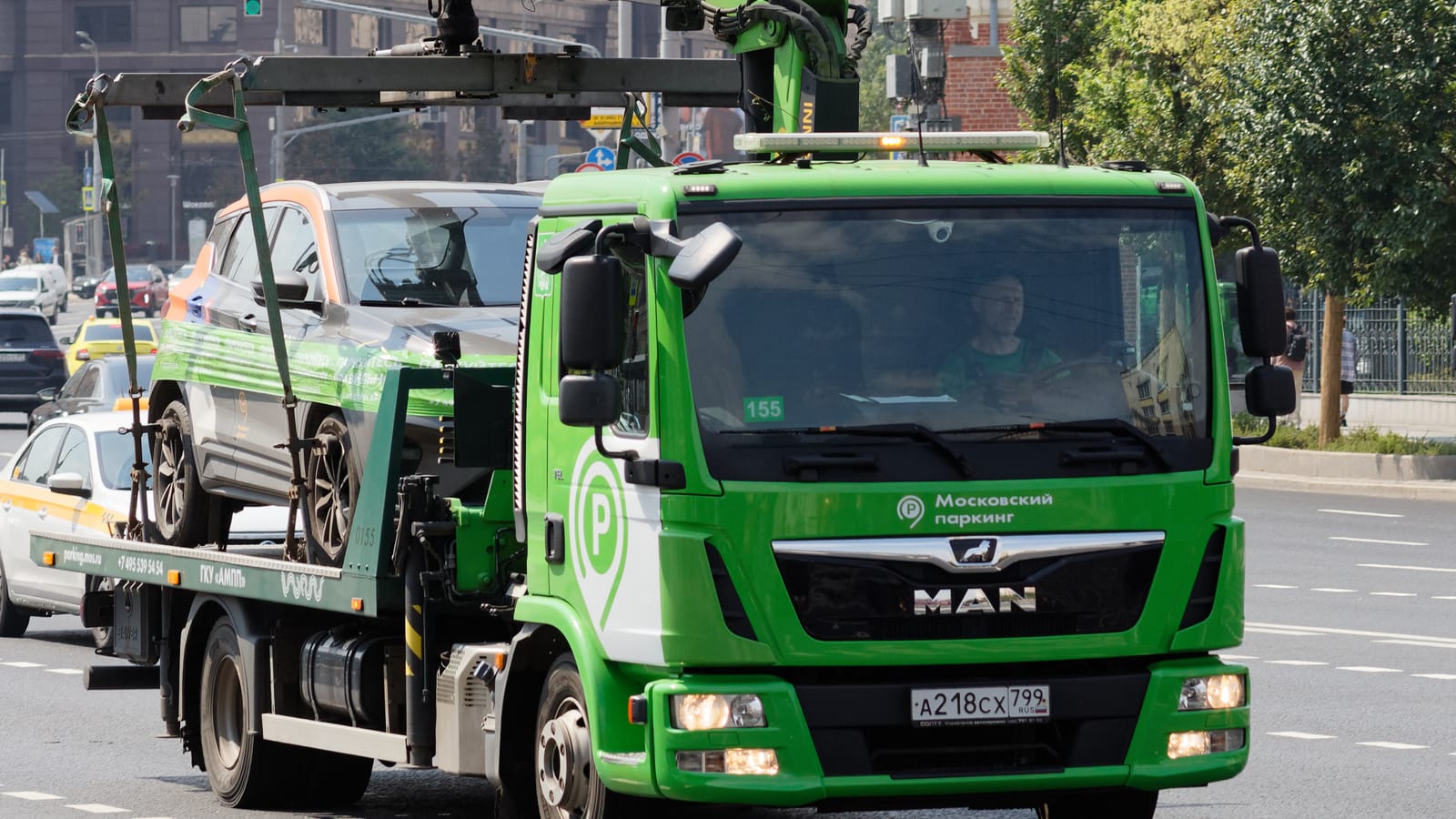
The flatbed recovery truck is a truck whose rear carries a wide deck that tilts hydraulically and slides back until it touches the ground, so that the vehicle is winched onto it or drives up under its own power, and the deck then returns to horizontal and is secured. It carries the vehicle and does not tow it, so it suits a vehicle that is completely disabled. It is a road vehicle whose life is measured in kilometres, with operating hours for the hydraulic pump and the winch. One practical detail is that a low vehicle needs a gentle tilt angle and ramp boards so that its bumper is not damaged on the way up. In the Saudi market it is known as “satha” or “satha hydraulic”, and it differs from the “tareela satha”, which is a flat trailer with no hydraulics, and from the “low-bed”, which is built for heavy equipment.
Uses
- Moving disabled or accident-damaged vehicles to workshops.
- Moving vehicles between cities on highways.
- Moving premium or low vehicles that cannot be towed by the wheels.
- Roadside assistance for individuals and insurance companies.
- Moving fleet cars between branches, sites and sales showrooms.
- Carrying light machines and small equipment on the deck.
- Moving showroom and dealership imported vehicles from the port to the showroom without driving them.
- Clearing illegally parked vehicles at the request of the competent authorities.
02Classes and sizes
The reference states that towing equipment is classified by size into light, on a light-truck chassis, medium, and heavy, on multi-axle truck chassis, with rotators the heaviest of all. The load limits for each model are in the manufacturer’s bulletin and in the registration card, and the practical criterion in choosing is the deck length and capacity against the largest vehicle the establishment moves.
| Class | Description | Typical use |
|---|---|---|
| Light flatbed | Tilting deck on a light two-axle chassis | Moving a single passenger car inside cities. |
| Medium flatbed | Medium chassis with a longer deck | Four-wheel-drive vehicles, pickups and damaged vehicles. |
| Heavy flatbed | Heavy chassis with three or more axles | Moving large vehicles, buses and machines. |
| Flatbed with boom and wheel lift | A combination of the deck with an arm or a wheel lift | Quick clearance and tight parking spaces. |
03Main components
- 01The chassis, the cab and the drivetrain.
- 02The sliding tilting deck, its frame and the floor.
- 03The tilt and slide cylinders and the hydraulic pump.
- 04The power take-off from the transmission.
- 05The winch, with its steel rope or strap and its hook.
- 06The lashing points, chains, wheel straps and tyre holders.
- 07The control valves in the cab or on the wireless remote.
- 08Work lights, warning lights and rotating beacons.
- 09The air or hydraulic brake system and the tyres.
04Periodic maintenance schedule
The ladder is in kilometres, with operating hours for the winch and the hydraulics, and the manual for the specific model sets the intervals and tasks that apply; the intervals are shorter in heavy use and dust.
| Interval | Typical tasks |
|---|---|
| Daily before moving |
|
| Weekly |
|
| Every 10,000 km or per the manual |
|
| Every 20,000 km |
|
| Every 40,000 km |
|
| Every 80,000 km or annually |
|
The manufacturer’s manual governs. The actual intervals and tasks are set by the operation and maintenance manual for your machine’s model, and they are shortened in heavy dust, high heat and continuous operation. This table shows the general order only and does not replace the manual.
05Daily pre-start checklist
13 items
The general reference for commercial transport vehicles requires the driver to check before driving the service brakes, the parking brake, the steering, the lighting, the reflectors, the tyres, the horn, the wipers, the mirrors, the coupling devices, the wheels and rims, and the emergency equipment.
06Common operating mistakes that cause breakdowns
- Lashing the vehicle at two points only instead of four, so that it moves under braking and in bends.
- Winching with a sudden movement or at a sharp side angle, which damages the rope and the drum.
- Leaving the carried vehicle’s brake unapplied or in drive.
- Driving with the deck not locked in the transport position.
- Loading a vehicle that exceeds the deck capacity, or with an unbalanced distribution on the front axle.
- Engaging the power take-off while driving at speed.
- Towing four-wheel-drive vehicles with a lifting strap instead of carrying them on the deck, which damages the driveline.
- Neglecting the greasing of the deck slides, so that sliding becomes rough and the frame wears.
07Regulatory requirements
Regulatory procedures to check when owning or operating this machine in the Kingdom.
08What to weigh when renting or buying
- The deck length and width against the vehicles that will be moved.
- The deck capacity and winch capacity according to the model bulletin.
- Cylinder leaks, speed of tilt and slide, and the stability of the locks.
- The condition of the rope or strap and the evenness of its winding.
- The deck frame, its welds and its floor.
- The meter reading together with the maintenance record, and the condition of the engine and transmission.
- The type of equipment required: deck only, or deck with a wheel lift, according to your work.
- The condition of the tyres and the number of axles and whether they match the type of work.
- When renting: how it is charged, by trip or by month, who bears the driver and the fuel, and whether the insurance covers the carried vehicle.
Settle these factors first, then enter your own numbers in the Own vs rent calculator or the Equipment operating cost per hour calculator.
09Frequently asked questions
In the Saudi market it is called “satha”. The English name is in the name field above, and in English it has several alternative names describing the tilt and slide.
By design: tilting deck, wheel lift, boom arm, and an integrated unit that combines the arm and the wheel lift; by size: light, medium and heavy.
The satha is a single truck with a tilting deck and hydraulics for moving vehicles, while the tareela satha is a tractor head pulling a fixed flat trailer for carrying loads and goods.
The satha is for moving vehicles and light machines, while the low-bed is a low trailer for moving heavy equipment such as the Bokalin and the wheel loader.
It is the satha whose deck tilts and slides with hydraulic cylinders, and it works from a power take-off on the transmission.
The winch rope and its hook, the lashing straps, the hydraulic hoses, the cylinder seals and the chassis tyres.
It is a contract for the satha, with or without its driver, for one month to move the company’s or its customers’ vehicles, in which it is settled in advance who bears the fuel, the winch and hydraulic maintenance, the insurance of the carried vehicle and the kilometre ceiling if there is one.