- Names used in Saudi Arabia
- Light truckLight-duty truckCab-over truckDyna truckDyna (Saudi term)Dayna
- Formal name
- شاحنة خفيفة
- English name
- Light truck
- Family
- Trucks & trailers · Trucks
- Measured by
- Kilometres
01Definition and uses
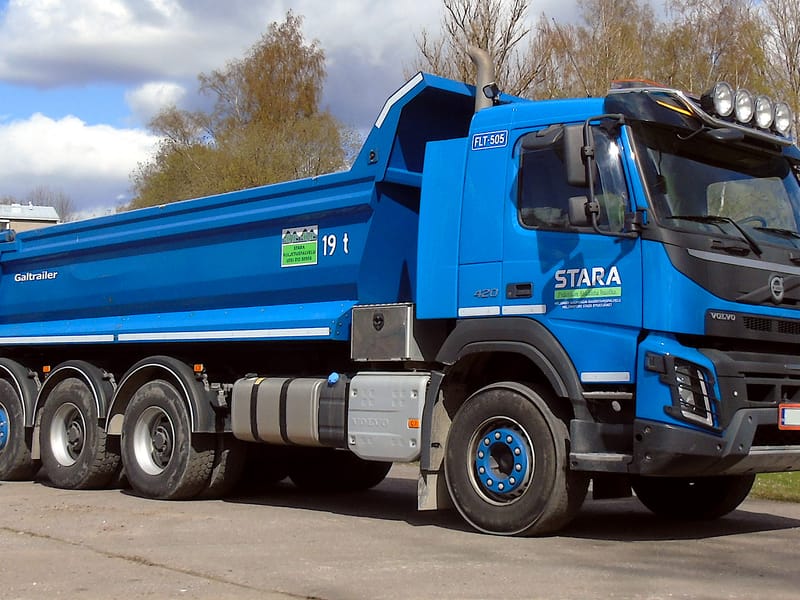
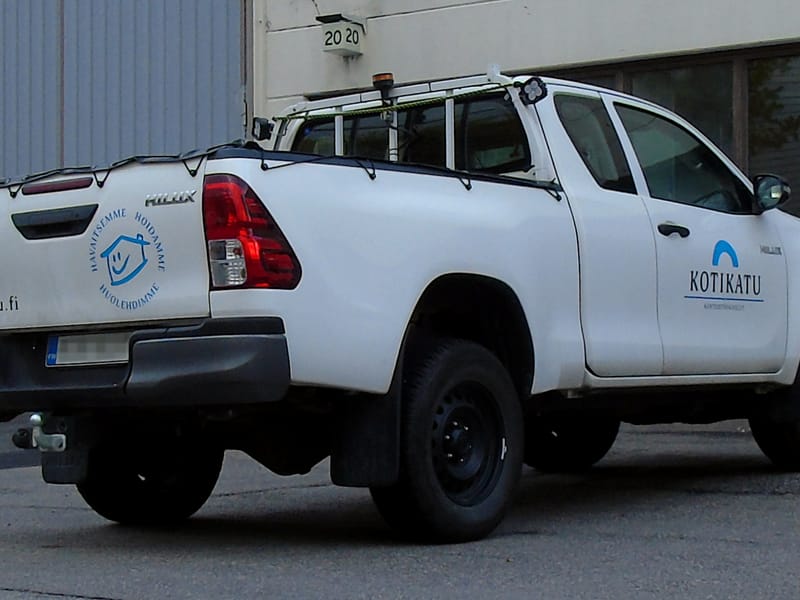
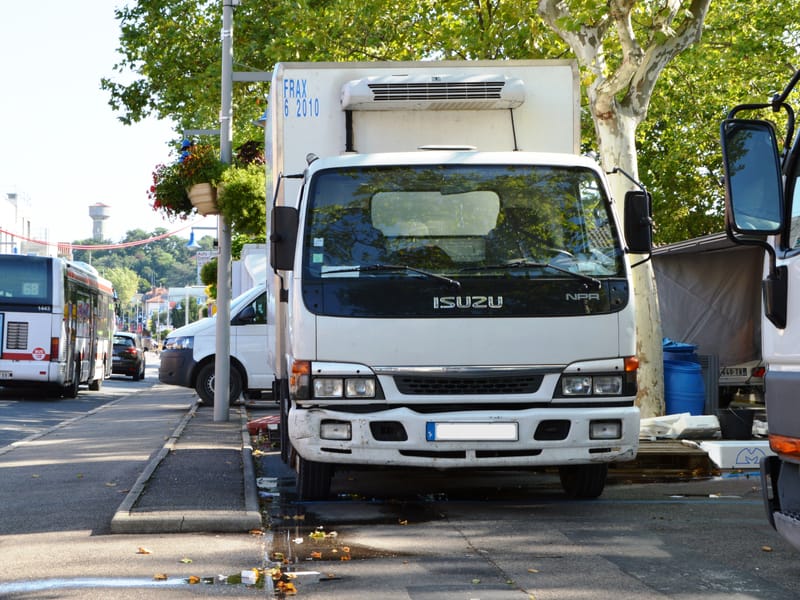
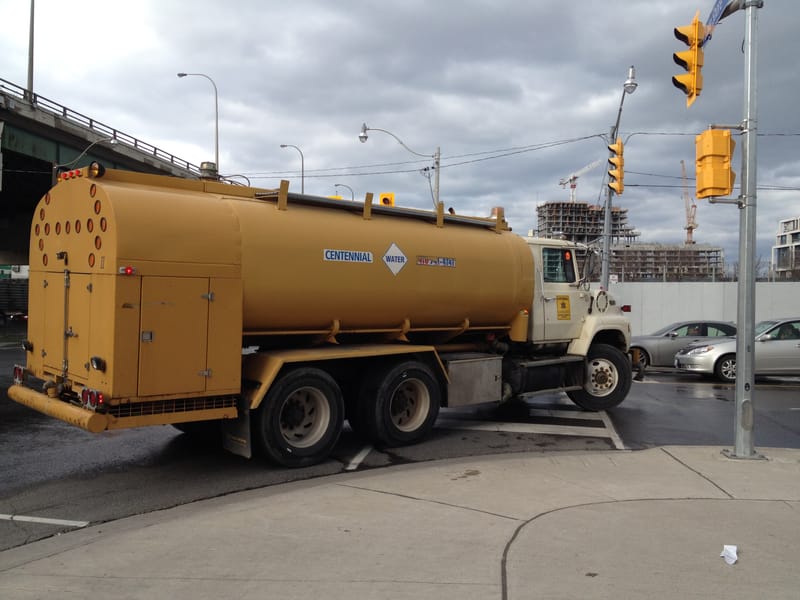
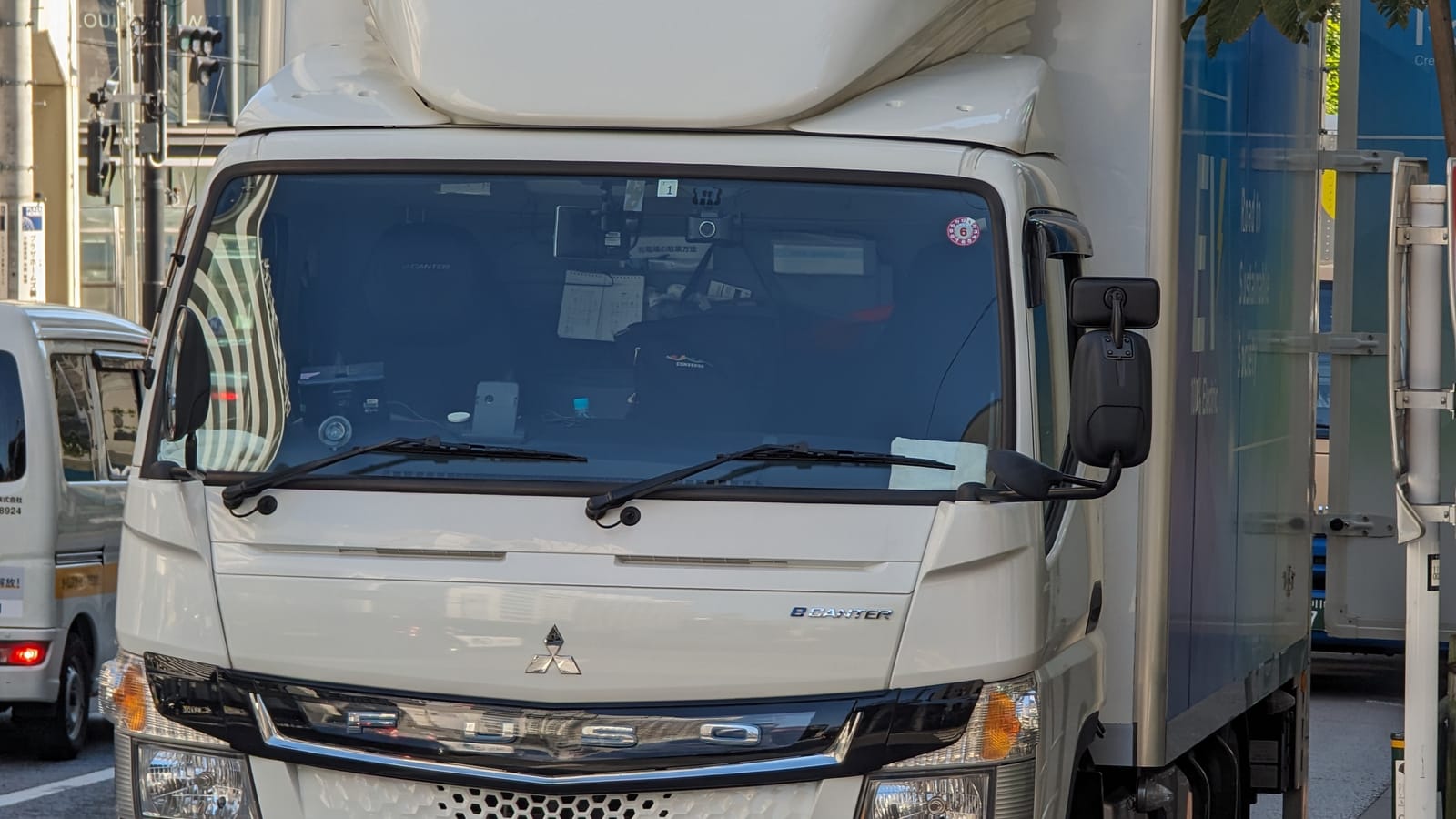
The Dyna is a light to medium truck with a cab over the engine, and the name was originally a Toyota model whose identical version is sold under the name Hino Dutro. In the Saudi market the word “dyna” or “dayna” came to be said for this class of small trucks with a box, a crane or a tipper, even when the truck is from another maker such as Isuzu or Mitsubishi. It is a road vehicle whose life is measured in kilometres, and several bodies are fitted on its chassis. The legal definition of a “light truck” by gross weight differs from one country to another. What applies in practice is the weight stated in the vehicle’s registration card.
Uses
- Distributing goods and materials inside cities and narrow alleys.
- “Crane dyna”: a hydraulic crane mounted behind the cab to lift materials and set them down on sites.
- “Tipper dyna”: a tipping body for carrying sand, waste and small backfilling work.
- Carrying water and fuels in a small tank on the chassis.
- Carrying chilled goods in an insulated and refrigerated box.
- Carrying light equipment, scaffolding and tools to projects.
- Carrying furniture and goods for retail and warehouses.
02Classes and sizes
Dynas vary in load and in wheelbase length, so there are short models with four wheels and long ones with six wheels. The actual classification is by the gross weight declared in the registration card, not by the model name. Model naming changes between markets, so the number in a model name may mean the load in one market and the gross weight in another.
| Class | Description | Typical use |
|---|---|---|
| Open box | A deck or openable sides | Carrying goods and general materials. |
| Closed box | A closed load space | Delivery and protecting goods from dust. |
| Tipper dyna | A body raised by a hydraulic cylinder | Sand, fill and waste. |
| Crane dyna | A crane mounted on the chassis | Lifting materials and equipment on sites. |
| Tanker | A tank on the chassis | Water, fuels and local distribution. |
| Refrigerated | An insulated box with a refrigeration unit | Carrying food and sensitive materials. |
03Main components
- 01The diesel engine and the cooling and lubrication system.
- 02The manual or automatic gearbox and the propeller shaft.
- 03The rear axle with single or dual wheels.
- 04The brake system and its booster, by air or vacuum depending on the model.
- 05The leaf-spring suspension and the shock absorbers.
- 06The front cab and its tilting frame for easy access to the engine.
- 07The chassis and the subframe that carries the fitted body.
- 08The power take-off and the hydraulic pump for the tipper and the crane.
- 09The tyres and rims.
- 10The electrical system, lighting and batteries.
04Periodic maintenance schedule
Dyna maintenance is built on kilometres with a time limit, and the intervals shorten in extreme heat, dust, distribution inside cities and frequent stop-start driving, and the operating hours of the power take-off are added if there is a lifting body. The following ladder is the usual one, and the model manual from the manufacturer sets the intervals and tasks that apply.
| Interval | Typical tasks |
|---|---|
| Daily before moving |
|
| Weekly |
|
| Every 5,000 to 10,000 km |
|
| Every 20,000 km |
|
| Every 40,000 km |
|
| Every 80,000 km or annually |
|
The manufacturer’s manual governs. The actual intervals and tasks are set by the operation and maintenance manual for your machine’s model, and they are shortened in heavy dust, high heat and continuous operation. This table shows the general order only and does not replace the manual.
05Daily pre-start checklist
14 items
The general reference for commercial transport vehicles requires the driver to check the brakes, the parking brake, the steering, the lighting, the tyres, the horn, the wipers, the mirrors, the wheels and rims, and the emergency equipment.
06Common operating mistakes that cause breakdowns
- Loading above the declared load, which is the fastest way to ruin the springs, brakes and tyres.
- Running the tipper or crane on sloping or soft ground without stabilising.
- Driving with the body raised or the arm not folded.
- Hard acceleration and sudden braking in distribution inside cities.
- Leaving the engine running for long during loading and waiting.
- Neglecting to check the tyre pressure, especially the dual ones.
- Delaying the oil change past its due date because of workload.
- Fitting a lifting body or a tipper on a chassis that cannot bear it, without approval.
07Regulatory requirements
Regulatory procedures to check when owning or operating this machine in the Kingdom.
08What to weigh when renting or buying
- The required load against the gross weight in the registration card, not against the model name.
- The type of fitted body and its match to the work: box, tipper, crane or refrigerated.
- The condition of the chassis and its welds and traces of overloading in the springs.
- The meter reading with the maintenance record, and the condition of the engine and gearbox.
- The condition of the fitted body: the lift cylinder and its pump, and the crane outriggers and ropes.
- The condition of the dual tyres and their matching.
- The availability of spare parts and maintenance at the dealer in the cities of work.
- When renting: who bears the fuel, the driver, the maintenance and the tyres, and whether the rate is per day or per trip.
Settle these factors first, then enter your own numbers in the Own vs rent calculator or the Equipment operating cost per hour calculator.
09Frequently asked questions
The dyna is a trade name that became common for a light truck with a cab over the engine, and its origin is a Toyota model. The limits of “light” differ between countries by gross weight.
A dyna that carries a hydraulic crane mounted on the chassis to lift small materials and set them down, and it is different from the independent mobile crane.
A dyna with a tipping body raised by a hydraulic cylinder to discharge sand, fill and waste on small projects.
By recording every refill with the meter reading, then dividing the distance by the quantity in the fleet record and comparing it with the load and the distribution pattern, since the rate changes with loading and long stops; and no general figure can be stated.
Yes, it is rented with different bodies, and the contract specifies who bears the driver, the fuel, the maintenance and the permitted load of the truck.
The brakes, the steering, the tyres, the lamps, the oils, the leaks, the securing of the load and the soundness of the fitted body, as in the list above.