- Names used in Saudi Arabia
- Wheeled excavatorWheel excavatorMobile excavatorRubber-tyred excavatorBokalin kafarat (Saudi term)Hafar kafarat
- Formal name
- حفّارة بعجلات
- English name
- Wheeled excavator
- Family
- Heavy equipment · Digging & loading
- Measured by
- Operating hours
01Definition and uses
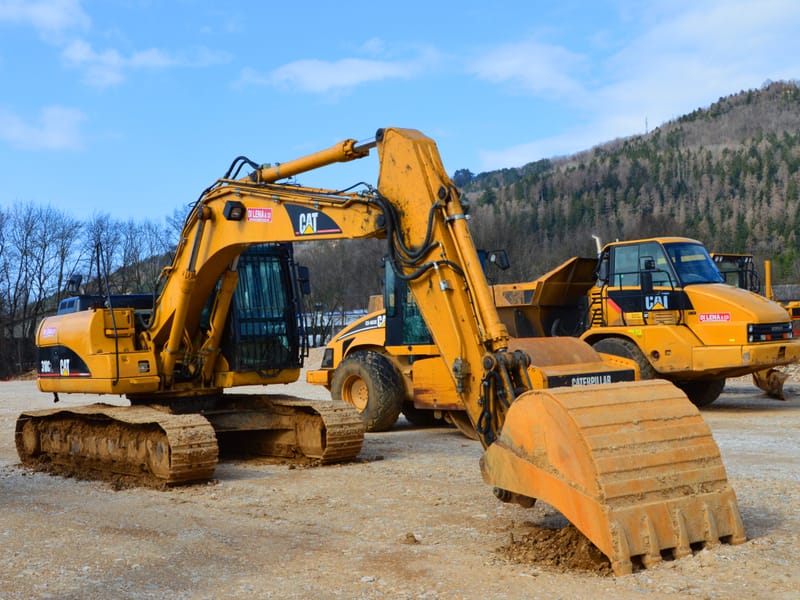
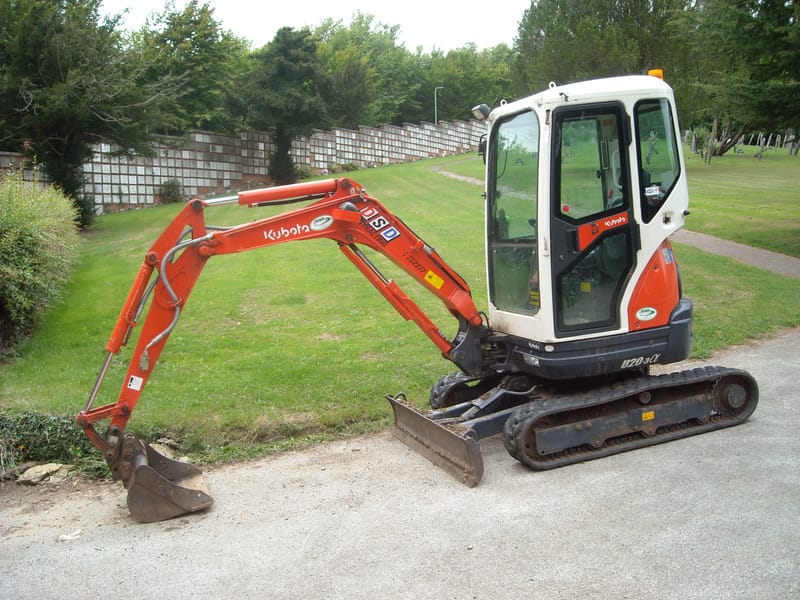
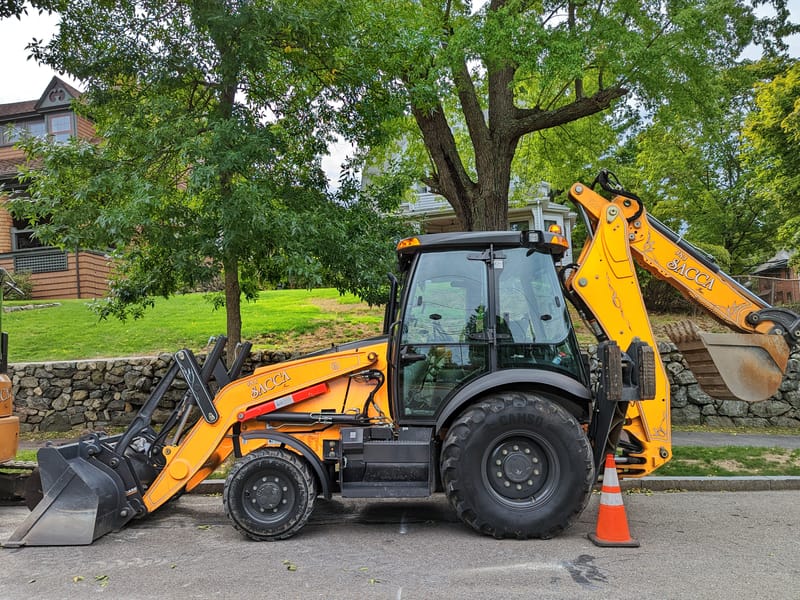
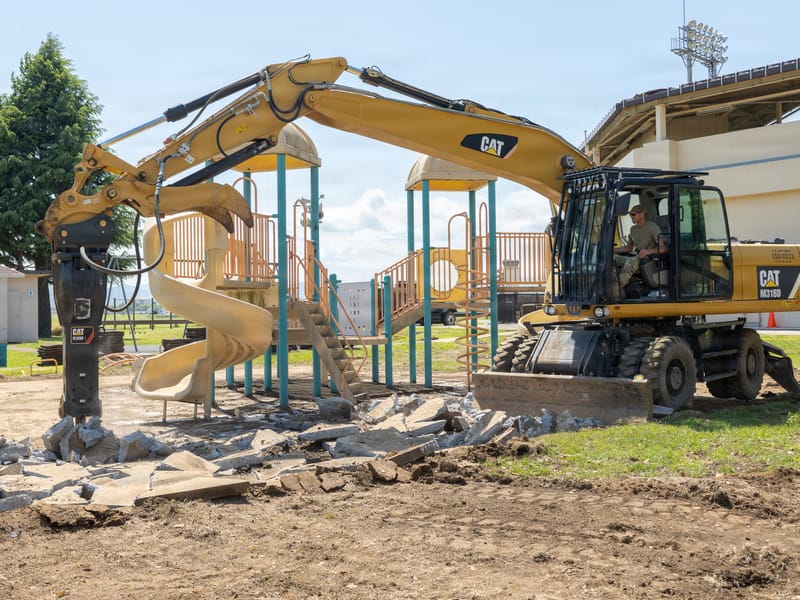
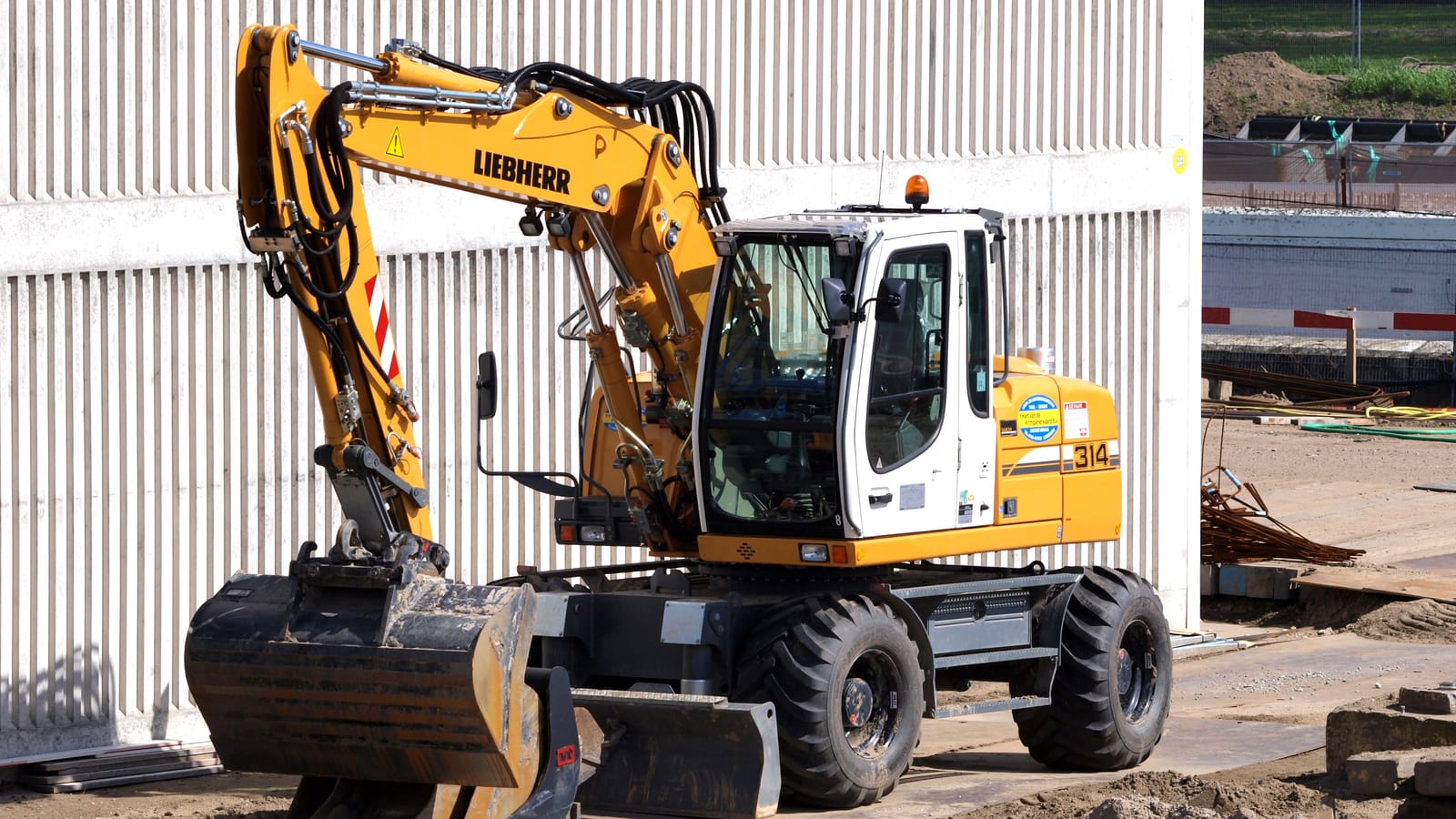
The wheeled excavator is a hydraulic excavator whose rotating upper structure sits on a base with rubber wheels instead of tracks, while the digging functions remain the same. It moves between sites under its own power on paved roads. Most carry a front dozer blade that is lowered for stability during digging. Its life is measured in operating hours, with optional kilometres if it moves often between sites. One practical care is to check the tyre pressure after a long drive and before heavy digging. In the Saudi market it is called “bokalin kafarat” or “hafar kafarat” to distinguish it from the “tracked Bokalin”, and it must not be confused with the JCB, which is a loader and an excavator in one machine with a rear digging arm.
Uses
- Municipal work and water and sewage networks inside cities.
- Digging trenches, pits and foundations.
- Handling and loading materials.
- Demolition with attachments such as the grapple, the shear and the breaker.
- Road, bridge and utility work that requires frequent movement.
- Cutting vegetation and removing stumps with special attachments.
- Working on paved or hard sites where steel tracks are prohibited because they damage the surface.
- Moving soil and nearby materials in factory yards and small quarries.
02Classes and sizes
Wheeled excavators range from small classes close to the mini to medium and large classes, and the operating weight, engine power, digging depth and bucket capacity of each model are set in its bulletin. The useful classification in the market is the purpose of use, not the number alone, since a city machine that moves daily is not the same as a fixed-site machine that moves weekly.
| Class | Description | Typical use |
|---|---|---|
| Small wheeled | A compact excavator on wheels | Work inside cities and alleys. |
| Medium wheeled | The class most in demand for utility and road work | Municipalities and general contracting. |
| Large wheeled | A heavier body and a larger bucket | Larger projects on hard ground. |
| With stabiliser outriggers | Legs that are lowered to the ground | Heavy digging and machine stability. |
03Main components
- 01The rotating upper structure: the cab, the engine and the pump.
- 02The slew bearing between the two structures.
- 03The front and rear axles with their differentials.
- 04The large tyres and their rims.
- 05The front dozer blade and its cylinders.
- 06The side or rear stabiliser outriggers, if fitted.
- 07The work group: the boom, the stick and the bucket or attachment.
- 08The steering system and the geared transmission.
- 09The hydraulic system: pumps, valves, tank and cooler.
- 10The cab, the operator seat and the protective structure.
04Periodic maintenance schedule
The usual ladder, and the manual for the specific model sets the intervals and tasks that apply; axle and tyre tasks are added because the excavator travels on the road.
| Interval | Typical tasks |
|---|---|
| Every 10 hours / daily |
|
| Every 50 hours / weekly |
|
| Every 250 hours |
|
| Every 500 hours |
|
| Every 1000 hours |
|
| Every 2000 hours |
|
The manufacturer’s manual governs. The actual intervals and tasks are set by the operation and maintenance manual for your machine’s model, and they are shortened in heavy dust, high heat and continuous operation. This table shows the general order only and does not replace the manual.
05Daily pre-start checklist
14 items
06Common operating mistakes that cause breakdowns
- Digging with the machine on its tyres without lowering the outriggers and the blade, so it moves and leans.
- Working on soft ground or sharp rock, so the tyres sink or tear.
- Driving on the road with the boom extended or without locking the slew.
- Low tyre pressure or mismatched pairs, so they wear quickly and stability weakens.
- Sudden slewing with a full load on a slope.
- Lifting loads above the lifting capacity chart of the model.
- Striking rock with the bucket to break it instead of using the breaker.
- Neglecting to grease the slew bearing and the axle joints.
07Regulatory requirements
Regulatory procedures to check when owning or operating this machine in the Kingdom.
08What to weigh when renting or buying
- The suitability of wheels for the site: hard paved ground is more suitable, and soft or sharp rocky ground suits tracks better.
- The condition of the tyres and the percentage of tread remaining, since they are among the largest later consumption items.
- The working of the stabiliser outriggers and the blade and the steadiness of their cylinders.
- The clearance of the slew bearing, the boom pins and the front axle.
- Hydraulic and axle leaks and the performance of the transmission.
- The compatible attachments, the type of quick coupler and the auxiliary hydraulic lines.
- The periodic inspection record and documents if it travels on public roads.
- The hour-meter reading with the maintenance record, and the availability of parts for the brand.
- When renting: whether travelling on the road is allowed or transport is required, and who bears the tyres, the fuel and the operator.
Settle these factors first, then enter your own numbers in the Own vs rent calculator or the Equipment operating cost per hour calculator.
09Frequently asked questions
In the Saudi market it is called “bokalin kafarat”. The English name is in the name field above, and in Britain it has a colloquial name different from the official one.
The wheeled one travels fast on paved roads and suits cities, while the tracked one is steadier and more capable on soft and rocky ground and on slopes.
The Bokalin is an excavator with a rotating structure and a front arm, while the JCB is a loader and excavator in one machine with a small rear digging arm.
It may drive itself on paved roads for short distances according to the site’s rules, and it is moved on a low-bed between cities or where travel is restricted, as set by the local transport regulation.
The tyres, the slew bearing, the cylinders, the axles, the outriggers, the hour-meter reading and the maintenance record.
Buckets, the breaker, the grapple, the shear and the auger, according to the coupler and the auxiliary hydraulic lines.
When the work is temporary and intermittent and does not justify owning a machine, and the choice is decided from the expected operating hours, not by a general rule.