- Names used in Saudi Arabia
- TrencherTrenching machineChain trencherWheel trencherTrencher (Saudi term)Hafar trencher
- Formal name
- حفّارة خنادق
- English name
- Trencher
- Family
- Heavy equipment · Specialised drilling
- Measured by
- Operating hours
01Definition and uses
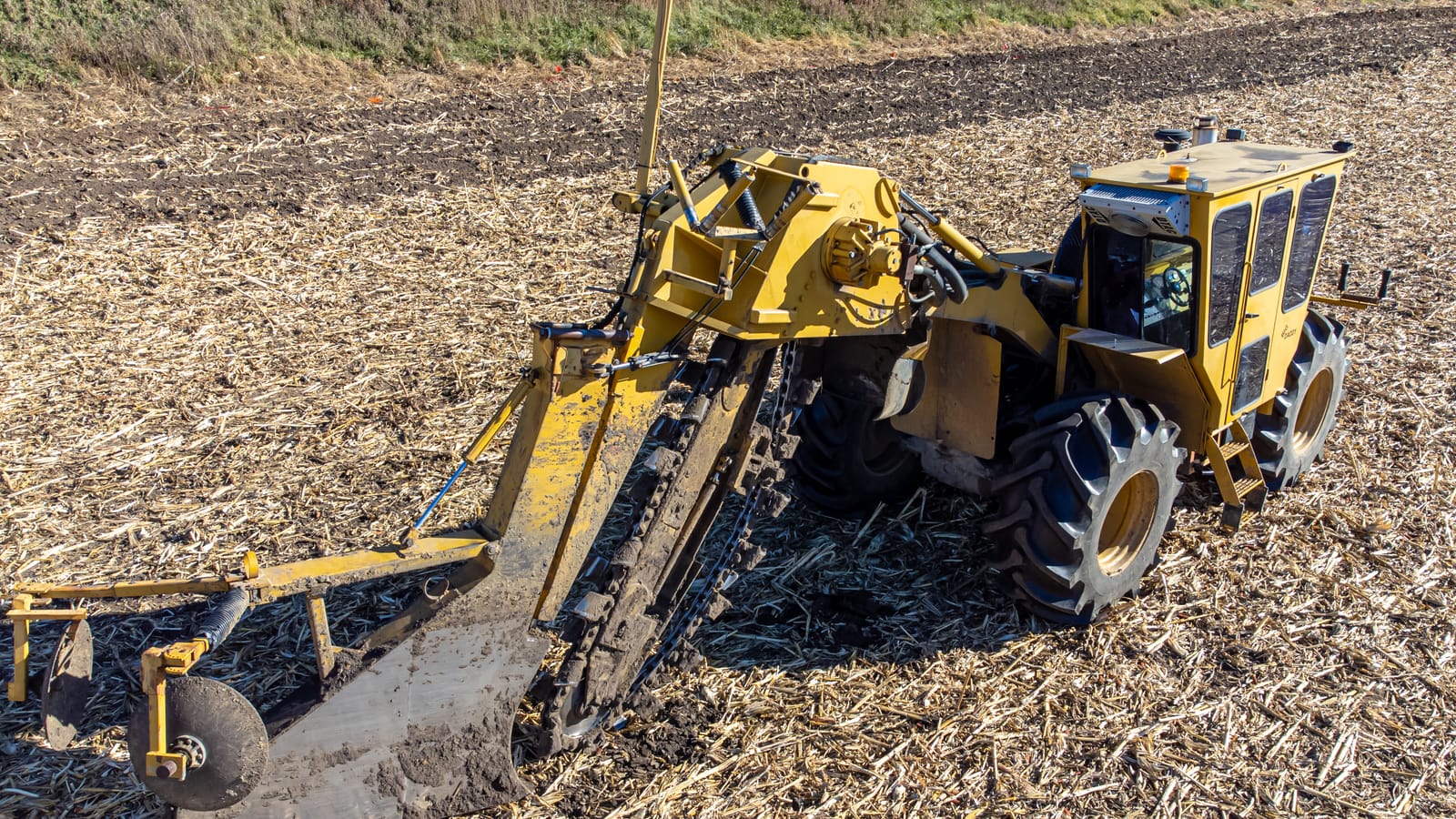
The trencher is a construction machine that digs trenches, especially for laying pipes or electrical cables or installing drainage networks. Its sizes range from a walk-behind model pushed by the operator, through an attachment fitted to skid-steer loaders (“Bobcats”) or to a tractor, up to a heavy tracked machine. The types differ in the digging tool that cuts the soil, and the choice is set by the width and depth of the trench and the hardness of the surface. Its operating hours are measured by the engine meter. It is not the Bokalin, since the Bokalin digs with a bucket and tears up the soil, while the trencher cuts it with a wheel or a cutting chain and advances slowly, throwing the excavated material to the side of the trench. In the Saudi market it is called “hafar trencher” or “trencher”, and it is mostly rented for long utility projects.
Uses
- Digging trenches for water, sewage and gas pipes.
- Digging trenches for electrical cables, telecom cables and fibre.
- Digging drainage trenches.
- Cutting asphalt to reach services under roads.
- Digging narrow and deep trenches in ground that a Bokalin bucket finds hard to cut.
- Laying irrigation lines on agricultural and landscaping projects.
- Combining digging, laying the pipe and backfilling the trench in one pass with a feeding attachment.
02Classes and sizes
Trenchers are classified by cutting tool, machine size and carrying method, and the manufacturer’s bulletin sets the trench width and maximum depth for each model.
| Class | Description | Typical use |
|---|---|---|
| Cutting wheel | A toothed steel wheel that turns, cuts the ground and moves the spoil away from the edge | Hard and soft ground including broken rock, and easier to operate and maintain than the chain. |
| Cutting chain | A chain that runs around a round arm like a huge saw | Ground too hard for the Bokalin bucket to cut, and narrow deep trenches. |
| Micro trencher | A small wheel for fine trenches in cities | Laying fibre in pavements and streets with the least damage. |
| Walk-behind | Light, pushed by the operator on foot | Garden landscaping and small irrigation lines. |
| Tractor-mounted | A cutting chain that needs a tractor moving very slowly | Agricultural work and rural projects. |
| Heavy tracked | A complete machine on tracks | Long projects and difficult ground. |
The trench width in the micro trencher ranges between about 30 and 130 millimetres, with a depth of up to 500 millimetres or less.
03Main components
- 01The cutting wheel, or the arm and the cutting chain.
- 02The teeth and the tooth holders, which are replaced often, possibly daily.
- 03A conveyor or auger that moves the spoil away from the trench edge.
- 04The arm lift cylinder, with the depth set by the arm angle.
- 05The diesel engine and the cooling system.
- 06The hydrostatic drive system with the pumps and motors.
- 07The tracks or the rubber tyres.
- 08The feeding and trench backfilling system, where present.
- 09The operator seat and control levers, or remote control in the small models.
- 10The guards for the rotating parts and the emergency stop buttons.
04Periodic maintenance schedule
The usual ladder, and the manual for the specific model sets the intervals and tasks that apply; the intervals are shorter in rocky and abrasive sandy ground.
| Interval | Typical tasks |
|---|---|
| Every 10 hours / daily |
|
| Every 50 hours / weekly |
|
| Every 250 hours |
|
| Every 500 hours |
|
| Every 1000 hours |
|
| Every 2000 hours |
|
The manufacturer’s manual governs. The actual intervals and tasks are set by the operation and maintenance manual for your machine’s model, and they are shortened in heavy dust, high heat and continuous operation. This table shows the general order only and does not replace the manual.
05Daily pre-start checklist
13 items
06Common operating mistakes that cause breakdowns
- Digging before locating the underground pipes and cables and notifying their owners.
- Advancing at high speed in hard ground, so the teeth break and the chain and engine are strained.
- Working with worn teeth, so the digging rate falls and the load on the system rises.
- Leaving the spoil and the equipment close to the trench edge.
- Turning the machine with the chain sunk in the ground, which strains the arm and damages the chain.
- Neglecting to clean the conveyor of stuck stones.
- Operating on a slope without adjusting the arm and the right advance.
- Neglecting to inspect the trench and its sides before workers enter it.
07Regulatory requirements
Regulatory procedures to check when owning or operating this machine in the Kingdom.
08What to weigh when renting or buying
- The trench width and depth required and their match to the model’s bulletin.
- The hardness of the ground: soft or rocky, which decides between a wheel and a chain.
- Rocky soil: the choice between the trencher, the hydraulic breaker and blasting.
- The condition of the teeth and the availability of replacements of the type suited to the ground.
- The condition of the chain and its sprockets, or the wheel and its holders.
- The engine hours with the maintenance record.
- The condition of the tracks or the tyres and the drive system.
- The feeding and trench backfill attachments, if the project needs them.
- When renting: who bears the worn teeth, the operator, the fuel and the transport of the machine.
Settle these factors first, then enter your own numbers in the Own vs rent calculator or the Equipment operating cost per hour calculator.
09Frequently asked questions
A machine that digs trenches for laying pipes, cables and drainage.
The Bokalin tears up the soil with a bucket and suits general digging and foundations, while the trencher cuts a continuous trench with a wheel or a chain at a steady speed. The chain cuts ground too hard for the Bokalin bucket to cut.
The cutting wheel, the cutting chain, the micro trencher, the walk-behind and the tractor-mounted.
A small wheel that digs fine trenches with the least damage to the road, and it is used to lay fibre in public places.
The references state that digging in rock is done by blasting, by hydraulic breakers or by chain trenchers, and that the choice follows the properties of the rock and the machine.
The trench width and depth, the hardness of the ground, the condition of the teeth, and who bears the operator and the worn teeth, as in the section above.
The teeth, the chain or wheel, the conveyor, the oils, the leaks, the guards and the location of underground services, as in the list above.