- Names used in Saudi Arabia
- Water tankerWater tanker truckWater truckWayt maa (Saudi term)Wayt miyahWaytWater bowser
- Formal name
- صهريج مياه
- English name
- Water tanker truck
- Family
- Trucks & trailers · Tankers
- Measured by
- Kilometres
01Definition and uses
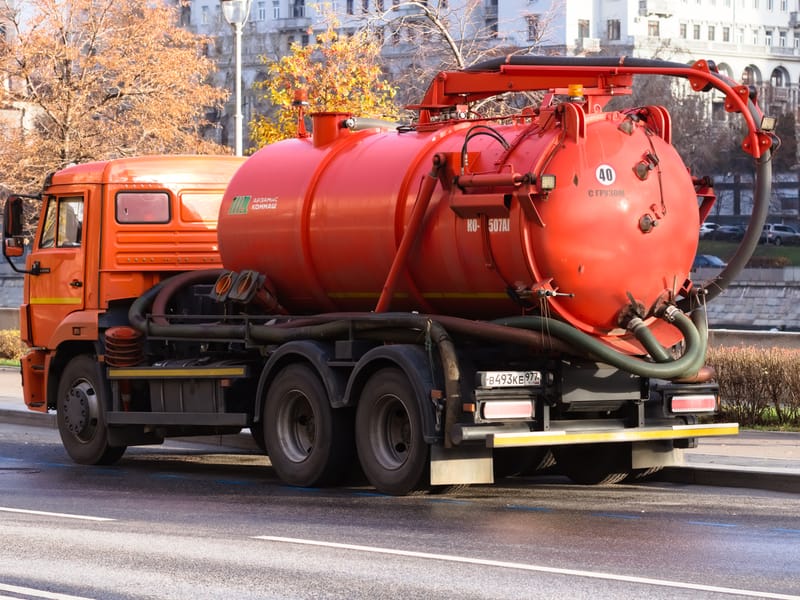
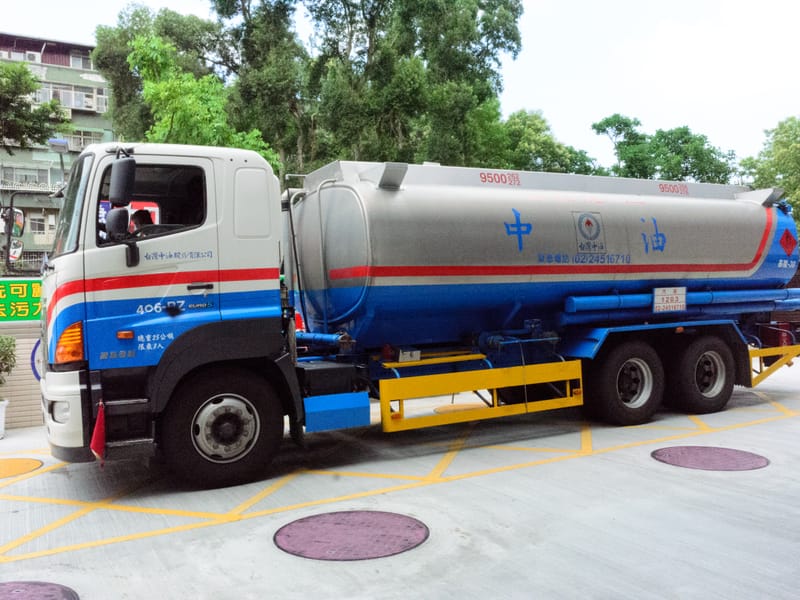
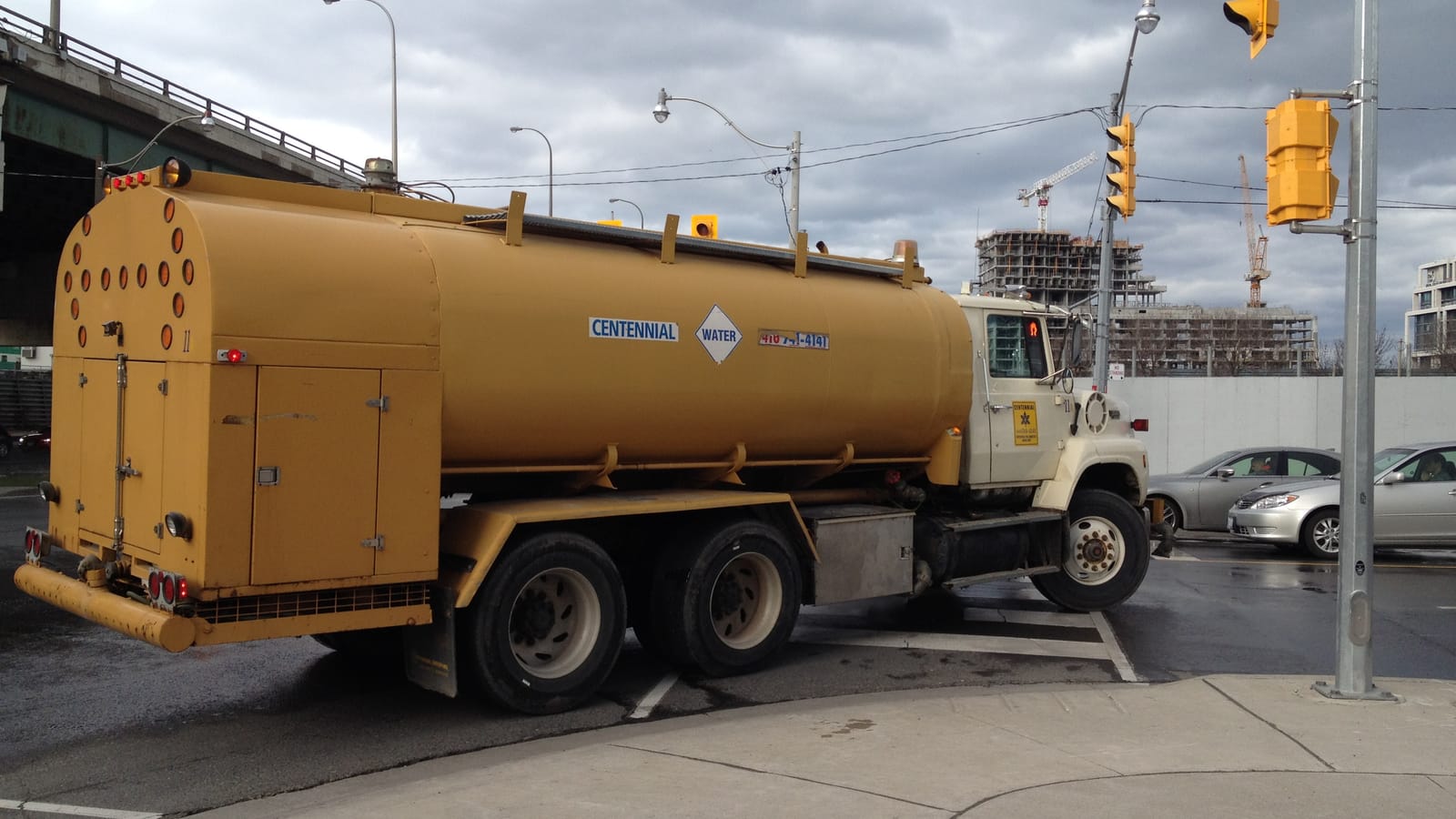
The “wayt” in the Saudi market is a truck carrying a cylindrical tank for transporting water, with a pump, discharge pipes and, on the models made for sites, sprinklers. It is used to deliver water to homes and sites the network does not reach, and to spray dirt roads on projects, and its life is measured in kilometres as a truck, with operating hours for the pump in fleets that work inside sites. The word is local, and is also applied to other tankers, distinguished as “wayt sarf” (sewage) and “wayt diesel”.
Uses
- Delivering drinking water to homes and facilities in areas not served by the network.
- Supplying construction sites and camps with utility water.
- Spraying dirt roads on projects to reduce dust.
- Moistening fill layers before compaction in road works.
- Filling overhead and underground tanks for farms and rest houses.
- Supporting firefighting as an auxiliary water tank at some sites.
02Classes and sizes
The market classifies water tankers by tank capacity in tonnes or cubic metres, which appears in the enquiries “6-tonne wayt” and “18-tonne wayt”, and it also distinguishes the drinking-water wayt from the utility-water wayt by the tank material, its lining and its cleanliness. The possible capacity is tied to the gross weight declared for the truck; a tonne of water is approximately one cubic metre, and the load must not exceed what is in the registration.
| Class | Description | Typical use |
|---|---|---|
| Small wayt | On a light or medium two-axle truck | Narrow alleys, homes and rest houses. |
| Medium wayt | A medium truck with two or three axles | Distributing water in cities and on sites. |
| Large wayt | A heavy truck with three or four axles | Supplying projects and camps and spraying roads. |
| Tanker semi-trailer | A tank on a semi-trailer pulled by a head | Long-distance haulage and large quantities. |
| Site-spraying wayt | A tank with front and rear sprinklers and a water cannon | Reducing dust and moistening fill on projects. |
03Main components
- 01The truck chassis, cab and driveline.
- 02The cylindrical tank and its internal baffles that prevent the water from sloshing.
- 03The top filling hatch with its cover and strainer, and the vent opening.
- 04The pump and the power take-off or the auxiliary engine.
- 05The pipes, valves, discharge hose and its connectors.
- 06The sprinklers and the water cannon on the site model.
- 07The water level indicator and the overflow valve.
- 08The brake system, tyres and lighting as on any truck.
- 09The access ladder and the tank handrail at the filling hatch.
04Periodic maintenance schedule
The schedule is in kilometres for the truck with a time-based schedule for the tank and the pump, and the manual for the specific model sets the intervals and tasks that apply.
| Interval | Typical tasks |
|---|---|
| Daily before moving |
|
| Weekly |
|
| Every 10,000 km or per the manual |
|
| Every 20,000 km |
|
| Every 40,000 km |
|
| Annually or per the manual |
|
The manufacturer’s manual governs. The actual intervals and tasks are set by the operation and maintenance manual for your machine’s model, and they are shortened in heavy dust, high heat and continuous operation. This table shows the general order only and does not replace the manual.
05Daily pre-start checklist
15 items
06Common operating mistakes that cause breakdowns
- Travelling with a half-full tank at speed or in bends, so the water sloshes and raises the overturning risk and strains the tank mounts, especially if the internal baffles are damaged.
- Filling above the declared weight because “the tank can hold it”.
- Running the pump dry with no water, which ruins the seal and the bearings.
- Operating the power take-off at high engine speed or engaging it while moving.
- Closing the discharge valve while the pump is running, so the pressure in the pipes rises.
- Neglecting the internal baffles and the mount bolts until the tank moves on the chassis.
- Leaving the filling hatch open while moving, so dust enters and contaminates the water.
- Filling drinking water from an unapproved source or in a tank that has not been cleaned.
07Regulatory requirements
Regulatory procedures to check when owning or operating this machine in the Kingdom.
- Renewing the vehicle registration (istimara)
- Periodic technical vehicle inspection
- Transport General Authority operating card and driver card
- Heavy-vehicle driving and equipment-operator licences
08What to weigh when renting or buying
- The capacity relative to the declared weight of the truck, not relative to the tank volume alone.
- The tank material, its internal lining and its cleanliness if it is for drinking water.
- The condition of the internal baffles, the welds and the rust at the tank bottom.
- The pump: pressure, flow, bearing sound and seal leakage.
- The tank mounts and the bolts fixing it to the chassis.
- The condition of the truck itself: the odometer, maintenance record, brakes and tyres.
- When renting: whether the rate is counted per trip or per month, with or without a driver, and who bears the fuel, the pump and the tyres.
Settle these factors first, then enter your own numbers in the Own vs rent calculator or the Equipment operating cost per hour calculator.
09Frequently asked questions
“Wayt” is a local word common in Saudi Arabia for transport tankers in general, and its type is specified by what follows it: water, sewage or diesel.
The water wayt in small, medium and large capacities, the tanker semi-trailer, and the site-spraying wayt with sprinklers; the drinking-water wayt is distinguished from the utility-water wayt by the cleanliness and lining of the tank.
A tonne of water equals approximately one cubic metre, so the capacity in tonnes and the volume in cubic metres are close, and the limit that applies is the gross weight declared in the registration.
Because the water sloshes freely and shifts the centre of gravity in bends and braking, which is more dangerous than a full or an empty tank, and the internal baffles reduce this effect.
By not running it dry, greasing its bearings periodically, checking the seal, cleaning the strainer, and running it at the engine speed the manual specifies.
The brakes, tyres, lights, leaks, filling cover, valves, tank mounts, pump and documents, as in the list above.