- Names used in Saudi Arabia
- Sewage tankerVacuum tankerSeptic tankerSewage suction truckWayt sarf sihhi (Saudi term)Wayt shaftSihrij sarf sihhi
- Formal name
- صهريج شفط الصرف الصحي
- English name
- Sewage vacuum tanker
- Family
- Trucks & trailers · Tankers
- Measured by
- Kilometres
01Definition and uses
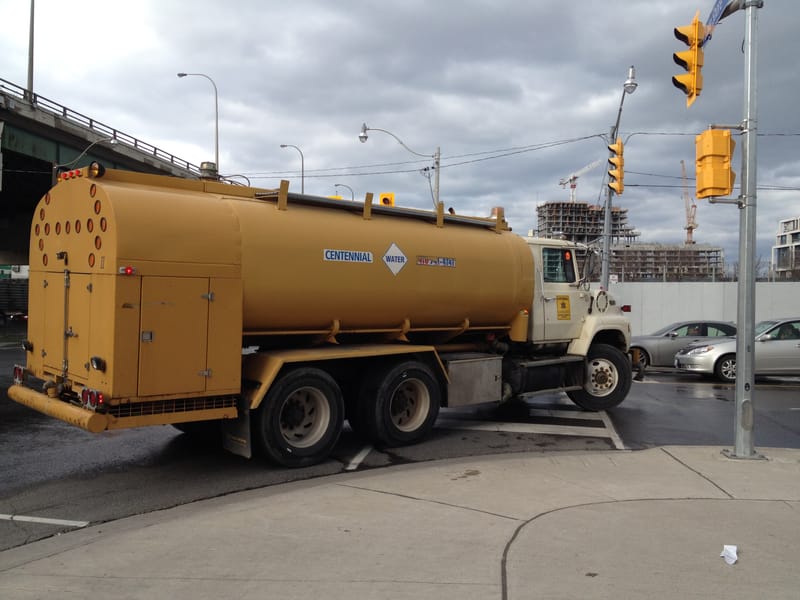
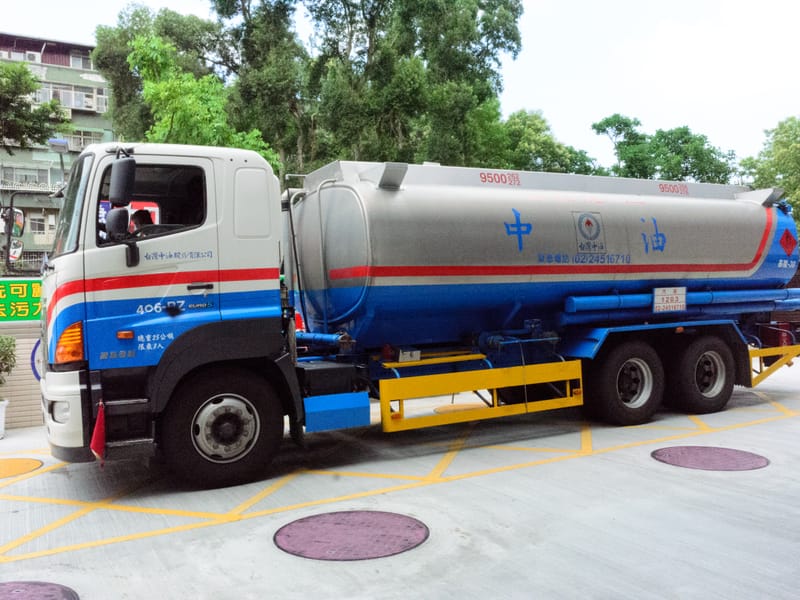
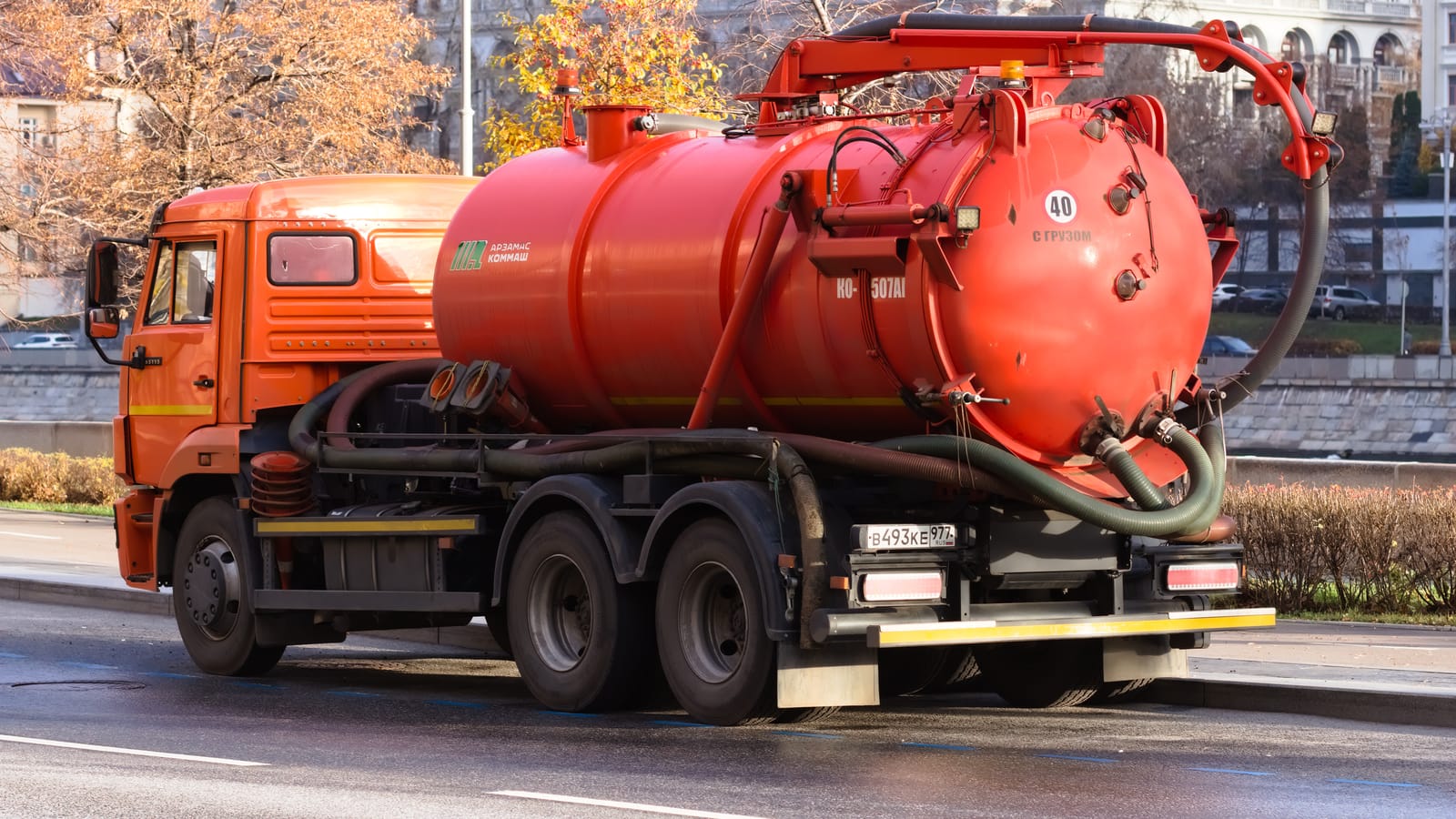
The sewage tanker is a tanker truck fitted with a pump that draws liquids, sludge and waste by suction from where they lie, often underground, into the truck’s tank, to carry them to a treatment plant or a licensed discharge site. Among the best-known materials it carries is faecal sludge from septic tanks and soakaway pits. It is a road vehicle measured in kilometres, with operating hours for the suction pump. In the Saudi market it is called “wayt sarf sihhi”, “wayt shaft” or “sihrij sarf sihhi”, and it differs from the “water wayt”, which carries water fit for use and does not draw by suction.
Uses
- Drawing sludge from septic tanks, soakaway pits and community toilets.
- Cleaning sewage lifting stations.
- Emptying portable toilets and temporary sites.
- Cleaning sewer networks and removing sand from them with a high-pressure pump in the equipped models.
- Carrying industrial liquids and liquid waste from factories.
- Cleaning oil tanks and spills in the oil industry.
- Locating buried services before digging with special equipment.
02Classes and sizes
The reference states that the capacity of commercial tanks that carry sludge usually ranges between ten and fifty-five cubic metres, and smaller versions of up to five hundred litres may exist for special applications. The actual capacity and the declared weight of each truck are in the registration card.
| Class | Description | Typical use |
|---|---|---|
| Small on a light chassis | A tank of limited capacity | Narrow neighbourhoods and small sites. |
| Medium on a medium chassis | The most widespread in services | Homes, establishments and construction sites. |
| Large on a heavy chassis | A large tank with three axles | Factories, projects and municipalities. |
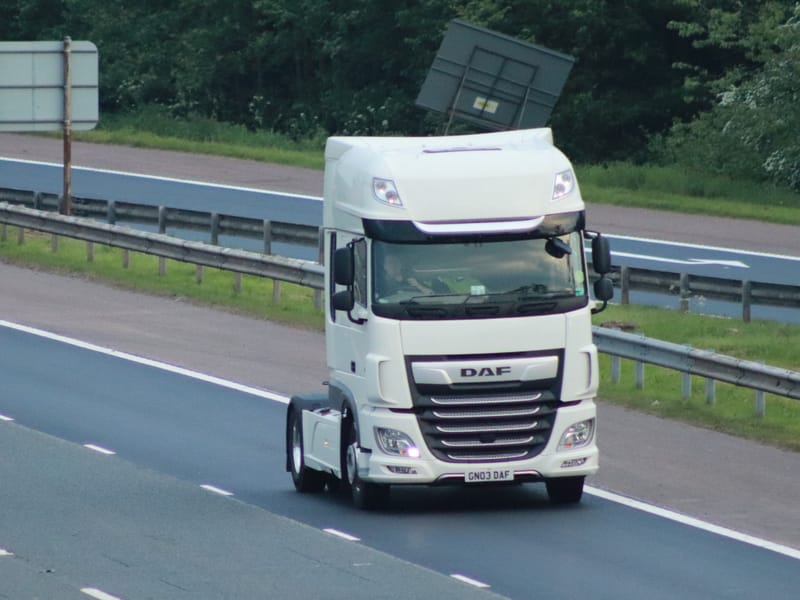
| Vacuum semi-trailer | A tractor head and a tanker semi-trailer | Transport between cities and long distances. |
| Combined suction and pressure unit | A high-pressure pump together with suction | Cleaning networks and removing sand. |
03Main components
- 01The horizontal cylindrical tank and its internal baffles to reduce the movement of the liquid, and the inspection openings and their covers.
- 02The suction pump, usually of the sliding-vane or liquid-ring type.
- 03The pump drive, with power from the main engine through a belt or a hydraulic system.
- 04The suction hoses, whose diameter is usually five to ten centimetres.
- 05The moisture separator and the trap that protects the pump from liquids.
- 06The rear discharge valve and the retaining screen.
- 07The pressure and vacuum relief valve and the tank level indicator.
- 08The overflow preventer that stops suction when full.
- 09The chassis, the engine, the brake system and the tyres.
- 10The warning lighting, the reflectors and the safety tools.
04Periodic maintenance schedule
The ladder is in kilometres for the chassis with operating hours for the suction pump, and the manual for the specific model sets the intervals and tasks that apply; the intervals are shorter with viscous waste and heavy daily work.
| Interval | Typical tasks |
|---|---|
| Daily before moving |
|
| Weekly |
|
| Every 10,000 km or per the manual |
|
| Every 20,000 km |
|
| Every 40,000 km |
|
| Every 80,000 km or annually |
|
The manufacturer’s manual governs. The actual intervals and tasks are set by the operation and maintenance manual for your machine’s model, and they are shortened in heavy dust, high heat and continuous operation. This table shows the general order only and does not replace the manual.
05Daily pre-start checklist
14 items
The general reference for commercial vehicles requires checking before driving the brakes, the steering, the lighting, the tyres, the horn, the mirrors, the wheels and the emergency equipment.
06Common operating mistakes that cause breakdowns
- Filling the tank above its capacity or disabling the overflow preventer, so liquid enters the pump.
- Drawing in solid objects, bags or timber without a retaining screen, so the hoses and valves block.
- Running the pump dry for a long time, so the vanes burn.
- Pressurising the tank to speed up discharge instead of discharging by gravity, which is harmful to the machine and is resorted to only in special cases.
- Driving a half-full tank at speed, so the liquids move and threaten stability.
- Opening the inspection opening while the tank is under vacuum or pressure.
- Neglecting to wash the tank and hoses after every job, so the deposits harden.
- Discharging at unlicensed places, which is a health and environmental hazard and a violation.
07Regulatory requirements
Regulatory procedures to check when owning or operating this machine in the Kingdom.
08What to weigh when renting or buying
- The tank capacity and declared weight against the neighbourhoods you serve.
- The pump type, its soundness, the sound of its operation and its suction ability.
- The condition of the tank from the inside: rust, corrosion and welds.
- The safety systems: the overflow preventer, the relief valve and the level indicator.
- The condition of the hoses and their connections, length and diameter.
- The meter reading with the maintenance record and the condition of the engine and transmission.
- The condition of the tyres and the brakes.
- When renting: how work is charged, by trip or by hour, and who bears the fuel, the driver and the discharge of the load.
Settle these factors first, then enter your own numbers in the Own vs rent calculator or the Equipment operating cost per hour calculator.
09Frequently asked questions
In the Saudi market it is called “wayt sarf sihhi”. The English name is in the name field above, and it has many other English names depending on the country.
The sewage wayt draws by a vacuum pump and carries waste, while the water wayt carries and pumps water fit for use and is not used for anything else.
It varies between small and large, and in commercial tanks it is, according to the reference, between ten and fifty-five cubic metres, with the actual figure in the registration card.
Vacuum pumps of the sliding-vane or liquid-ring type, and less commonly diaphragm pumps.
It usually cannot exceed fifty metres, and the permitted suction height is affected by atmospheric pressure and the viscosity of the material.
Washing the tank and hoses after every job, the pump oil and vanes, the safety valves, and then the maintenance of the chassis and the brakes.