- Names used in Saudi Arabia
- Dump truckTipper truckTipperQallab (Saudi term)Tareela qallab (tractor-trailer tipper)Qallab raml (sand tipper)
- Formal name
- شاحنة قلّابة
- English name
- Dump truck (tipper)
- Family
- Trucks & trailers · Trucks
- Measured by
- Kilometres
01Definition and uses
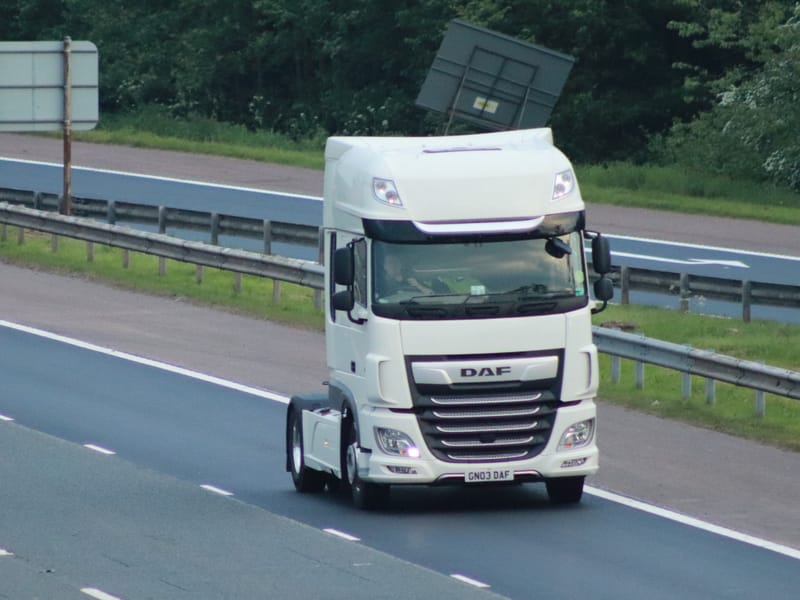
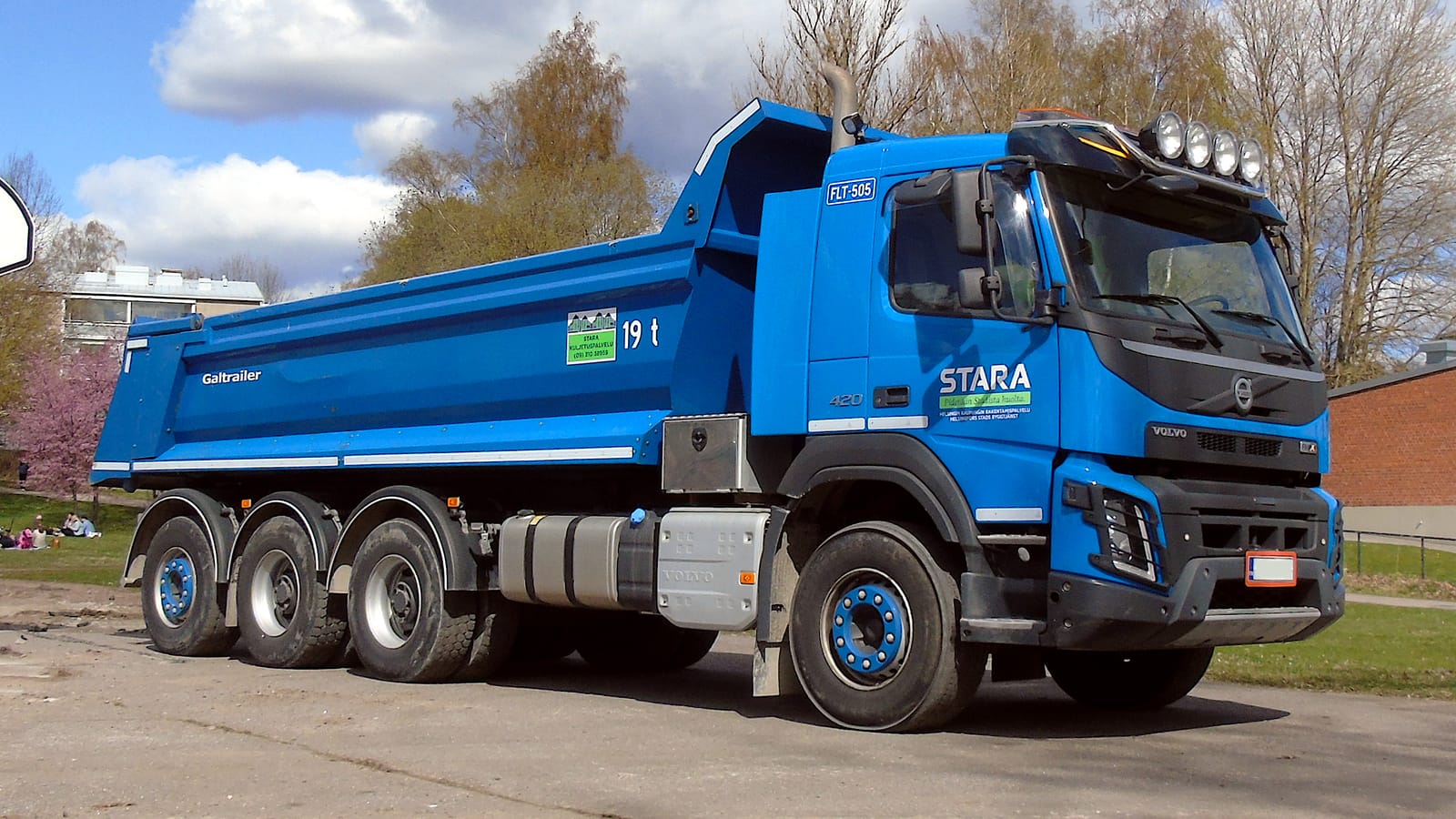
The dump truck (“qallab”) is a truck with a hinged body raised by a hydraulic cylinder to discharge its load at the rear, used to carry loose materials such as sand, aggregate, soil and debris between sites, quarries and dumps. It is mostly a road vehicle whose life is measured in kilometres, with operating hours for the lift pump in some fleets. In the Saudi market the word “qallab” is applied to the rigid truck with a body, while “tareela qallab” is a tractor head pulling a tipping semi-trailer.
Uses
- Carrying sand, aggregate and gravel from crushers to construction sites.
- Hauling soil from excavation to fill sites or dumps.
- Carrying hot asphalt from the asphalt plant to the paver.
- Carrying demolition and construction waste.
- Backfilling and filling work and spreading material on roads.
- Internal haulage inside quarries and large projects.
02Classes and sizes
The market classifies dump trucks by the number of axles, by payload and by body size, and the common question “how many metres is the qallab” means the body capacity in cubic metres. The actual classification depends on the gross vehicle weight declared in the vehicle registration, which the load must not exceed.
| Class | Description | Typical use |
|---|---|---|
| Small tipper (“Dyna qallab”) | A light truck with a tipping body on two axles | Deliveries inside cities, small projects and alleys. |
| Medium tipper | A medium truck with two or three axles | General construction projects and carrying materials over medium distances. |
| Heavy tipper | A heavy truck with three or four axles and a large body | Quarries, roads and large projects. |
| Tractor-trailer tipper (“tareela qallab”) | A tractor head with a tipping semi-trailer | Inter-city haulage and large loads from crushers. |
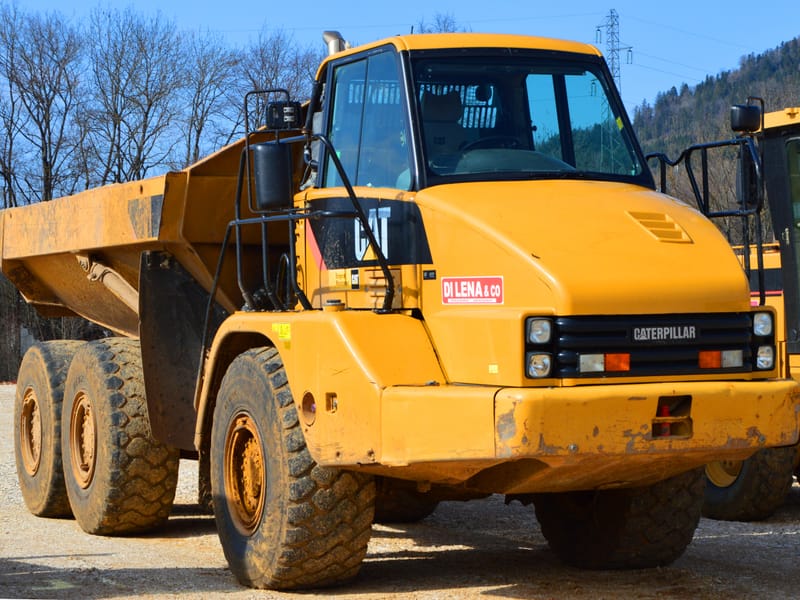
| Articulated dump truck (“dumper”) | An off-road machine with a central joint that does not travel on public roads | Inside mines and on projects with soft ground. |
03Main components
- 01The chassis, the cab and the driveline: engine, transmission and axles.
- 02The tipping body with its floor, sides, tailgate and tailgate lock.
- 03The telescopic lift cylinder, the hydraulic pump and the power take-off from the transmission.
- 04The lift control valve and the operating lever in the cab.
- 05The air brake system with its tanks and dryer.
- 06The suspension, axles and tyres.
- 07The automatic or tarpaulin load cover.
- 08The electrical and lighting system, the reverse alarm and the reverse camera.
04Periodic maintenance schedule
The dump truck is a road vehicle, so its schedule is built on kilometres or time, together with the operating hours of the lift pump. The following ladder is usual for commercial trucks, and the manual for the specific model sets the intervals and tasks that apply; the intervals shorten for work inside quarries and in heavy dust.
| Interval | Typical tasks |
|---|---|
| Daily before moving |
|
| Weekly |
|
| Every 10,000 km or per the manual |
|
| Every 20,000 km |
|
| Every 40,000 km |
|
| Every 80,000 km or annually |
|
The manufacturer’s manual governs. The actual intervals and tasks are set by the operation and maintenance manual for your machine’s model, and they are shortened in heavy dust, high heat and continuous operation. This table shows the general order only and does not replace the manual.
05Daily pre-start checklist
15 items
The general reference for trucks on work sites requires an inspection at the start of every shift of the service brakes, parking brake, emergency brakes, tyres, horn, steering, towing devices, seat belts, operating levers and safety devices.
06Common operating mistakes that cause breakdowns
- Loading above the declared gross weight, which damages the suspension, brakes and tyres and exposes the operator to a violation.
- Tipping on sloping or soft ground, the first cause of a dump truck overturning with the body raised.
- Moving with the body raised, or not making sure it is fully lowered before driving under bridges and lines.
- Standing under a raised body for maintenance without a locked prop.
- Unbalanced loading at the front of the body or on one side.
- Neglecting to drain water from the air tanks, which damages the brake valves.
- Driving with under-inflated tyres on hot roads.
- Engaging the power take-off at high engine speed while lifting.
07Regulatory requirements
Regulatory procedures to check when owning or operating this machine in the Kingdom.
08What to weigh when renting or buying
- Matching the payload and body size to the type of material and to the wheel loader or excavator that will load it.
- The number of axles and the suspension system according to the roads and the permitted weights.
- The body condition: floor thickness, welds, cracks, wear of the sides.
- The lift cylinder and its pump: leaks and the speed of lifting and lowering.
- The air brake system and the history of the linings and cylinders.
- Reading the odometer together with the maintenance record and the condition of the engine and the transmission.
- The condition of the tyres and rims and the match of their sizes.
- When renting: whether the rate is counted per trip, per day or per kilometre, and who bears the fuel, the driver and the tyres.
Settle these factors first, then enter your own numbers in the Own vs rent calculator or the Equipment operating cost per hour calculator.
09Frequently asked questions
In the Saudi market it is called “qallab”, which refers to the rigid truck with a body, while “tareela qallab” is a tractor head pulling a tipping semi-trailer.
The small two-axle tipper, the medium, the heavy with three or four axles, the tractor-trailer tipper with a tractor head and semi-trailer, and the articulated dump truck for rough roads.
The body capacity differs with the class and the body fitted, and the limit that applies is not the body volume but the gross weight declared in the registration, since wet sand is heavier than dry sand of the same volume.
Because the centre of gravity rises with the body, so if the ground is sloping or soft, or the load sticks on one side, the truck overturns; tipping on firm level ground with a balanced load is the prevention.
The brakes, air, tyres, steering, lights, body, lift cylinder, prop, latch and documents, as in the list above.
The qallab is a road truck licensed for public roads, while the dumper is an articulated off-road machine for use on sites and in mines, and does not travel on public roads.
In kilometres primarily, like any truck, and operating hours are added for the lift system and pump if the truck works a great deal on sites, over short distances and with long waiting.