- Names used in Saudi Arabia
- Street sweeperRoad sweeperSweeper truckVacuum sweeperKannasa (Saudi term)
- Formal name
- كنّاسة طرق
- English name
- Street sweeper
- Family
- Heavy equipment · Roads
- Measured by
- Hours and kilometres
01Definition and uses
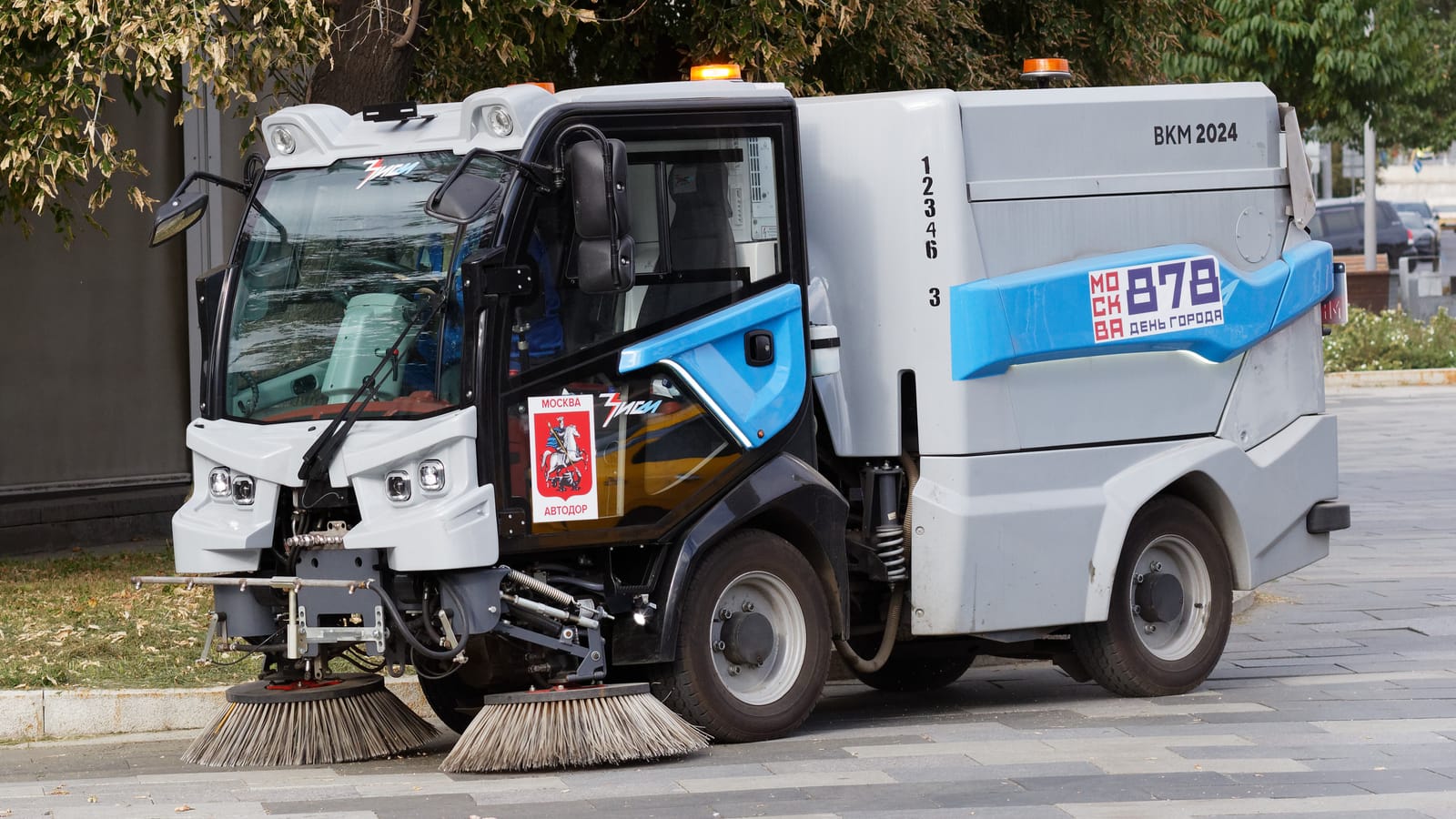
The street sweeper is a machine that cleans streets in built-up areas. Modern sweepers are mounted on a truck chassis and some of them draw by suction the dust and waste collected on the road. The prevailing type in the United States is the mechanical broom sweeper, which is about ninety percent of what is used there. It is a road vehicle measured in kilometres for its chassis and in operating hours for the sweeping system. In the Saudi market it is called “kannasa”.
Uses
- Cleaning streets and squares and removing dust and waste.
- Reducing pollutants in storm water runoff, which the US Environmental Protection Agency counts as a best practice for protecting water quality.
- Cleaning cycle paths and pedestrian walkways with small sweepers.
- Removing dust that clings to roads on construction sites and at quarries.
- Cleaning airports, ports and industrial yards.
- Sweeping car parks and highways.
- Cleaning after events, seasons and large works.
02Classes and sizes
Sweepers are classified by sweeping type, mechanical with a broom or by suction, by body size, truck or small vehicle, and by power source. Many modern sweepers are certified for collecting fine particles of diameters under ten micrometres and down to two and a half.
| Class | Description | Typical use |
|---|---|---|
| Mechanical broom sweeper | Cylindrical and side brooms that gather waste into a hopper | Public streets; the most widespread class. |
| Suction sweeper | Draws dust and waste from the road | Fine dust and crowded roads. |
| Small sweeper | A small vehicle | Cycle paths, pedestrian walkways and pavements. |
| Electric sweeper | Runs on electricity alone with no emissions | Cities and emission-sensitive areas. |
| Sweeper with an auxiliary engine | A separate engine for the sweeping system from the chassis engine | Long jobs and heavy loads. |
03Main components
- 01The truck chassis, the cab and its engine and transmission.
- 02The main cylindrical broom.
- 03The side brooms and the kerb broom.
- 04The waste hopper, its discharge opening and its lift.
- 05The suction fan, the air ducts and the dust filters.
- 06The water tank and the dust suppression sprayers.
- 07The hydraulic system that drives the brooms and lifts the hopper.
- 08The auxiliary engine of the sweeping system, if present.
- 09The control panel, the cameras and the rotating warning lights.
- 10The tyres, the brakes and the chassis air system.
04Periodic maintenance schedule
The sweeper is a road vehicle that runs on two meters, so its schedule is built on chassis kilometres and sweeping system hours. The following ladder is the usual one, and the model manual sets the intervals and tasks that apply; the intervals are shorter in heavy dust.
The chassis, in kilometres:
| Interval | Typical tasks |
|---|---|
| Daily before moving |
|
| Weekly |
|
| Every 10,000 km |
|
| Every 40,000 km |
|
| Every 80,000 km or annually |
|
The sweeping system, in hours:
| Interval | Typical tasks |
|---|---|
| Every 10 hours / daily | Emptying and washing the hopper, inspecting the brooms, cleaning the dust filters, checking the sprayers. |
| Every 50 hours | Measuring broom wear and adjusting their height, checking the hoses, greasing the points according to the manual. |
| Every 250 hours | Hydraulic oil filters according to the manual, checking the suction fan and its belts, the auxiliary engine oil. |
| Every 500 hours | Replacing the dust filters, checking the hopper lift and its cylinders. |
| Every 1000 hours | The hydraulic oil, checking the broom bearings and their motors. |
| Every 2000 hours | A structural inspection of the hopper, its welds and the suction fan. |
The manufacturer’s manual governs. The actual intervals and tasks are set by the operation and maintenance manual for your machine’s model, and they are shortened in heavy dust, high heat and continuous operation. This table shows the general order only and does not replace the manual.
05Daily pre-start checklist
14 items
The general reference for commercial vehicles requires checking before driving the brakes, the parking brake, the steering, the lighting, the tyres, the horn, the wipers, the mirrors and the emergency equipment.
06Common operating mistakes that cause breakdowns
- Sweeping with worn brooms, so the collection efficiency falls and the operator has to lower them more onto the ground.
- Setting the brooms at excessive ground pressure, so their bristles wear quickly.
- Dry sweeping without water spray, so dust rises.
- Leaving the hopper full until the load on the suspension and tyres rises.
- Sucking up large hard objects or wires, so the fan or the brooms are damaged.
- Neglecting to clean the dust filters, so suction weakens and the engine heats up.
- Driving with the brooms lowered on the road when moving between sites.
- Delaying emptying the hopper in high heat, so the waste rots and parts are damaged.
07Regulatory requirements
Regulatory procedures to check when owning or operating this machine in the Kingdom.
08What to weigh when renting or buying
- The sweeping type: broom or suction, according to the type of dust and waste.
- The hopper and water tank capacity against the length of the round.
- The efficiency of collecting fine particles according to certification.
- The condition of the brooms and their motors and the number of spare brooms.
- The condition of the suction fan and the filters.
- The sweeping system hours with the chassis kilometres in one record.
- The condition of the tyres, brakes and suspension.
- The availability of broom and filter parts at the dealer in your city.
- When renting: who bears the brooms and who provides the driver and the water.
Settle these factors first, then enter your own numbers in the Own vs rent calculator or the Equipment operating cost per hour calculator.
09Frequently asked questions
The Saudi term is “kannasa”. The English name is in the name field above.
Mechanical broom, which is the most widespread, suction, small ones for pedestrian walkways and cycle paths, and electric.
Yes, it is a municipal vehicle classified among road cleaning equipment, and it is recorded in the fleet as a two-meter vehicle.
With a record for each machine that separates the chassis kilometres from the sweeping system hours, a daily inspection before leaving, and a maintenance plan tied to the two meters.
Because wet sweeping reduces the rising dust, and dry sweeping is not acceptable where workers’ exposure to harmful dust may increase.
The main and side brooms, the dust filters, the hydraulic hoses and the tyres; and consumption varies with the type of dust.
By both, the chassis kilometres and the sweeping system hours, because it may run for long hours over a short distance.
The brakes, the tyres, the lighting, the brooms, the hopper, the filters, the sprayers and the documents, as in the list above.